Email:dennis@sun-cart.com Whatsapp:+86 13696971344
Street Legal Golf Carts in 2026: The Complete LSV Buying Guide
Confused between 2, 4, 6, and 8-seater golf carts? This 2026 guide compares payload capacity, battery range, LSV legal status, and real-world use cases across all four seat configurations. Most buyers (about 80%) are best served by a 4-seater cart, while solo riders, families, and commercial operators have more specific needs. Read the 5-question checklist in Section 8 to find the right configuration in 5 minutes.
What Makes a Golf Cart "Street Legal"?
The legal definition is narrow and precise.
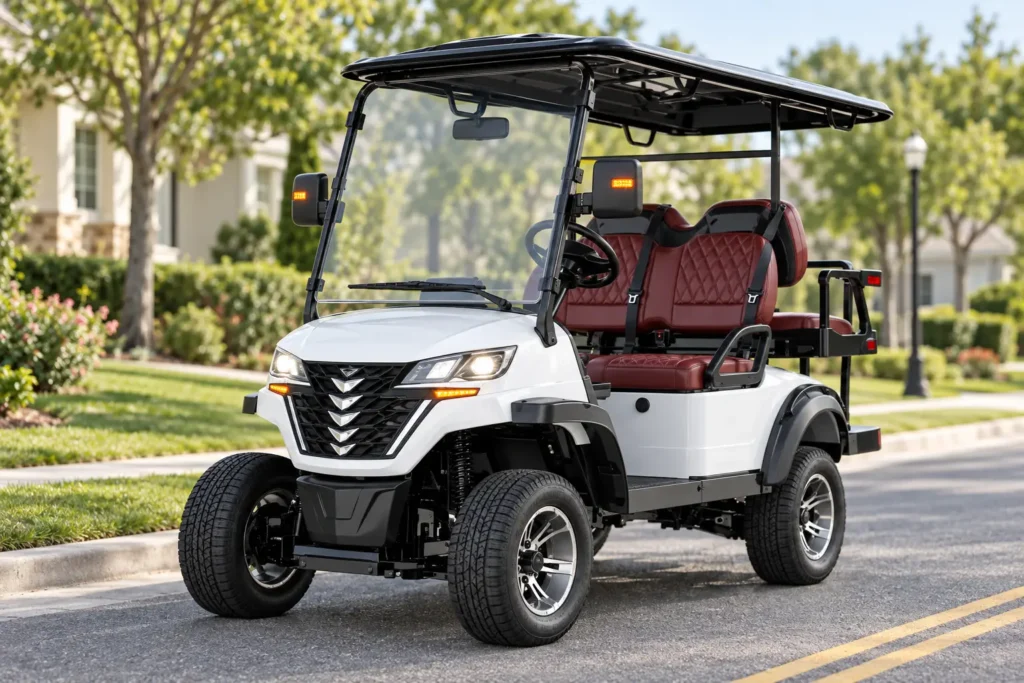
Under Federal Motor Vehicle Safety Standard (FMVSS) No. 500, a street legal golf cart — officially called a Low-Speed Vehicle (LSV) — must:
Have a top speed between 20 mph and 25 mph
Be equipped with headlights, taillights, turn signals, brake lights, and reflectors
Have seat belts for all occupants
Include rearview mirrors (interior and exterior)
Feature windshield wipers if equipped with a windshield
Meet specific braking performance standards
Anything that tops out below 20 mph is legally a golf cart, not an LSV — and in most states, it cannot be driven on public roads.
Anything above 25 mph becomes a regular motor vehicle and must meet full passenger-car crash safety standards — which no golf cart does.
Why LSVs Are Exploding in Popularity Across the US
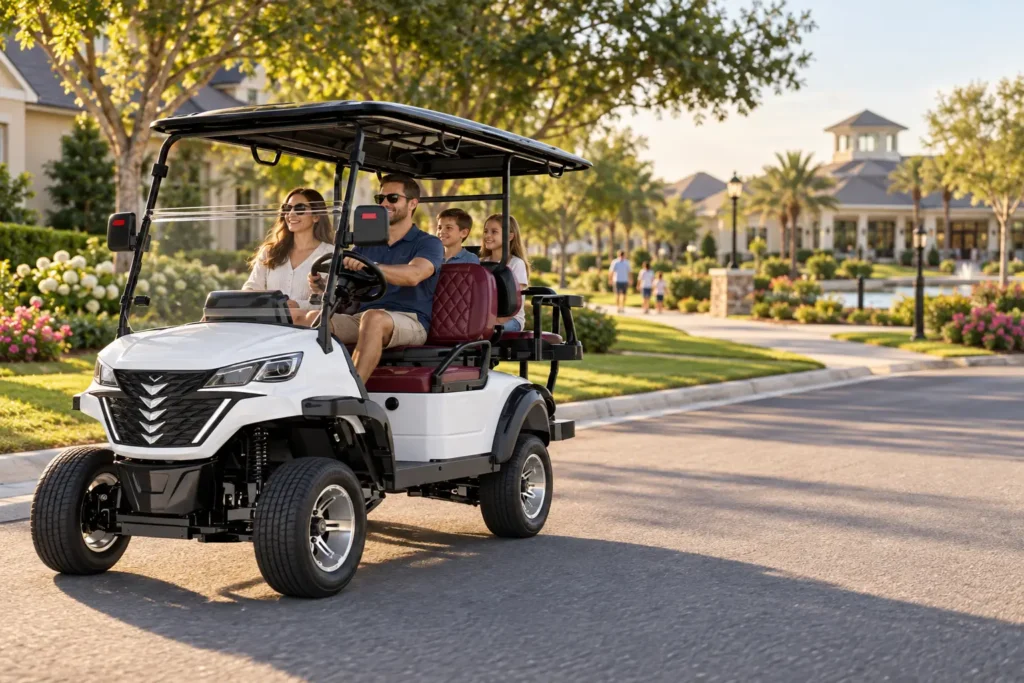
The growth isn’t just a pandemic-era trend. Several structural forces are driving demand:
Retirement community expansion. Master-planned communities in Florida, Texas, and Arizona are integrating LSV-friendly pathways into their designs. Some communities, like Nocatee in Jacksonville, now restrict gasoline carts entirely to preserve air quality and reduce noise.
Electrification mandates. Homeowners’ associations in Sun Belt states are increasingly requiring electric-only carts, effectively converting LSVs from an amenity into regulated infrastructure.
Lithium battery adoption. The shift from lead-acid to LiFePO₄ batteries has been transformative. Lithium packs offer 3-5x longer lifespan, 50-70% weight reduction, and 3-5 hour full charges — making daily use far more practical. Fleet operators are seeing the economics work: lithium-powered LSVs can run all day on a single charge, with charging times short enough to support multi-shift operations.
Rising fuel costs and carbon concerns. For trips under three miles, an LSV costs pennies per mile to operate compared to a full-sized vehicle. In states with carbon reduction mandates, electric LSVs also qualify for zero-emission vehicle incentives.
Speed: The Single Most Important Spec
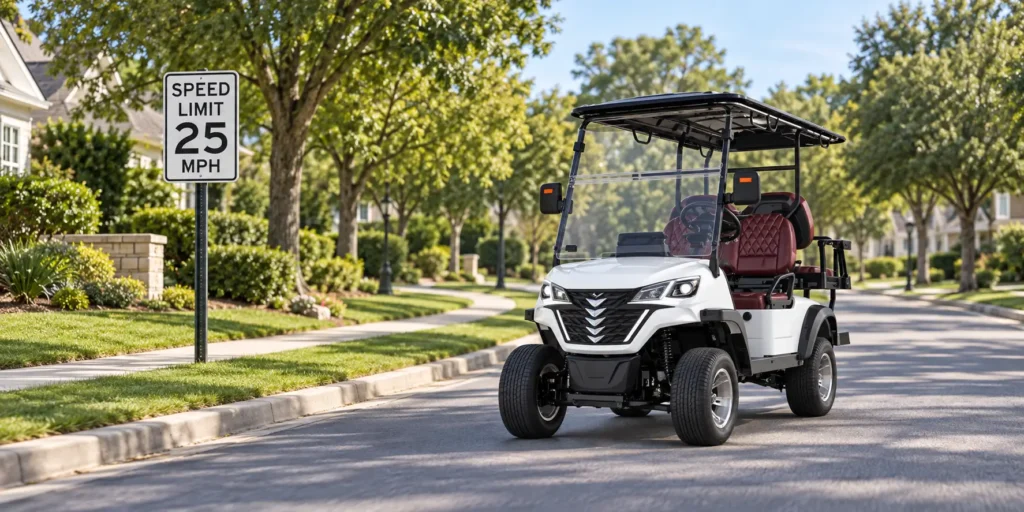
Here’s the number that matters: 25 mph.
That’s the ceiling for LSV classification. If a cart can’t reach 20 mph, it’s not an LSV. If it exceeds 25 mph, it’s no longer an LSV either.
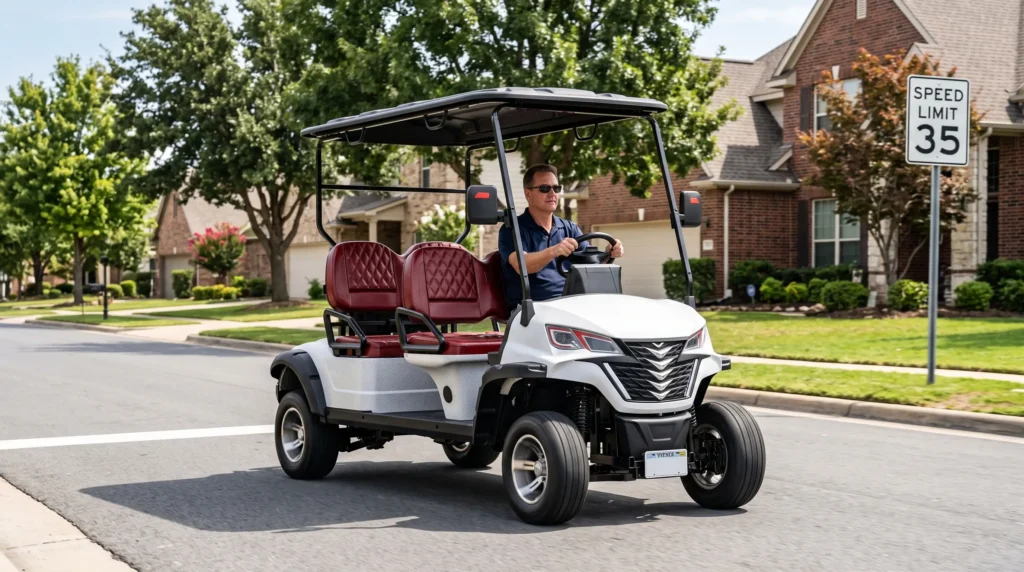
Most states allow LSVs on public roads with posted speed limits of 35 mph or less — but only if the cart meets the federal LSV definition. That means a 25 mph LSV can legally drive on a 35 mph road, but a 14 mph golf cart cannot.
This is why speed isn’t just a comfort feature. It’s the legal dividing line between a road-legal vehicle and a private-property-only cart.
Range and Battery: What to Expect in 2026
A street legal golf cart needs enough range to handle real daily use — not just a quick loop around the block.
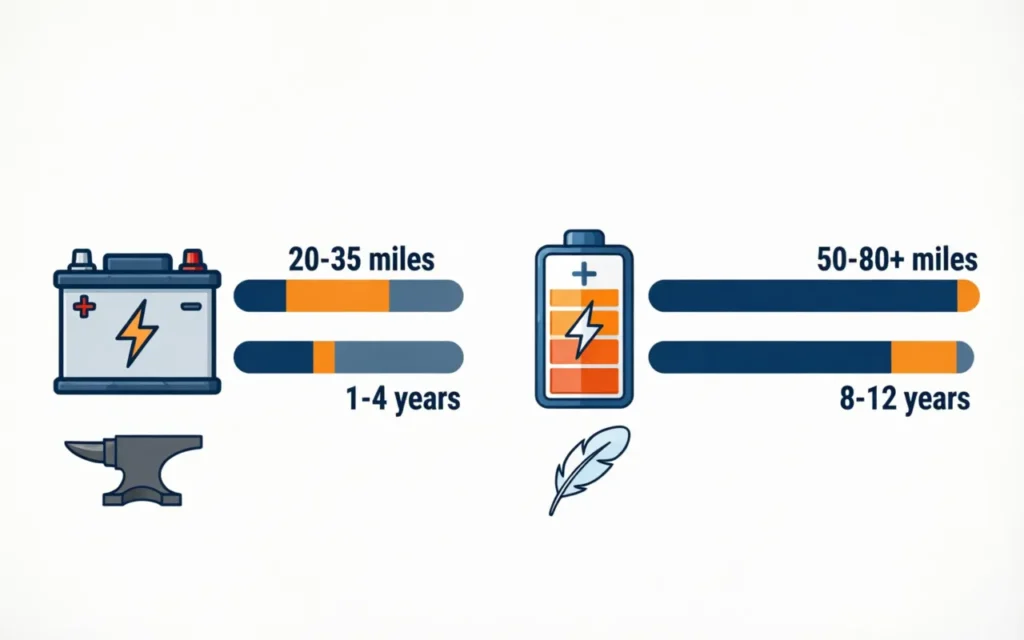
| Battery Type | Realistic Range | Lifespan | Weight |
|---|---|---|---|
| Lead-Acid (48V) | 20-35 miles | 1-4 years | 250-300 lbs |
| LiFePO₄ (48V/72V) | 50-80+ miles | 8-12 years | 70-90 lbs |
Lithium-powered LSVs are increasingly the standard for anyone planning to keep the cart for more than a few years. The upfront cost is higher, but the total cost of ownership is dramatically lower — no watering, no equalization charges, and 5-10x the cycle life of lead-acid.
If you’re planning to use your LSV as a daily driver in a retirement community, lithium is the clear choice. If it’s an occasional-use vehicle for a private community, lead-acid may still be sufficient.
How to Register Your Street Legal Golf Cart
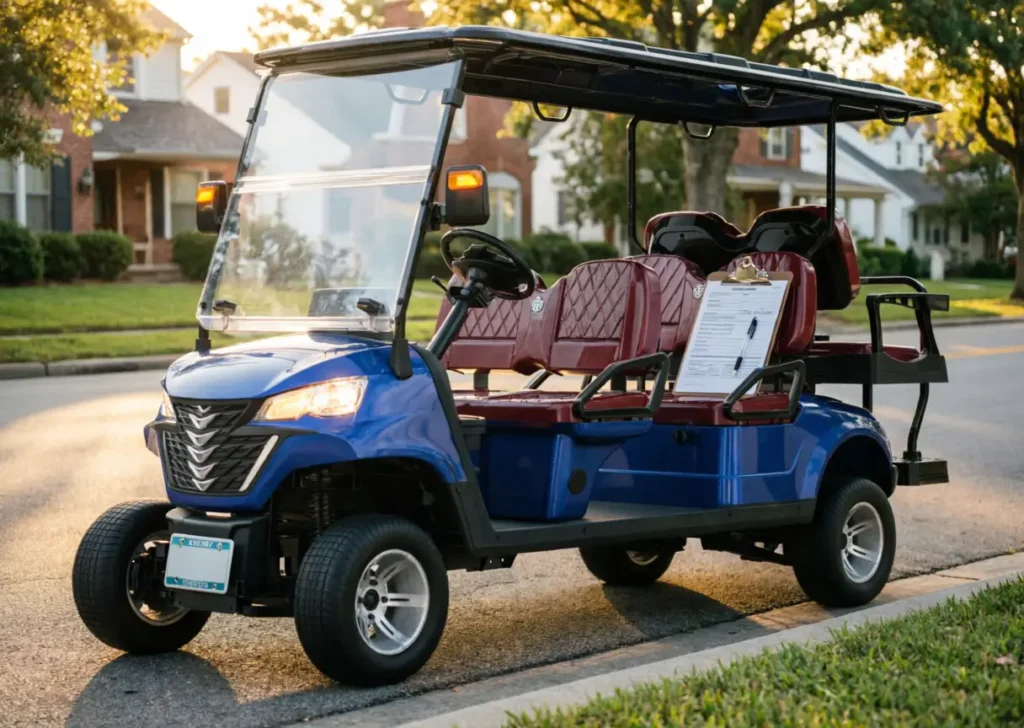
Registration requirements vary by state, but the general process looks like this:
Verify your cart meets FMVSS No. 500. Check that it has a VIN, meets speed requirements, and includes all mandated safety equipment.
Obtain a Vehicle Identification Number (VIN). Many manufacturers provide this at purchase. If your cart doesn’t have one, you may need to apply for a state-issued VIN.
Get insurance. Most states require liability insurance for LSVs. Rates are typically much lower than full-sized vehicles.
Register with your state DMV. You’ll need proof of ownership, VIN, and insurance. Fees vary but are generally in the $50-$200 range.
Display your license plate and registration. LSVs are typically issued a special plate or decal.
Important: Some states have additional restrictions. California, for example, identifies electric golf carts as a zero-emission requirement in federal ozone non-attainment areas. Always check your state and local regulations before purchase.
Top Street Legal Golf Cart Models in 2026
The market has matured significantly. Here are the leading options for US buyers:
LSV Series — Best for Daily Street Legal Driving
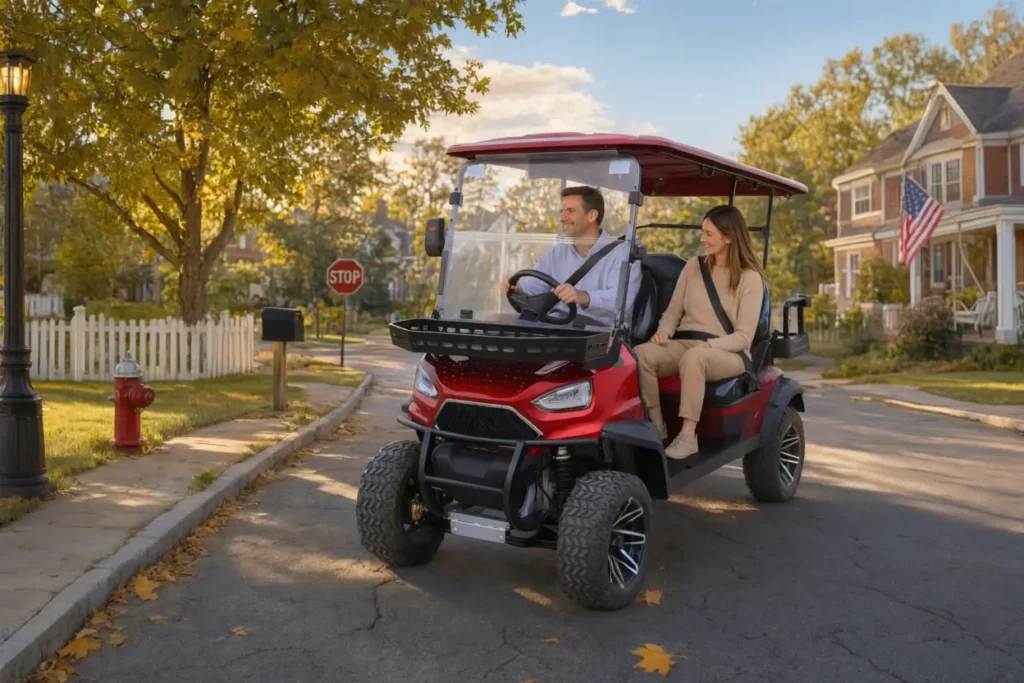
SUN-CART’s LSV Series is purpose-built for street legal use. Every unit is engineered to meet FMVSS No. 500 from the factory — no aftermarket retrofitting required.
Key specs:
4-6 passenger capacity
48V/72V LiFePO₄ battery with 5-year warranty
Top speed: 25 mph (FMVSS No. 500 compliant)
Range: 50+ miles on a single charge
Full LSV safety package — headlights, turn signals, brake lights, seat belts, rearview mirrors
The LSV Series is the go-to choice for retirement communities, gated neighborhoods, and resort properties where daily road use is the norm. If your primary goal is a street legal cart that feels like a real vehicle, this is it.
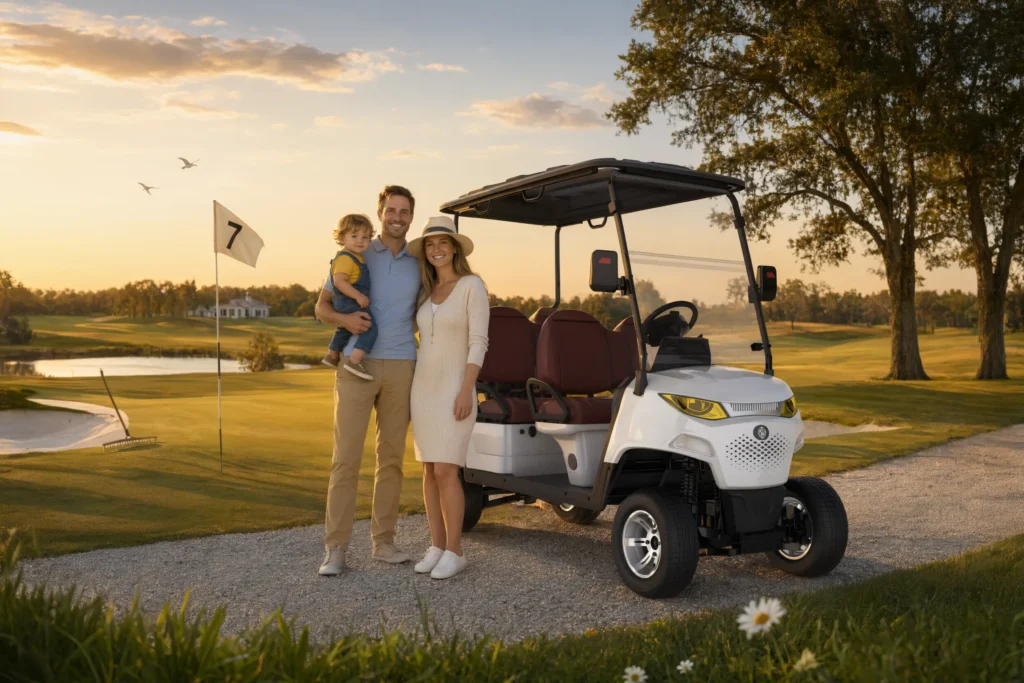
MXV Series — Best for Families and Community Shuttles
For larger households or community shuttle operations, the MXV Series offers a step up in capacity without sacrificing street legality.
Key specs:
6 passenger capacity — room for the whole family
48V/72V LiFePO₄ battery with extended range
Top speed: 25 mph — fully LSV compliant
Reinforced chassis for heavier loads and daily use
Optional solar charging for off-grid capability
The MXV Series is designed for neighborhoods, HOAs, and small commercial operations that need to move more people per trip. It’s the ideal balance between personal use and light commercial duty.
UTV Series — Best for Commercial and Rugged Applications
Resorts, campuses, and commercial operations often need a street legal vehicle that can handle more than paved roads. The UTV Series delivers.
Key specs:
2-6 passenger configurations — flexible seating for different missions
72V lithium battery for maximum range and torque
Heavy-duty suspension and all-terrain capability
Optional lift kit for increased ground clearance
Custom branding and OEM/ODM support for volume buyers
The UTV Series is built for properties with mixed terrain — golf courses with unpaved paths, resorts with service roads, or commercial campuses that need a versatile workhorse. It’s street legal when configured for road use, and rugged enough for off-road duty when needed.
What You Should Pay in 2026
Street legal golf cart pricing falls into three tiers:
| Tier | Price Range | Best For |
|---|---|---|
| Budget LSV | $7,500 – $10,000 | Occasional use, private communities |
| Mid-Range LSV | $10,000 – $14,000 | Daily use, retirement communities |
| Premium LSV | $14,000 – $20,000+ | Commercial fleets, luxury communities |
As a general rule, expect to pay $2,000-$4,000 more for a street legal LSV than for a comparable non-street-legal golf cart. The premium covers the safety equipment, VIN registration, and compliance testing required for road use.
Can I drive a street legal golf cart on any road?
No. Most states restrict LSVs to roads with posted speed limits of 35 mph or less. They are generally prohibited on highways, interstates, and high-speed arterial roads.
Do I need a driver's license to operate an LSV?
Yes. In most states, operating an LSV requires a valid driver’s license. Some states may require additional endorsements — check your local DMV.
What's the difference between an LSV and a NEV?
In practice, the terms are often used interchangeably. NEV (Neighborhood Electric Vehicle) is a broader category that includes LSVs and other low-speed electric vehicles. LSV specifically refers to vehicles meeting FMVSS No. 500.
Are lithium batteries worth the extra cost for a street legal golf cart?
If you plan to keep the cart for more than 3-4 years, yes. Lithium batteries last 8-12 years vs. 1-4 years for lead-acid, require zero maintenance, and deliver 50-80+ miles of range. The total cost of ownership is significantly lower over the vehicle’s life. Learn more about LiFePO₄ battery technology →
Can I customize my LSV with lift kits and larger tires?
Yes, but modifications may affect street legality. Some states require re-inspection after significant modifications. Always check local regulations before modifying a street legal vehicle. Explore customization options →
The Bottom Line
Street legal golf carts have moved from niche to mainstream. With over 14,800 monthly searches for “street legal golf carts” in the US alone, and the LSV market projected to grow from $1.73 billion to $2.66 billion globally by 2032, this is no longer a niche category.
The key is understanding the rules: 25 mph is the ceiling, FMVSS No. 500 is the standard, and your state’s registration process is the gate.
If you’re ready to explore a street legal electric golf cart for your neighborhood, community, or commercial fleet, contact our team for a custom quote and fleet consultation. As a leading electric golf cart manufacturer with US stock, SUN-CARTS delivers factory-direct LSVs with 5-year battery warranty and full LSV compliance.
This article is part of our ongoing series on electric golf cart technology and fleet management. For more insights, explore our Product Series or request a quote.
Newsletter Updates
Enter your email address below and subscribe to our newsletter