Email:dennis@sun-cart.com Whatsapp:+86 13696971344
The Business Case for Electric Golf Carts: Why Resorts, HOAs, and Commercial Fleets Are Making the Switch in 2026
A Billion-Dollar Shift Toward Electric Mobility
The numbers are impossible to ignore. The global electric golf cart market was valued at $2.69 billion in 2025** and is projected to reach **$4.24 billion by 2031, growing at a CAGR of 7.88% . Meanwhile, the broader Golf Cart and Neighborhood Electric Vehicle (NEV) market is expected to grow from $5.5 billion in 2025 to $8.7 billion by 2033 at a CAGR of 6.8%.
What‘s driving this explosive growth? It’s not just about golf anymore. Residential communities, resorts, corporate campuses, airports, and industrial facilities are rapidly electrifying their fleets, driven by a simple equation: lower operating costs, reduced maintenance, and zero emissions.
For HOA boards, resort managers, and commercial fleet operators, the question is no longer whether to switch to electric—it‘s how soon you can start saving.
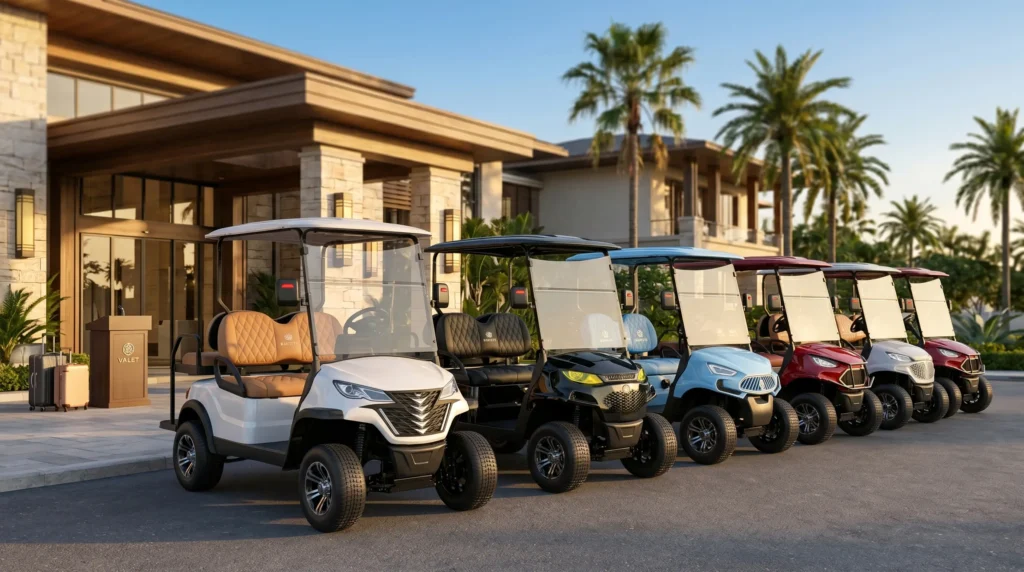
Sun-Cart manufactures 2, 4, 6, and 8‑seat electric golf carts with lithium battery technology and LSV certification. Explore our full lineup →
The Economics of Electric: Why Lithium Changes the Math
The single biggest factor reshaping fleet economics is the transition from lead-acid to lithium-ion batteries.
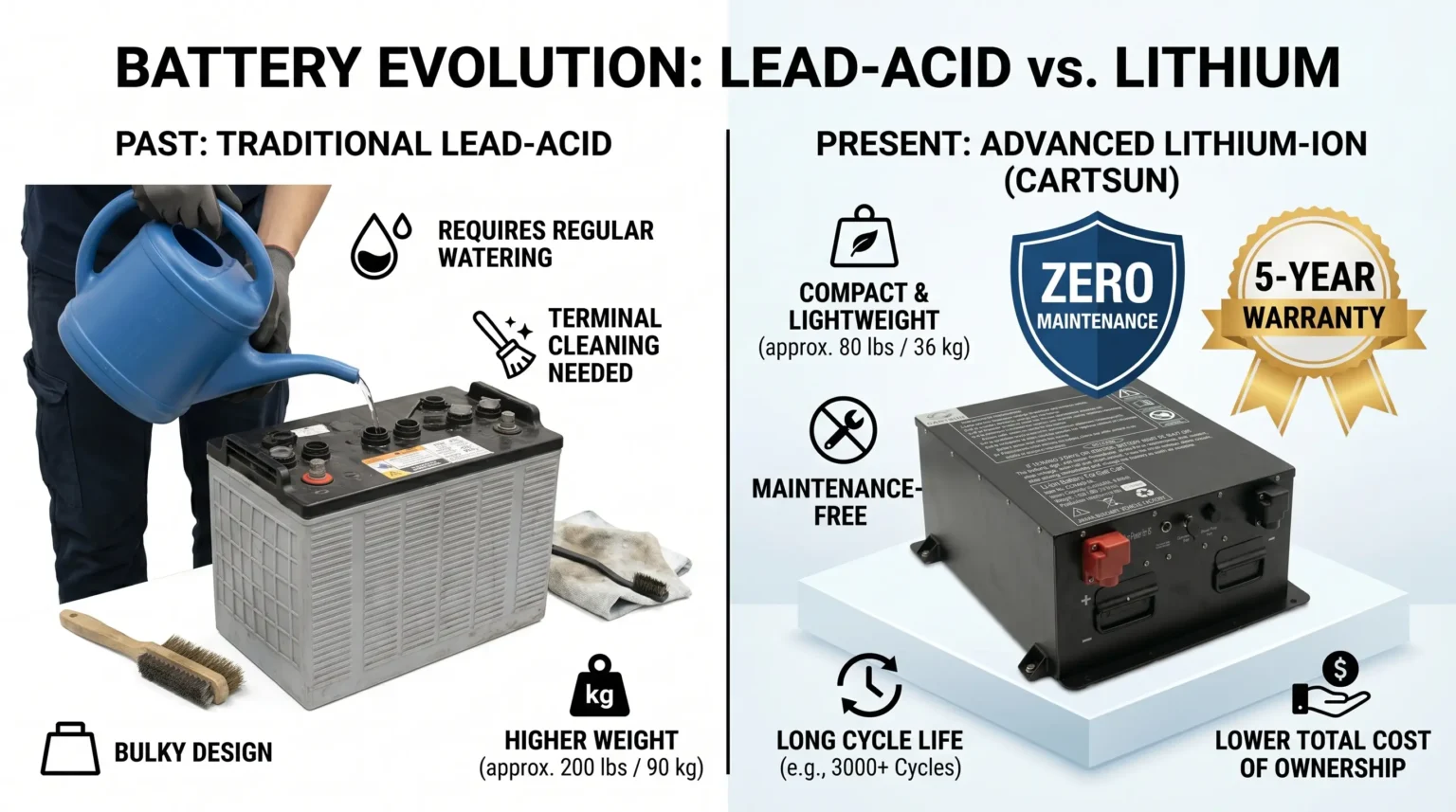
Lead-acid batteries have been the industry standard for decades, but their limitations are becoming impossible to ignore. They require regular watering, terminal cleaning, and replacement every 3–5 years. A typical 48V lead-acid set costs $600–$1,200 upfront—but that‘s just the beginning.
Lithium iron phosphate (LiFePO₄) batteries, by contrast, offer:
| Metric | Lead-Acid Battery | Lithium (LiFePO₄) |
|---|---|---|
| Upfront Cost (48V) | $600 – $1,200 | $1,500 – $3,500+ |
| Lifespan | 3–5 years | 8–12 years |
| Charge Cycles | 300–500 | 4,000–6,000+ |
| Maintenance | Monthly watering, cleaning | Zero |
| Weight | Heavy | 50–70% lighter |
| Consistent Power | Slows as it drains | Full speed until empty |
A lithium battery weighs 50–70% less than a comparable lead‑acid setup, improving cart performance and reducing wear on tires and suspension.
LiFePO₄ is now the preferred chemistry for modern golf carts because of its thermal stability, long cycle life, and consistent power delivery. A single lithium pack can last 4–10 times longer than lead‑acid, with far fewer replacements and significantly less maintenance overhead.
The bottom line for fleet operators: While lithium costs more upfront, the total cost of ownership over 8–10 years is dramatically lower. For fleets operating 20+ carts, the savings can easily exceed $50,000–$100,000 over a decade.
Sun-Cart‘s LiFePO₄ lithium batteries come with a 5‑year warranty and zero maintenance requirements. Learn more about our battery technology →
Why Resorts and Communities Are Going Electric First
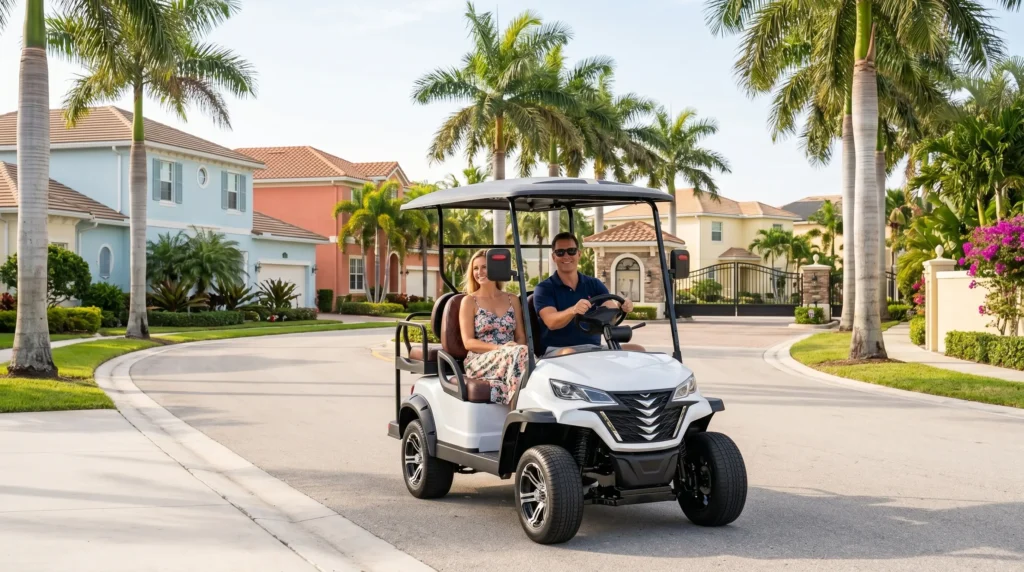
The shift to electric is happening fastest in resorts, gated communities, and hospitality properties—and for good reason.
According to industry data, residential communities now rank as the second-largest application segment for golf carts and NEVs, surpassed only by golf courses themselves. The market is being driven by the expansion of gated communities, retirement living projects, and planned smart townships that prioritize compact, low-speed mobility.
The Resort Advantage
For resorts and hotels, electric carts deliver three critical benefits:
Quiet Operation – Electric carts eliminate engine noise, preserving the peaceful atmosphere guests pay for. At the 2026 PGA Merchandise Show, exhibitors emphasized that quieter operation aligns with the expectations of modern clubs, resorts, and residential communities.
Lower Operating Costs – Resorts running 40+ carts can save tens of thousands of dollars annually on fuel and maintenance. A case study from an Orlando resort showed a 42% reduction in operating costs and full ROI in 22 months after switching to electric.
Brand Image – Zero-emission fleets support sustainability initiatives and appeal to eco-conscious travelers. Electric models eliminate tailpipe emissions and align with environmental certification programs.
The Community Revolution
In gated communities and HOAs, electric carts are becoming the default “second car“ for residents. Studies indicate that 30–40% of U.S. communities now permit street-legal golf carts, particularly in warm-weather states.
The Villages in Florida—home to over 150,000 residents—exemplifies how golf carts can dominate local transport. Communities embracing electric carts can see around 30–40% local emissions reductions.
Commercial and institutional facilities are also adopting electric fleets for internal transportation and light-duty logistics due to their compact structure, maneuverability, and low operating expenses.
Sun-Cart offers LSV-certified models for street-legal community use. View LSV options →
Total Cost of Ownership: Electric vs. Gas
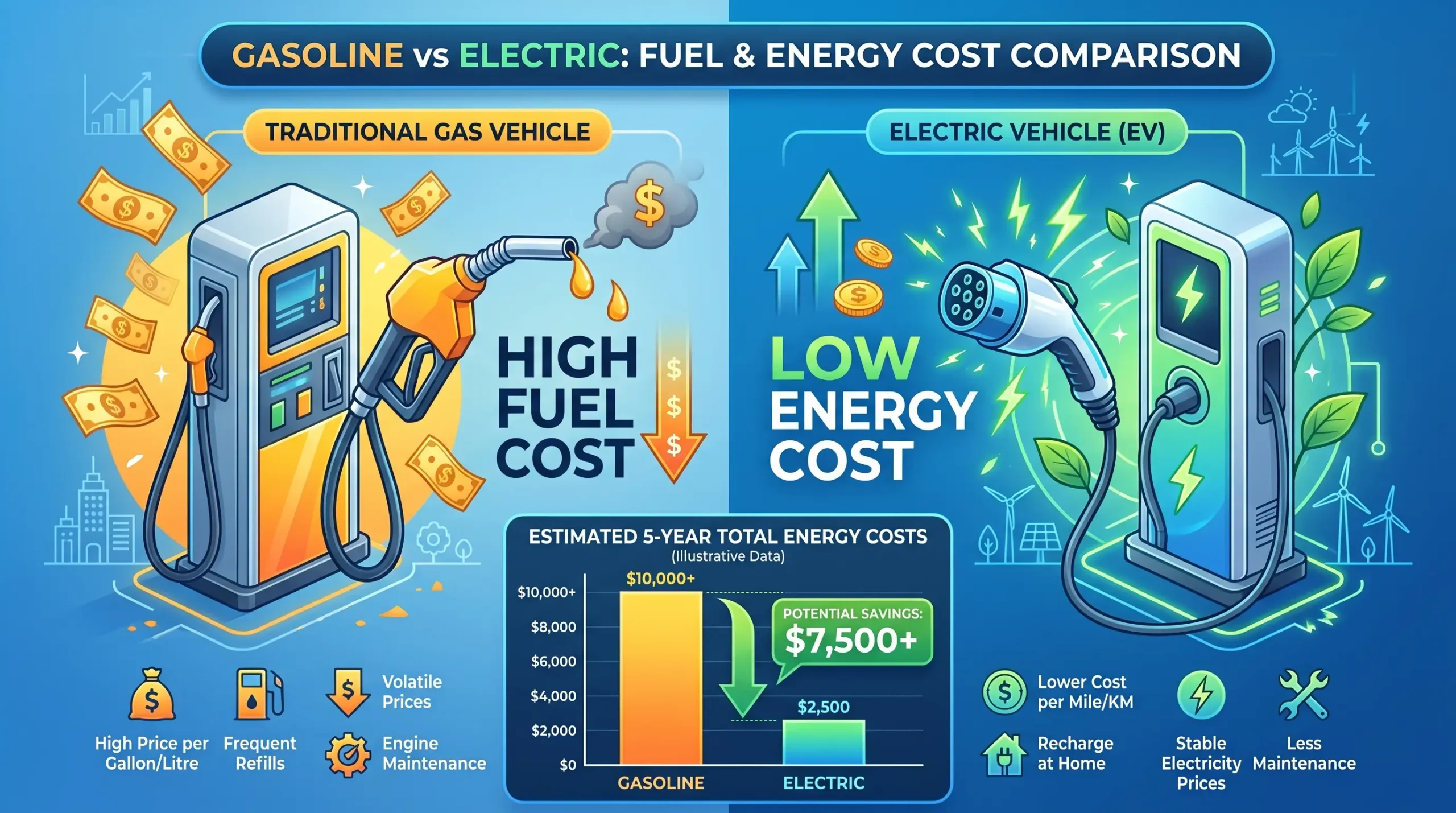
The upfront price of a gas cart may look attractive—but the 5‑year operating costs tell a very different story.
| Cost Category (per cart) | Gas Cart | Electric Cart (Lithium) |
|---|---|---|
| Fuel / Energy (5 yrs) | ~$4,000 – $5,000 | ~$500 – $800 |
| Maintenance (5 yrs) | ~$2,000 – $3,000 | ~$300 – $500 |
| Battery Replacement (5 yrs) | N/A | $0 (lithium lasts 8–12 years) |
| 5‑Year Operating Total | ~$6,000 – $8,000 | ~$800 – $1,300 |
Based on typical fleet data and 2026 energy prices.
According to industry analysis, a lithium‑electric cart costs roughly $4,000 – $7,000 less to operate over a decade than a comparable gas cart.
Electric carts also offer reduced mechanical complexity and quiet operation for customer-facing environments. For fleets managing 50+ carts, the annual savings can exceed $150,000.
According to Research and Markets, the electric segment accounted for 62% of market share in 2025 and is anticipated to grow at a CAGR of 7.5% through 2035. The shift is accelerating as lithium battery costs continue to decline and zero-emission mobility becomes a strategic priority.
Sun-Cart provides complete electric golf carts with factory‑installed lithium batteries. Request a wholesale quote →
Smart Fleet Management: The Next Frontier
Beyond cost savings, electric carts enable smart fleet management capabilities that gas carts simply cannot match.
Modern electric carts can be equipped with:
GPS tracking – Monitor vehicle locations in real-time
Telematics – Track battery health, usage patterns, and maintenance needs
Geofencing – Restrict carts from sensitive areas automatically
Remote diagnostics – Identify issues before they cause downtime
According to Deep Market Insights, technological upgrades are transforming fleet management with GPS tracking, remote diagnostics, and telematics-driven maintenance. Operators can now monitor vehicle health, schedule predictive maintenance, and optimize routing.
The integration of IoT-enabled telematics is elevating fleet efficiency and safety, making electric carts increasingly attractive for commercial buyers seeking data-driven fleet solutions.
The 2026 PGA Merchandise Show highlighted fleet management software, GPS systems, diagnostic tools, and speed-control technologies as solutions that allow operators greater oversight and efficiency.
Sun-Cart‘s FOC smart controllers support CAN bus communication for seamless telematics integration.
The LSV Opportunity: Street-Legal Mobility
One of the fastest-growing segments is the Low-Speed Vehicle (LSV) market, which includes street-legal electric golf carts.
The global LSV market is projected to grow from $8.33 billion in 2025 to $12.38 billion by 2030 at a CAGR of 8.4%. Electric LSVs are being increasingly used in gated communities, campuses, airports, resorts, and industrial facilities.
LSV-certified models equipped with seat belts, turn signals, and reinforced frames are becoming popular alternatives to conventional automobiles for short-range commuting. Municipalities are incorporating NEVs into maintenance, security, and park services, further broadening the market‘s scope.
For HOAs and communities, LSV certification means residents can legally drive on public roads up to 35 mph—transforming golf carts from recreational vehicles into legitimate daily transportation.
Conclusion: The Financial Case Is Clear
The data is unequivocal. Electric golf carts—particularly those with lithium battery technology—deliver superior total cost of ownership, lower maintenance burdens, and greater operational flexibility than gas alternatives.
For resorts, HOAs, commercial fleets, and communities, the decision is no longer about whether to switch. It‘s about how quickly you can start capturing the savings.
With the electric golf cart market projected to reach $4.24 billion by 2031 and the LSV market growing at over 8% CAGR, the momentum is undeniable.
The question isn‘t if electric will dominate. It’s already happening.

Ready to calculate your fleet‘s potential savings? Contact Sun-Cart for a customized TCO analysis and quote.
📧 Email: dennis@sun-cart.com
📞 WhatsApp: +86 19357388757
🌐 Website: www.sungolfcarts.com
We respond to all inquiries within 24 hours.
Newsletter Updates
Enter your email address below and subscribe to our newsletter