Email:dennis@sun-cart.com Whatsapp:+86 13696971344
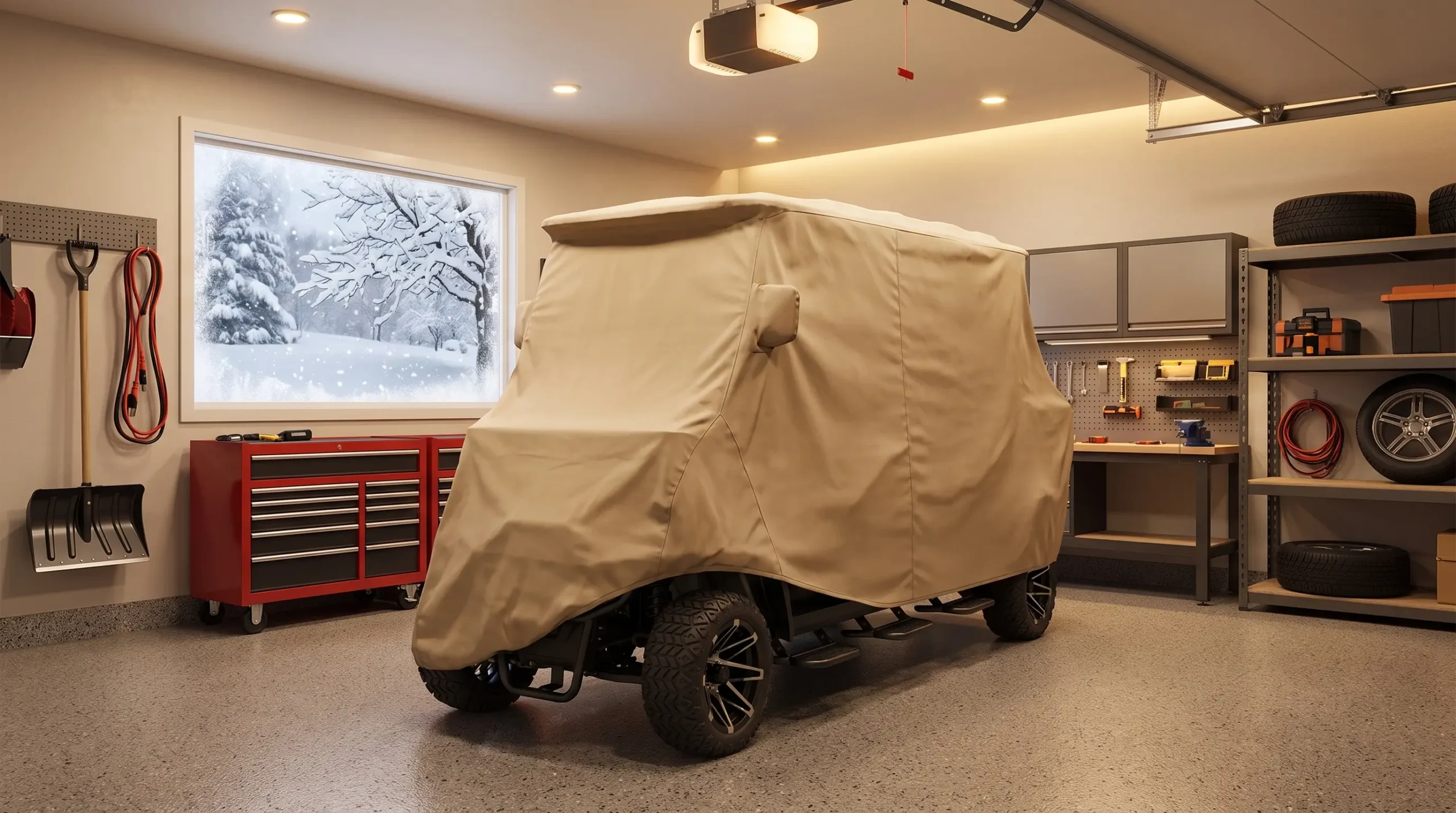
Golf Cart Winter Storage Guide 2026: Keep Your Ride Safe Through the Cold Months
Introduction: Why Winter Storage Matters More Than You Think
ou spent months enjoying your electric golf cart—cruising through the neighborhood, shuttling guests at the resort, or getting work done on the property. Then winter arrives. And for the next three to four months, that cart sits idle.
Come spring, you pull off the cover, turn the key—and nothing happens. Dead batteries. Flat tires. Corroded terminals. And a repair bill that can easily hit $800–$1,500 just to replace frozen batteries.
The good news? Winterizing your golf cart is a straightforward process that takes about 1–2 hours and costs $30–$80 in supplies. That‘s a fraction of what you’d pay for spring repairs.
This guide covers everything you need to know about winterizing your electric golf cart in 2026—whether you‘re storing it for a few months or just preparing for occasional winter use. We’ll cover lead-acid and lithium batteries, storage environments, tire care, and what to do when spring arrives.
Sun-Cart electric golf carts are equipped with maintenance-free LiFePO₄ lithium batteries, making winter storage simpler than ever. Explore our battery technology →
The honest answer: it depends on where you live.
If you‘re in Florida, Arizona, or Southern California, you probably don’t need to worry much. But if you‘re in Ohio, Michigan, or anywhere temperatures drop below freezing? Yes, you absolutely need to winterize.
| Climate Zone | States (Examples) | Winter Lows | Winterization Need |
|---|---|---|---|
| Zones 3-4 (Severe) | Minnesota, Wisconsin, Montana, Maine | -30°F to -10°F | ESSENTIAL |
| Zones 5-6 (Cold) | Ohio, Illinois, Pennsylvania, Colorado | -10°F to 10°F | ESSENTIAL |
| Zone 7 (Moderate) | Virginia, Tennessee, Oklahoma, New Mexico | 10°F to 20°F | RECOMMENDED |
| Zones 8-9 (Mild) | Texas, Georgia, Arizona, coastal California | 20°F to 40°F | OPTIONAL |
| Zones 10-11 (Warm) | South Florida, Hawaii, Southern California | Above 40°F | NOT NEEDED |
Source: USDA Plant Hardiness Zone Map
Even in mild climates, if you‘re storing your cart for 30+ days, basic battery maintenance is still recommended.
When to start: Don’t wait until the first snow. Start 2–4 weeks before your area‘s first freeze. For northern states, that’s typically late September to mid-October. For central states, late October to mid-November.
Do You Need to Winterize Your Golf Cart?
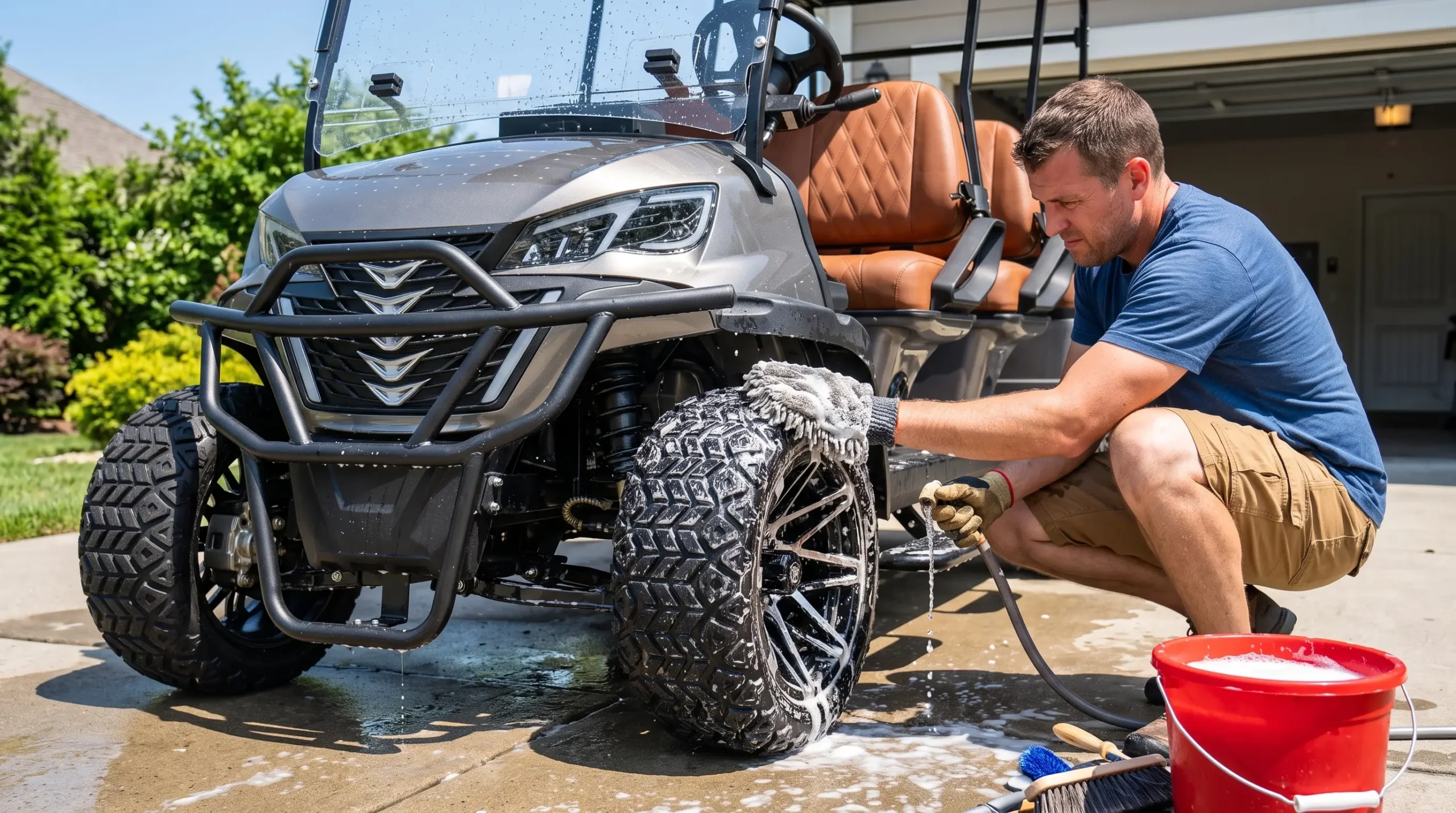
Step 1 — Clean Your Cart Thoroughly
Before you do anything else, give your cart a proper cleaning.
Dirt, salt, and grime left on your cart over winter can trap moisture, leading to rust, corrosion, and cracking. Salt residue—especially if you live in an area where roads are salted—is particularly damaging to metal components and electrical connections.
What to do:
Wash the exterior with mild soap and water. Avoid harsh chemicals or strong detergents that can strip protective coatings or damage paint finishes.
Clean the wheels and undercarriage thoroughly—this is where mud and debris tend to accumulate.
Wipe down seats and fabric surfaces.
Remove everything from storage compartments—snacks, wrappers, anything that could attract mice or insects.
Dry everything completely to prevent moisture-related issues.
💡 Pro tip: A clean cart is less likely to attract pests and makes it easier to spot any issues when spring arrives.
Step 2 — Battery Care: The Most Critical Winter Step
Battery care is the single most important part of winterizing your golf cart. Cold weather can reduce electric battery efficiency by 20–30%, and improper storage can permanently damage your batteries.
The approach depends entirely on your battery type:
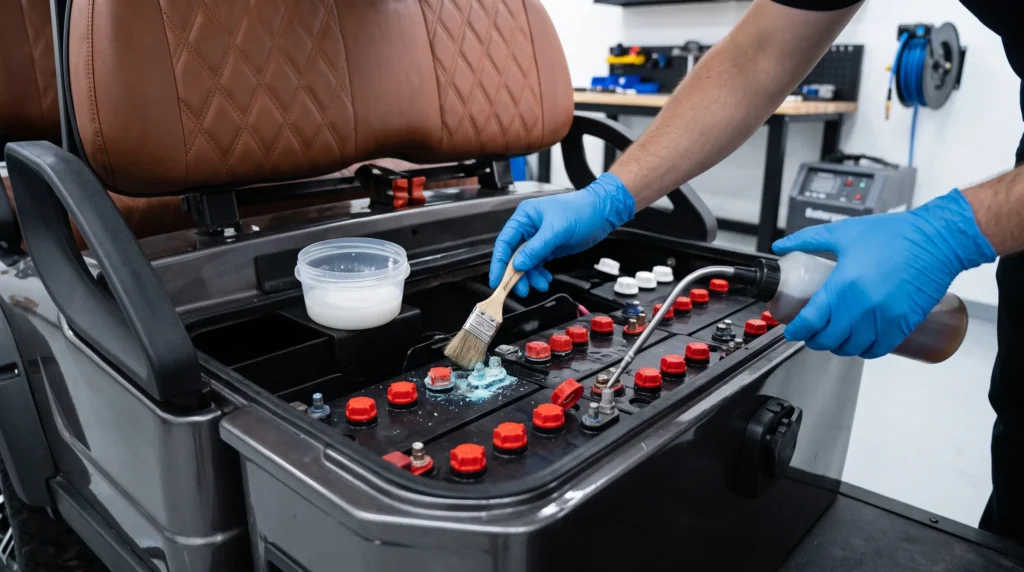
Lead-Acid Batteries
Lead-acid batteries require the most attention during winter.
What to do:
Fully charge the battery before storage. A fully charged battery is less likely to freeze.
Clean the battery terminals using a mixture of baking soda and water to prevent corrosion.
Check and top off water levels with distilled water only—never tap water. Top up each cell to the proper level before storage.
Disconnect the battery cables to prevent parasitic drain.
Protect terminals with anti-corrosion spray or petroleum jelly.
Set the cart to TOW mode if available. The Run/Tow switch (usually under the seat) stops the cart‘s electronics from slowly draining the battery while it sits.
Storage tips for lead-acid:
Store batteries in a cool, dry place above freezing.
Check voltage every 4–6 weeks. Lead-acid should remain around 12.6–12.8V for a fully charged battery.
Recharge as needed if voltage drops.
Never store a lead-acid battery discharged—this leads to sulfation and permanent capacity loss.
For more detailed lead-acid battery storage guidance, refer to this Trojan Battery winter storage guide.
Lithium (LiFePO₄) Batteries
Lithium batteries are much easier to store than lead-acid, but they still need proper care.
What to do:
Charge to the correct level—there‘s some debate here, so check your battery manufacturer‘s recommendation:
Some manufacturers recommend 100% charge before storage to keep the BMS in sync.
Others recommend 50–70% to avoid cell stress during long-term storage.
Important: Do not use a standard lead-acid maintainer on lithium batteries. It can damage the BMS.
Disconnect the battery from the cart if possible.
Set the cart to TOW mode.
Store in a temperature-controlled environment if possible.
Critical warning for lithium: Lithium batteries with appropriate safety features will not charge if the cell temperature is below 32°F (0°C). If your cart is stored outside in freezing temperatures, the battery cells need to warm up before they can charge.
Ideal storage temperature for lithium: 32°F to 80°F (0°C to 27°C).
Lithium vs. Lead-Acid Winter Performance:
| Factor | Lead-Acid | Lithium (LiFePO₄) |
|---|---|---|
| Storage Charge | 100% | 50-70% (or 100% per some manufacturers) |
| Freeze Risk | High when discharged | Low (won‘t freeze like lead-acid) |
| Maintenance | Monthly watering, cleaning | None |
| Cold Weather Charging | May freeze if undercharged | Won’t charge below 32°F |
| Lifespan in Cold | Degrades faster | Holds up better |
For detailed lithium battery storage tips, refer to this Leoch Lithium America winter guide.
Sun-Cart‘s LiFePO₄ batteries have a rated operating range of -4°F to 140°F (-20°C to 60°C).
Step 3 — Choose the Right Storage Location
The spot where your cart spends the winter makes a big difference.
Ideal storage environment:
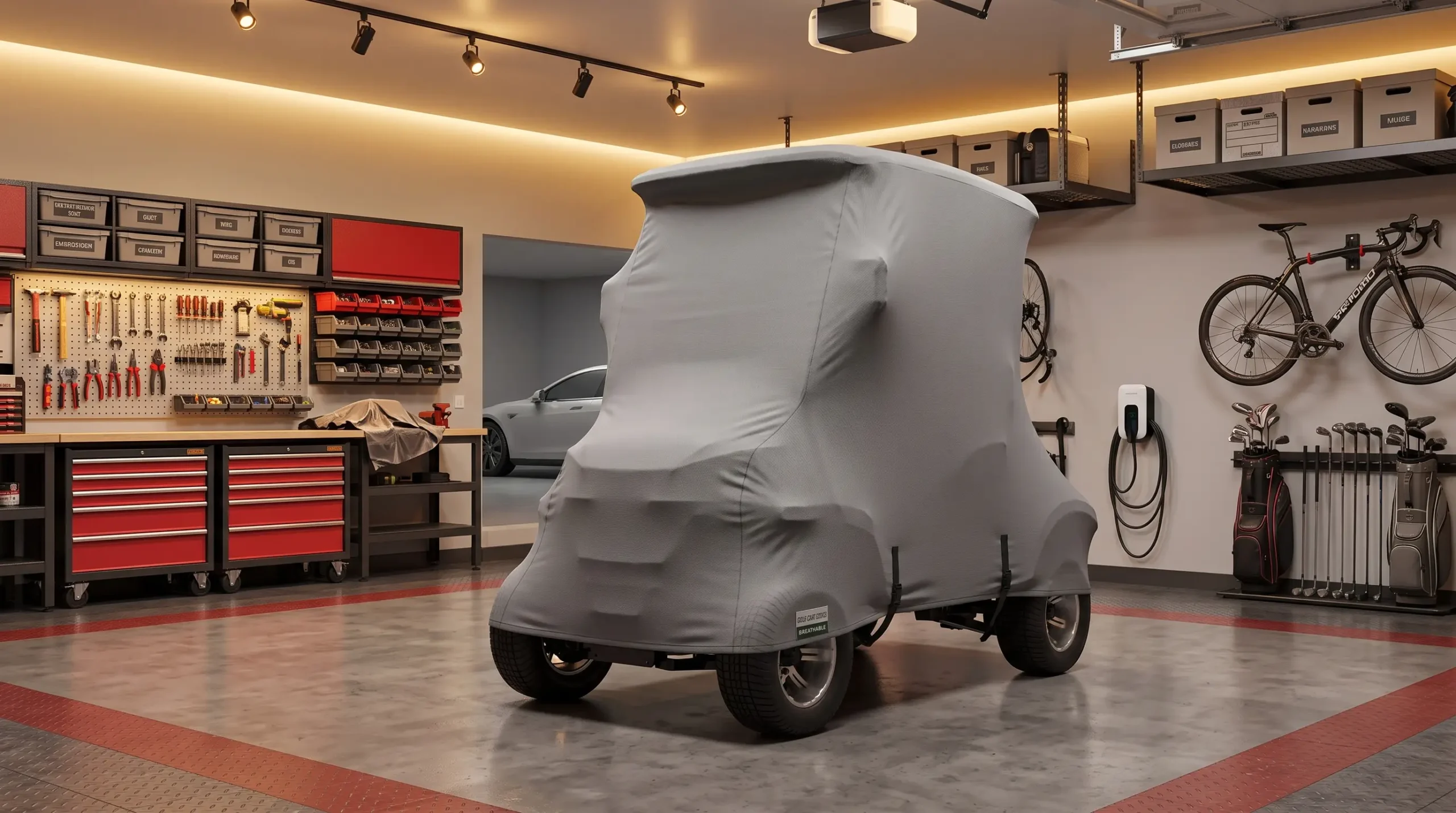
A dry, enclosed space like a garage or storage shed where stable temperatures and protection from precipitation work together to preserve your cart‘s condition.
Even an unheated garage helps stabilize temperatures and protect battery health.
Ideally, the storage area should remain between 50°F and 70°F.
If indoor storage isn‘t an option:
Use a weatherproof, breathable cover made specifically for golf carts. This keeps out snow and water while still letting moisture escape.
Avoid plastic tarps—they trap condensation.
Place the cart on a dry surface away from snow and water accumulation.
Lift and air it out periodically to prevent moisture buildup.
💡 Pro tip: If you must store your cart outdoors, tire covers or bonnets can help prevent tire cracks caused by freezing temperatures.
Step 4 — Tires & Mechanical Protection
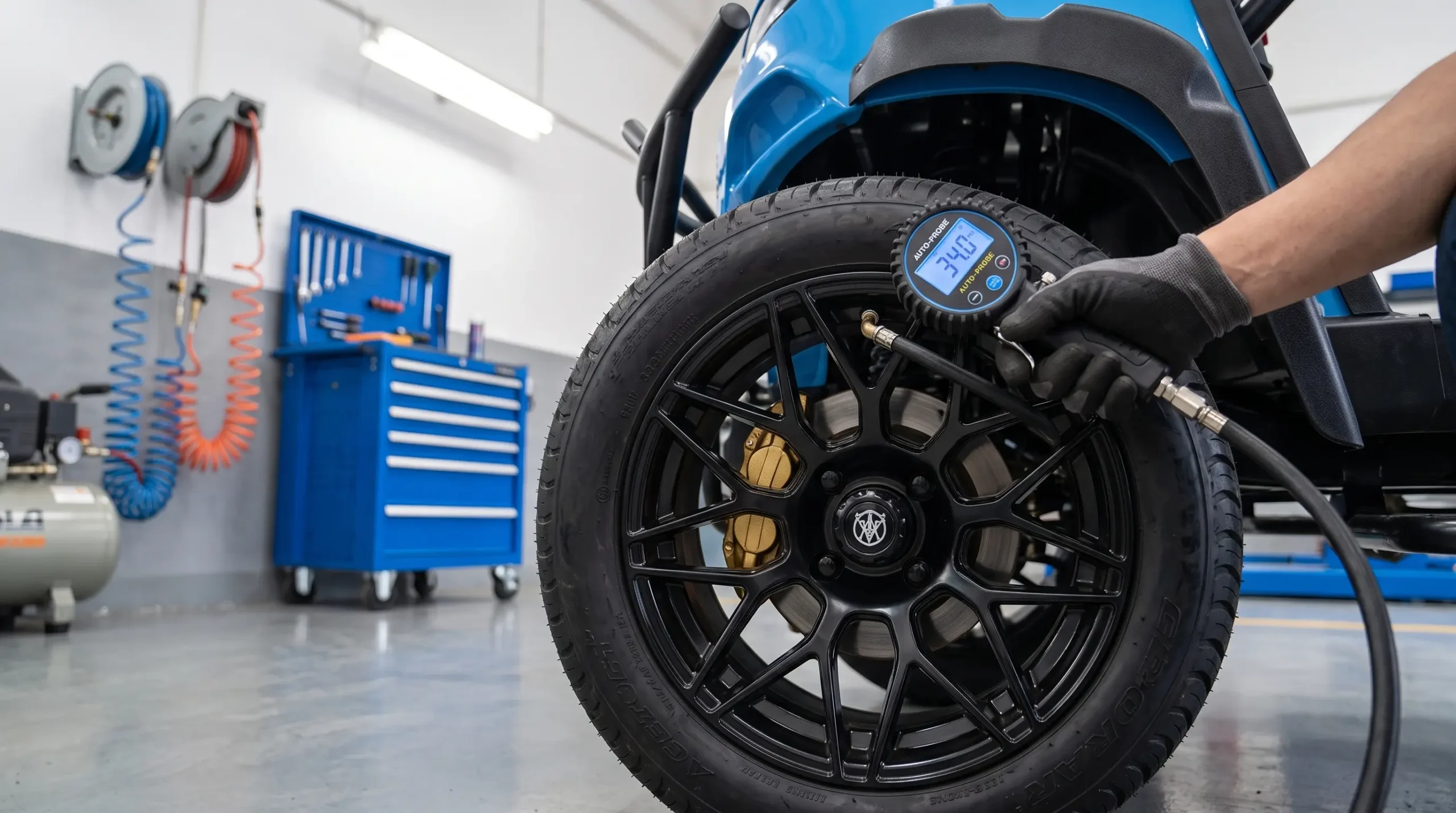
Cold air naturally causes tire pressure to drop over time. And sitting in the same spot for months can leave flat spots that affect handling.
What to do:
Inflate tires to the manufacturer‘s recommended PSI—or about 10% above to prevent flat spots.
Check pressure every few weeks and adjust as needed.
For extended storage, consider using jack stands to completely remove weight from the tires.
If you can‘t use jack stands, give the cart a gentle roll every few weeks to avoid ruining the tires.
Pest prevention:
Store your cart with windows cracked slightly to reduce trapped moisture.
Place mouse traps or repellent around the storage area—mice love nesting in seats.
💡 Pro tip: Seat covers and steering wheel covers protect surfaces from cold, drying air that can lead to cracking or fading.
Step 5 — Final Preparation Checklist
Before you close the garage door for the season, run through this final checklist:
| Task | Done? |
|---|---|
| Cart fully cleaned (body, undercarriage, compartments) | ☐ |
| Battery charged to proper level | ☐ |
| Battery terminals cleaned and protected | ☐ |
| Battery cables disconnected (lead-acid) or BMS in storage mode (lithium) | ☐ |
| TOW mode engaged (if available) | ☐ |
| Tires inflated to recommended PSI | ☐ |
| Jack stands in place (optional) | ☐ |
| Storage location dry and protected | ☐ |
| Breathable cover in place | ☐ |
| Pest control measures in place | ☐ |
Winter Driving: If You Plan to Use Your Cart Occasionally
If you plan to use your golf cart during winter, not just store it, follow these guidelines:
Charge after each use if driving regularly during winter.
Keep the battery charged—never let it sit partially discharged in cold weather.
Check tire pressure before each use—cold air causes pressure to drop.
Drive slowly for the first few minutes to let the battery and mechanical components warm up.
Clean the cart after each use to remove salt, sand, and moisture that can cause corrosion.
About 6–8 weeks before your first spring ride, start preparing your cart for the new season:
Reconnect the battery (if disconnected).
Fully charge the battery before first use.
Check tire pressure and inflate to recommended PSI.
Test brakes, lights, and steering during a slow, initial test drive.
Check all electrical connections for corrosion or damage.
Inspect the battery voltage—lead-acid should read 12.6–12.8V; lithium should be within normal operating range.
Spring Awakening — What to Do When Winter Ends
Conclusion — A Little Prep Now Saves Big Headaches Later
Winterizing your electric golf cart isn‘t complicated. It takes about 1-2 hours and costs $30–$80 in supplies. But it can save you $800–$1,500 in battery replacement costs and prevent weeks of spring frustration.
A few simple steps—cleaning the cart, charging the battery correctly, choosing the right storage location, and protecting the tires—can mean the difference between a cart that starts right up in spring and one that needs expensive repairs.
The key takeaways for 2026:
Lead-acid batteries need the most care—full charge, clean terminals, check water levels, store above freezing.
Lithium batteries are easier to store—charge to manufacturer recommendations, put in TOW mode, and store in a cool, dry place.
Storage location matters—garage or shed is ideal; outdoor storage requires a breathable cover and extra precautions.
Don‘t skip the prep—a clean, properly stored cart is a reliable cart.
Your golf cart is an investment. Protect it this winter, and it will be ready to roll when warmer weather returns.
Ready to upgrade to a maintenance-free lithium battery system? Contact Sun-Cart for a customized quote.
📧 Email: dennis@sun-cart.com
📞 WhatsApp: +86 19357388757
🌐 Website: www.sungolfcarts.com
We respond to all inquiries within 24 hours.
Newsletter Updates
Enter your email address below and subscribe to our newsletter