Email:dennis@sun-cart.com Whatsapp:+86 13696971344
First Electric Golf Cart? 7 Mistakes First-Time Buyers Make in 2026 (And How to Avoid Them)
The $8,000 Question: What Every First-Time Buyer Gets Wrong
You‘ve finally decided. After months of research, you’re ready to buy your first electric golf cart. Maybe it‘s for weekend errands around the neighborhood. Maybe you’re managing a small resort or a golf course. Or maybe you just want a quiet, zero-emission way to get around your community.
But here‘s the problem: most first-time buyers make the same mistakes—and they don’t realize it until months later, when they‘re staring at a dead battery, a rusted frame, or a cart that can’t handle the terrain they bought it for.
In 2026, the electric golf cart market is larger and more confusing than ever. Electric carts now dominate 95% of new sales, with the global market projected to reach $3.3 billion by 2035**. Lithium batteries are replacing lead-acid at record speed. LSV regulations are expanding across the US. And prices now span from **$5,500 to over $20,000 for premium models.
With so many options, it‘s easy to make the wrong choice. This guide covers the seven most common mistakes first-time electric golf cart buyers make—and exactly how to avoid them.
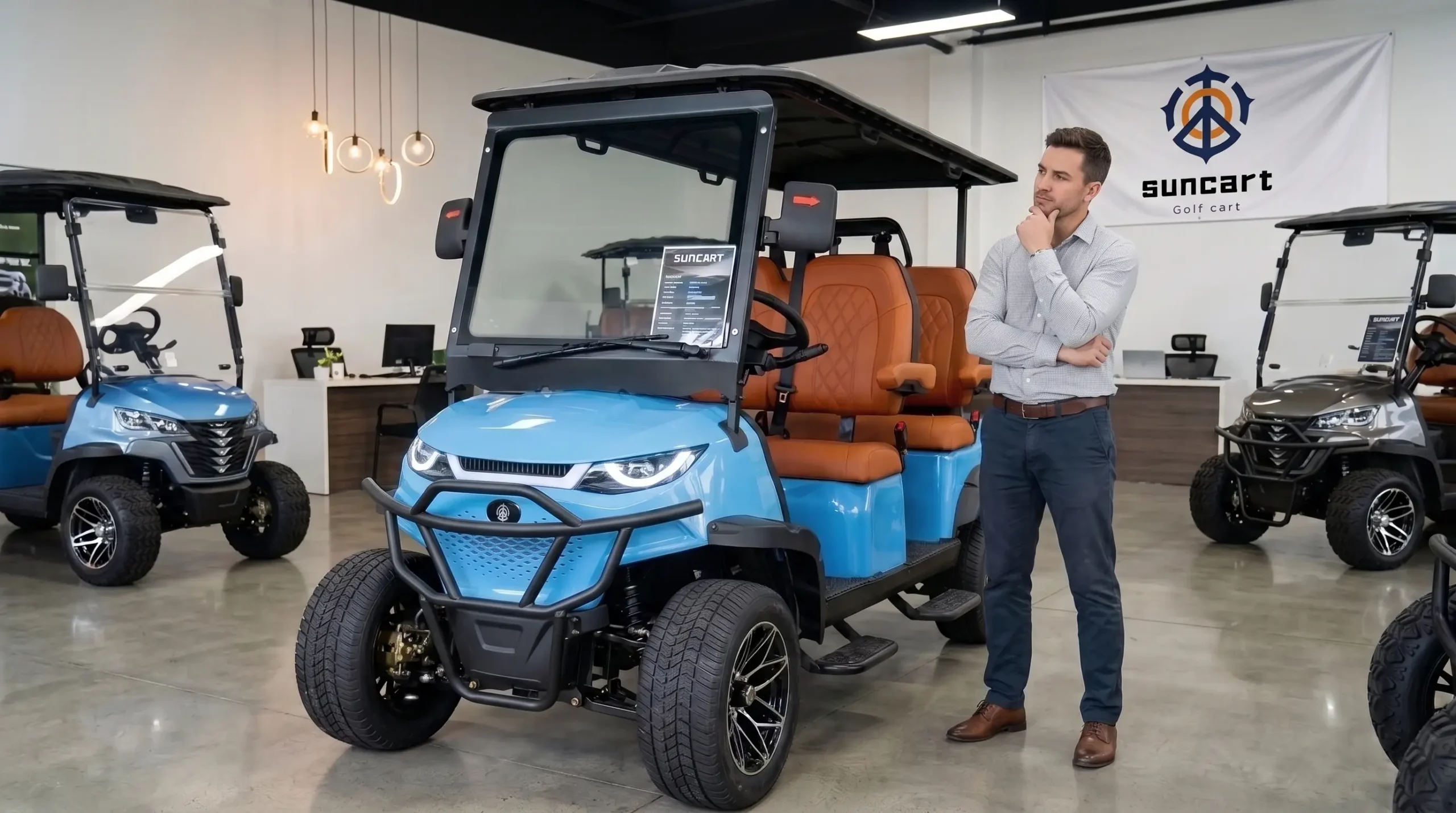
Sun-Cart manufactures 2 to 8-seat electric golf carts with lithium battery technology and LSV certification. Explore our full lineup →
What to Do Instead:
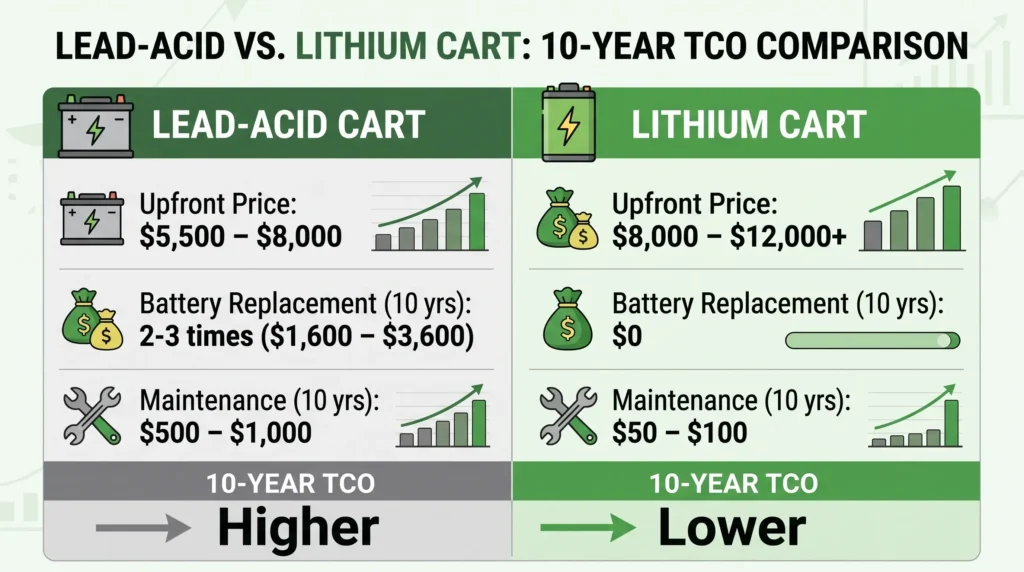
Calculate 5-year TCO, not just purchase price. Factor in battery replacement, energy costs, and maintenance.
Invest in lithium technology now. The initial price is higher, but the maintenance-free nature and 10-year lifespan make it the smarter choice.
Ask dealers about expected battery lifespan, replacement costs, and warranty coverage.
| Cost Factor | Lead-Acid Cart | Lithium Cart |
|---|---|---|
| Upfront Price | $5,500 – $8,000 | $8,000 – $12,000+ |
| Battery Replacement (10 yrs) | 2-3 times ($1,600 – $3,600) | $0 |
| Maintenance (10 yrs) | $500 – $1,000 | $50 – $100 |
| 10-Year TCO | Higher | Lower |
Sun-Cart equips all models with automotive-grade LiFePO₄ lithium batteries backed by a 5-year warranty. Learn more →
Mistake #1: Focusing Only on Price, Not Total Cost of Ownership
The sticker price is the first thing you see. It‘s also the most misleading number on the page.
A cart that costs $6,000** might seem like a bargain compared to one that costs **$9,000. But if that cheaper cart has lead-acid batteries, you’ll be replacing them in 3-4 years at a cost of $800–$1,200 per set. Meanwhile, the more expensive cart with lithium batteries will last 8-12 years with zero maintenance——and may never need a battery replacement during the vehicle’s lifetime.
The reality in 2026: Your buying strategy must pivot from “lowest price” to “lowest Total Cost of Ownership (TCO)”. Lead-acid replacement costs have become prohibitively expensive due to rising labor and lead recycling costs.
Mistake #2: Ignoring Battery Type and Power System
This is the single most expensive mistake you can make.
Many first-time buyers assume all batteries are the same. They‘re not. The difference between lead-acid and lithium isn’t just price—it‘s performance, lifespan, maintenance, and daily usability.
Lead-acid batteries:
Last 300-500 cycles (2-4 years)
Require monthly watering and terminal cleaning
Lose power as they drain (you’ll slow down on hills)
Cost less upfront, but need replacement every 3-4 years
Lithium (LiFePO₄) batteries:
Last 2,000-5,000 cycles (8-12 years)
Require zero maintenance——no watering, no cleaning
Deliver consistent power until empty
Cost more upfront, but last the life of the cart
What to Do Instead:
Always ask: “What type of battery is installed?”
Ask about battery capacity (Ah), expected lifespan, warranty, and available monitoring features
Verify core configuration before comparing prices. A cheap cart with poor batteries isn‘t a bargain.
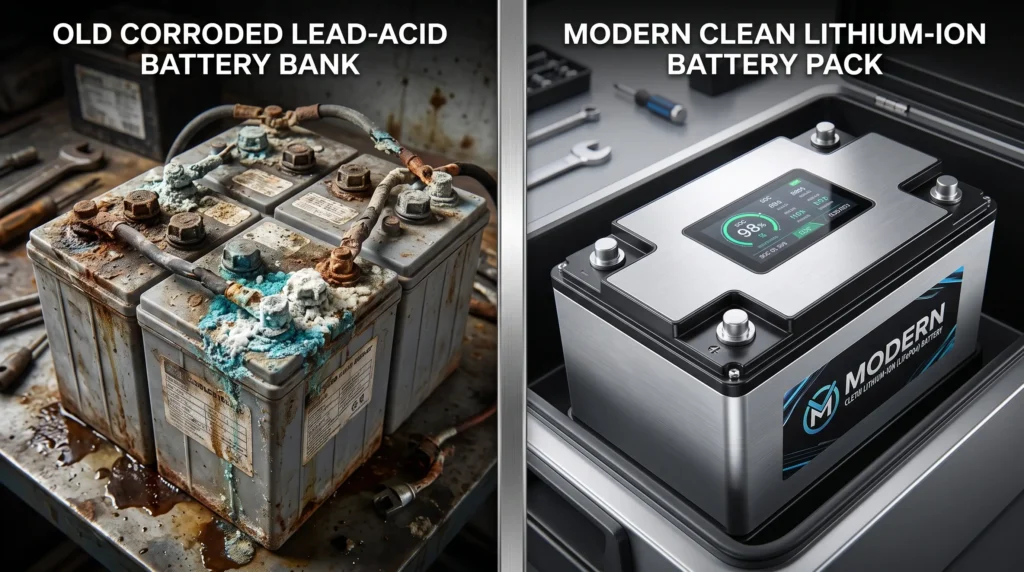
Industry data shows lithium-ion battery adoption is a major trend driving the market. Don’t get left behind.
What to Do Instead:
Map your daily route. Where will you drive? Hills or flat? Paved roads or gravel?
Consider your load. Will you carry passengers, cargo, or both?
Ask the dealer about the cart‘s gradeability and real-world performance on terrain like yours.
| Terrain Type | Recommended Voltage | Range | Best For |
|---|---|---|---|
| Flat (golf courses, communities) | 48V | 40-50 miles | Light daily use |
| Hilly (resorts, commercial) | 72V | 50-65 miles | Heavy loads, steep inclines |
Sun-Cart offers both 48V and 72V configurations to match your terrain. View options →
Mistake #3: Buying the Wrong Voltage for Your Terrain
Not all electric golf carts are created equal—and not all voltage systems are right for your terrain.
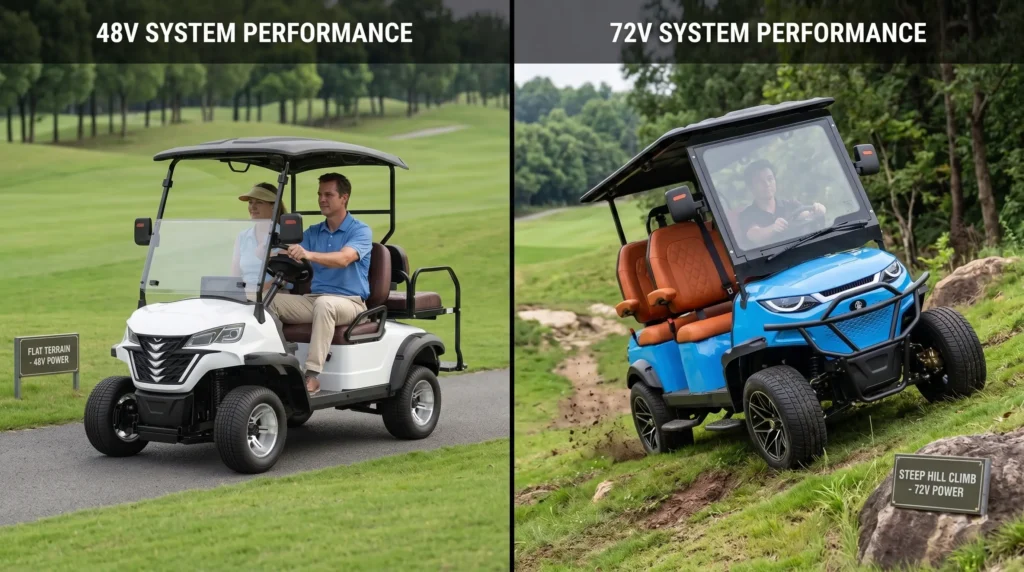
48V systems are ideal for flat terrain, golf courses, and light daily use. They offer 40-50 miles of range and 15-20 mph top speed. If you live in a flat community and only drive short distances, 48V may be enough.
72V systems are designed for hilly terrain, resorts, commercial fleets, and heavy loads. They offer 50-65 miles of range, 20-25 mph top speed, and up to 30% gradeability. If you have hills, steep driveways, or carry heavy loads, 72V is the smarter choice.
Mistake #4: Overlooking LSV Certification and Street-Legal Requirements
This is the mistake that gets you pulled over.
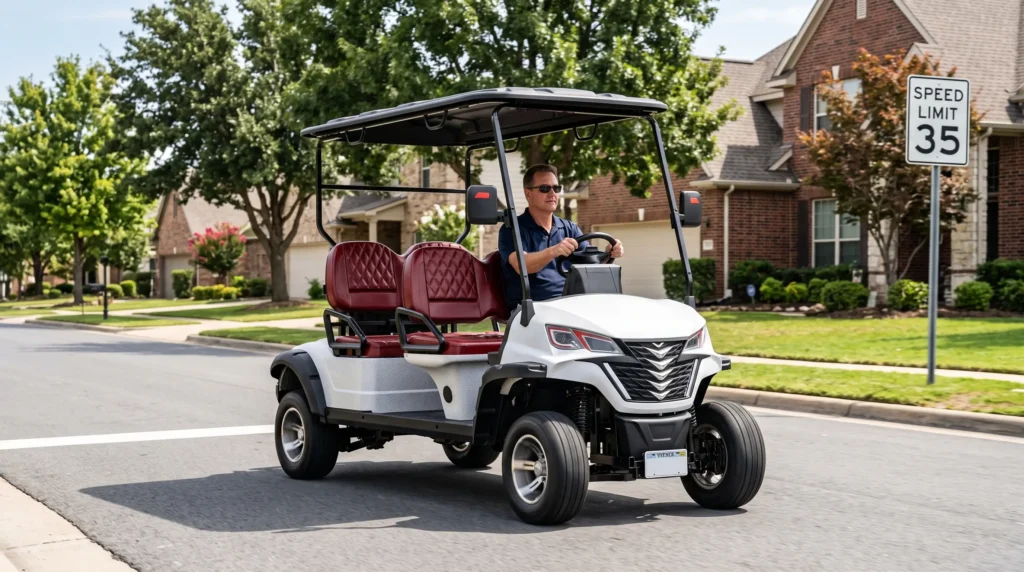
A standard golf cart is designed for private property only——golf courses, your backyard, or private communities. If you plan to drive on public roads, you need an LSV (Low-Speed Vehicle) certification.
What makes an LSV street-legal?
VIN (Vehicle Identification Number)
Seat belts for all passengers
LED headlights, tail lights, and turn signals
Rearview mirrors
Windshield
DOT-approved tires
Top speed between 20-25 mph
In most states, LSVs can operate on roads with speed limits of 35 mph or less. States like Florida and California have especially LSV-friendly laws.
What to Do Instead:
Check your state and local laws before buying.
Ask the dealer: “Is this cart LSV certified?”
If you plan to drive on public roads, don‘t buy a standard golf cart. Buy an LSV.
Sun-Cart offers LSV-certified models ready for DMV registration. View LSV options →
You’ve bought the cart. It‘s in your driveway. Everything is perfect—until something breaks.
And then you realize: the dealer you bought from doesn’t stock parts. The warranty is useless because you can‘t get anyone on the phone. And the cart is sitting in your garage for weeks while you search for a replacement controller or battery.
This is the hidden cost of buying from the wrong supplier.
What to Do Instead:
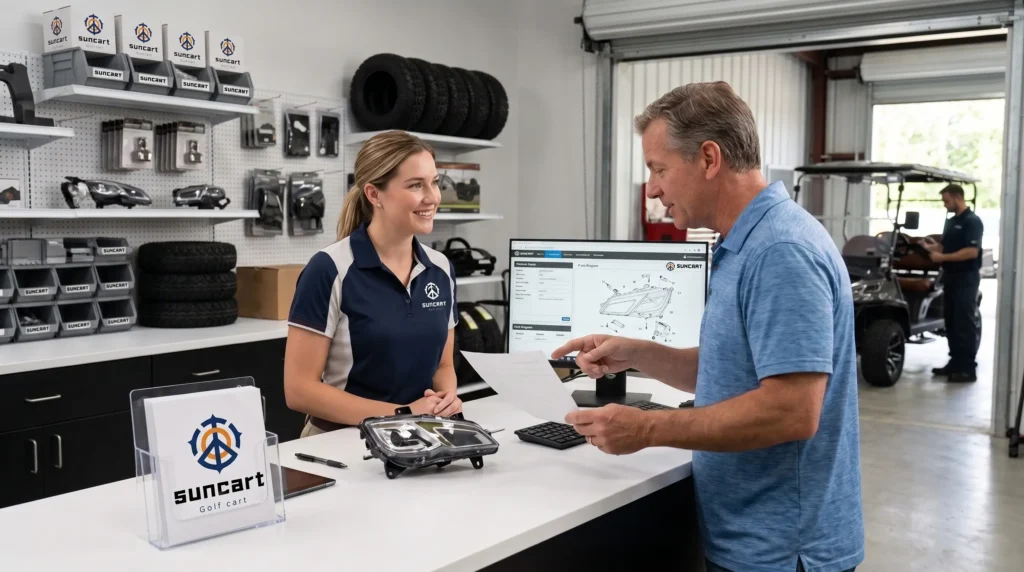
Ask about parts availability before you buy. Are common parts (batteries, chargers, controllers, tires) stocked locally?
Check warranty coverage. What’s covered? For how long? Who handles claims?
Verify after-sales support. Is there a local service network? Can you reach someone by phone or email?
Avoid “three-no” products——no brand, no support, no parts.
Sun-Cart maintains US warehouse stock for fast delivery and US-based support for warranty claims.
Mistake #5: Forgetting About After-Sales Support and Parts Availability
Mistake #6: Not Understanding the Gas vs. Electric Decision
The gas vs. electric debate still confuses first-time buyers in 2026.
Here‘s the truth: electric golf carts are on track to capture 95.3% of market share. They‘re quieter, cleaner, and cheaper to operate. Gas carts still have a place in remote areas without charging infrastructure, but for most buyers—especially those in communities, resorts, and neighborhoods—electric is the smarter choice.
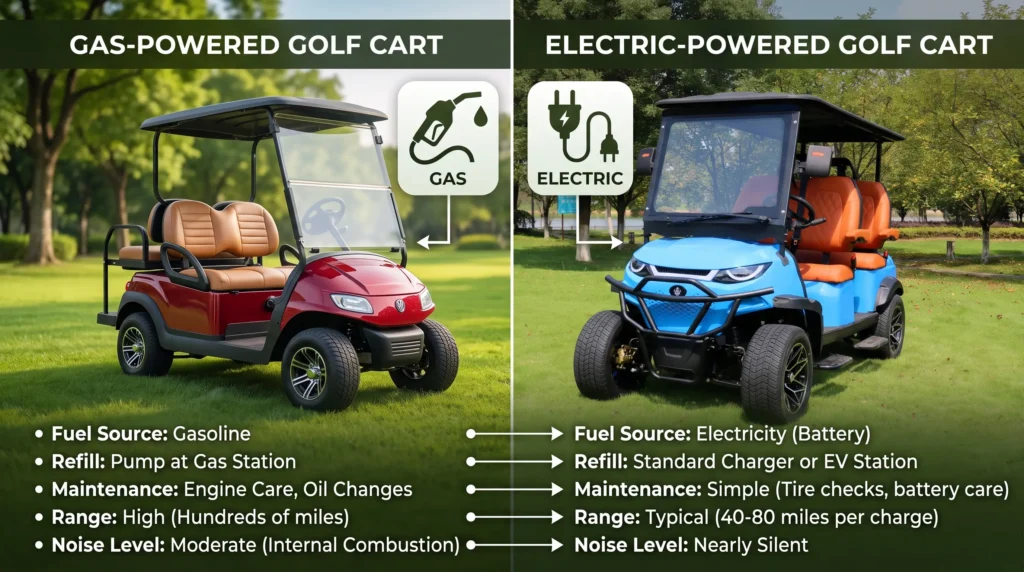
The Electric Advantage:
Near-silent operation——no engine noise for your neighbors
Zero emissions——better for the environment
Lower operating costs——pennies per mile vs. dollars for gas
Minimal maintenance——no oil changes, no spark plugs, no fuel filters
What to Do Instead:
If you have reliable charging, choose electric.
If you need off-road capability in remote areas, gas may still be worth considering.
For everyday community use, electric is the clear winner.
Industry data shows the electric segment already accounts for 62% of market share and is expected to grow at 7.5% CAGR through 2035.
You might think a 2-seater is enough. Then your kids want to ride. Or your neighbors want to join you for a community event. Or your resort guests expect group transport.
Suddenly, your 2-seater feels very small.
In 2026, the 2-seater segment still accounts for 57.4% of the market, but multi-seater demand is rising fast. More buyers are choosing 4, 6, or even 8-seat configurations for family use, group transport, and commercial fleets.
What to Do Instead:
Think about future needs. Will your family grow? Will you use the cart for group events?
Consider your daily use. Are you alone? With passengers? Carrying cargo?
If you‘re buying for a resort, community, or commercial fleet, 4-8 seat configurations are often more practical.
Sun-Cart offers 2, 4, 6, and 8-seat configurations to match your needs. View options →
Mistake #7: Choosing the Wrong Seat Config
The 2026 Golf Cart Market: Key Numbers Every Buyer Should Know
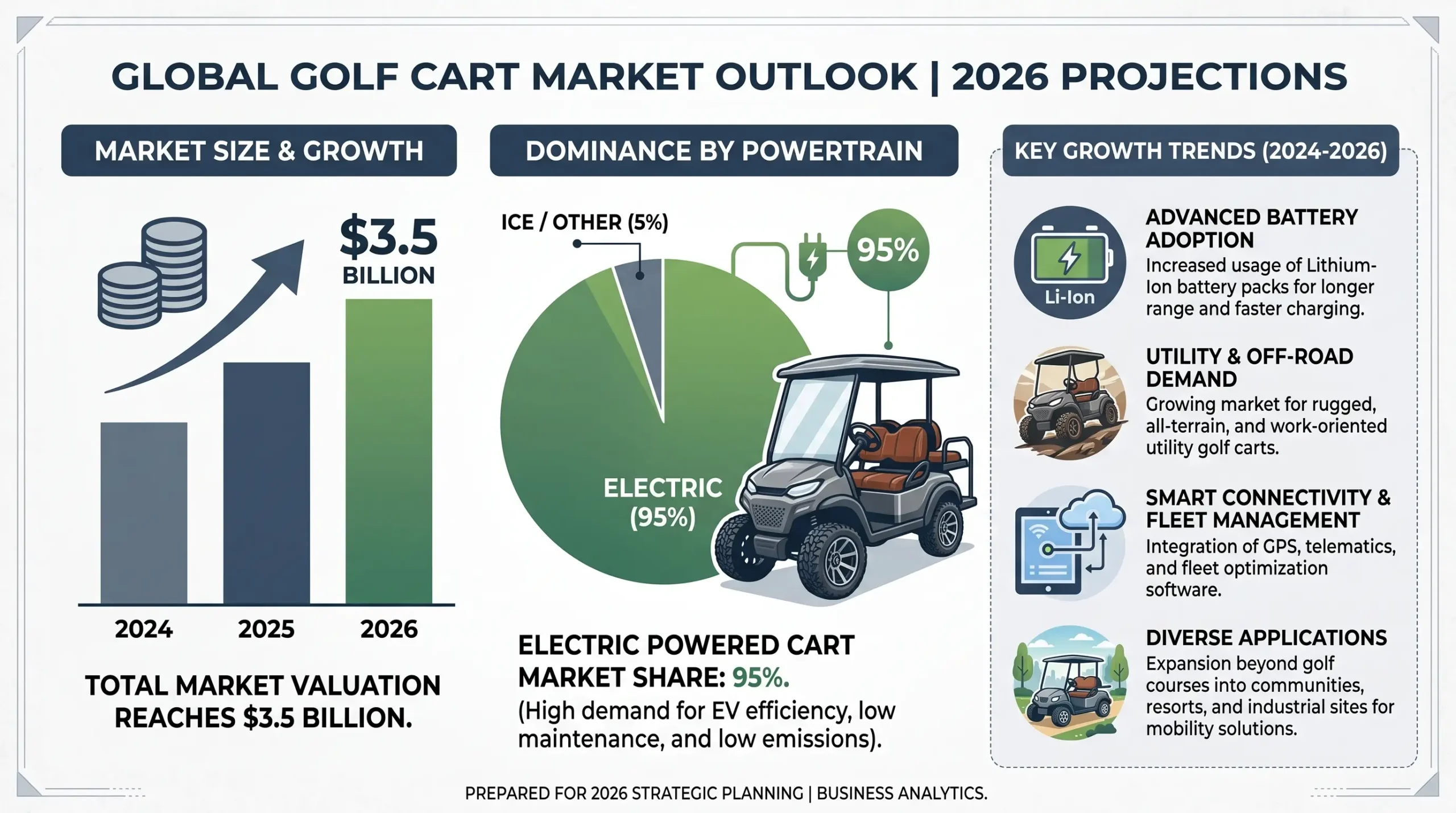
Before you make your final decision, here are the key market numbers that matter:
| Metric | Value |
|---|---|
| Electric cart market share (2026) | 95.0% of new sales |
| Global market value (2026) | $3.50 billion |
| Projected market value (2035) | $3.3 billion (electric segment) |
| Lead-acid battery share (2026) | 58.0% (still common, but declining) |
| Lithium battery adoption | Major growth trend |
| LSV market growth | Street-legal segment is expanding rapidly |
What this means for you: Electric is the clear future. Lithium is replacing lead-acid. LSV regulations are opening new possibilities. And the market is growing—which means more options, but also more confusion.
Sun-Cart provides factory-direct pricing, 5-year battery warranty, and US warehouse stock. Request a quote →
Newsletter Updates
Enter your email address below and subscribe to our newsletter