Email:dennis@sun-cart.com Whatsapp: +86 13943346910
The Smart Revolution: How Electric Golf Carts Are Reshaping Communities and Commercial Fleets in 2026
For decades, golf carts had one job: move golfers and their clubs from the 1st tee to the 18th green. That era is definitively over.
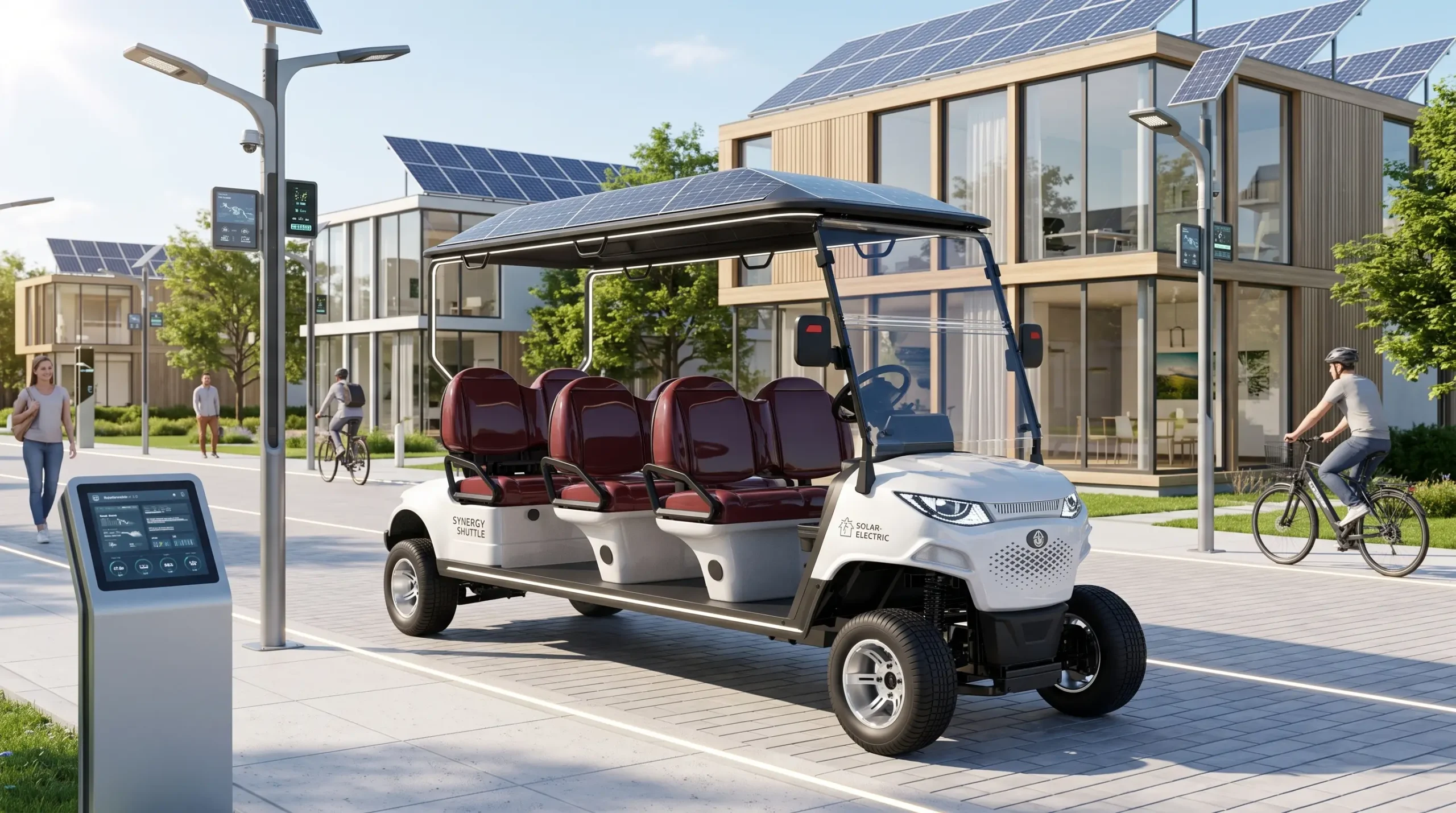
In 2026, electric golf carts have evolved into something far more significant. They are legitimate neighborhood electric vehicles (NEVs) , the backbone of resort logistics, a cost-effective “second car” for families in gated communities, and an essential tool for commercial fleet operations across campuses, industrial parks, and airports.
The numbers tell the story. The global Golf Cart & Neighborhood Electric Vehicle market was valued at USD 6.01 billion in 2025 and is projected to reach USD 10.12 billion by 2032, growing at a robust CAGR of 7.73%. The electric golf cart market specifically is expected to grow from $2.06 billion in 2025 to $3.39 billion by 2030 at a CAGR of 10.5%.
What’s driving this transformation? Four powerful trends: the lithium-ion battery revolution, the explosion of street-legal LSV adoption, the expansion beyond golf courses into resorts, communities, and commercial facilities, and the integration of smart technology. This article explores each of these trends, providing insights for B2B buyers and fleet managers navigating the 2026 electric golf cart landscape.
Learn more about Sun-Cart’s full lineup of electric golf carts for commercial applications → Electric Golf Carts
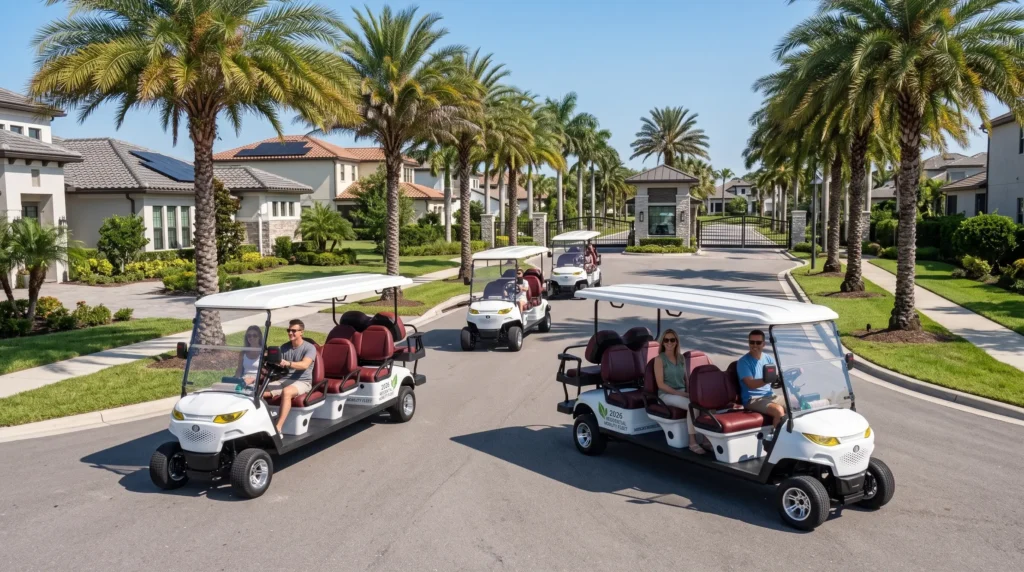
Beyond the Fairway – A Mobility Revolution

The Lithium Battery Revolution – No Longer an Upgrade, Now the Standard
If there’s one trend that defines the 2026 electric golf cart market, it’s this: lithium batteries have become the new baseline expectation, not a premium upgrade.
At the 2026 PGA Merchandise Show and industry events like GCSAA 2026, lithium battery systems were positioned as the standard offering. Exhibitors emphasized extended range, reduced charging time, lower maintenance needs, and undeniable total cost-of-ownership advantages. The message was clear: lead-acid is fading, and lithium is taking over.
Why Lithium Is Winning
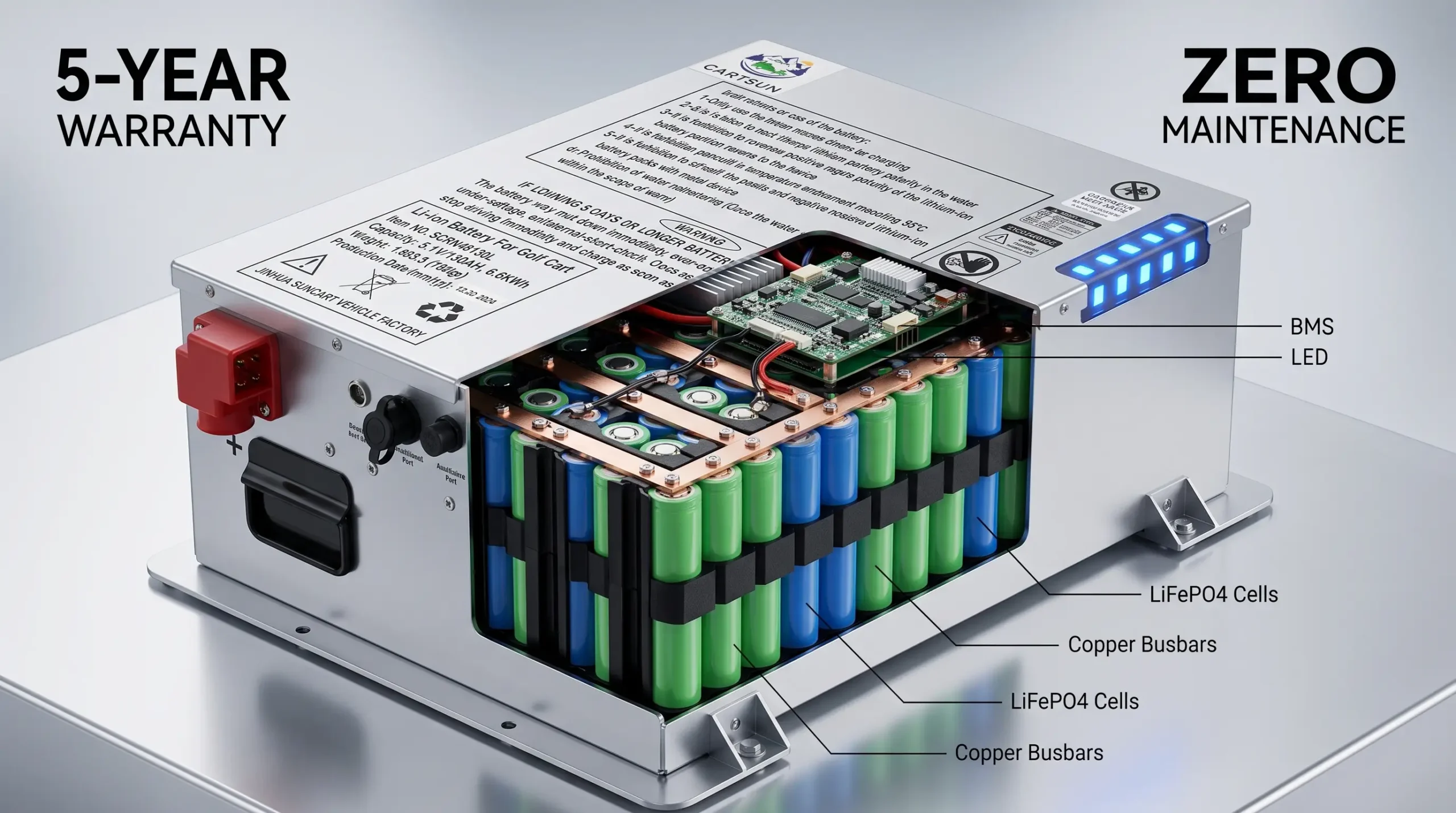
Lead-acid batteries, with their 300-500 cycle lifespan, frequent watering requirements, and terminal corrosion, simply can’t compete with modern LiFePO₄ technology. The shift from lead-acid to lithium-ion is one of the most significant trends, driven by lower maintenance, longer lifespan, and better performance.
| Metric | Lead-Acid Battery | Lithium (LiFePO₄) |
|---|---|---|
| Cycle Life | 300-500 cycles | 2,000-5,000 cycles |
| Lifespan | 2-4 years | 8-12 years |
| Charge Time | 8-10 hours | 2-4 hours (to 80%) |
| Weight (48V) | ~280 lbs | ~90 lbs (70% lighter) |
| Maintenance | Monthly watering, cleaning | Zero maintenance |
| Energy Efficiency | ~75% | 95%+ |
| Consistent Power | Slows as it drains | Full speed until empty |
The Commercial Impact
For fleet operators, the economics are compelling. Replacing multiple lead-acid batteries with a single high-capacity lithium battery is emerging as the mainstream upgrade path. Operators are looking for longer service life, reduced maintenance costs, steadier output, and more transparent battery management.
The global lithium-ion battery for golf cart market is predicted to grow from US522millionin2025toUS522millionin2025toUS 761 million in 2032, at a CAGR of 5.3%. This rapid adoption is driven by the need for low-maintenance designs and the rising demand for smart and connected golf carts that rely on stable, data-rich power systems.
Sun-Cart equips all models with automotive-grade LiFePO₄ lithium batteries backed by a 5-year warranty. Explore our battery technology →

Beyond the Golf Course – Expanding Applications Drive Market Growth
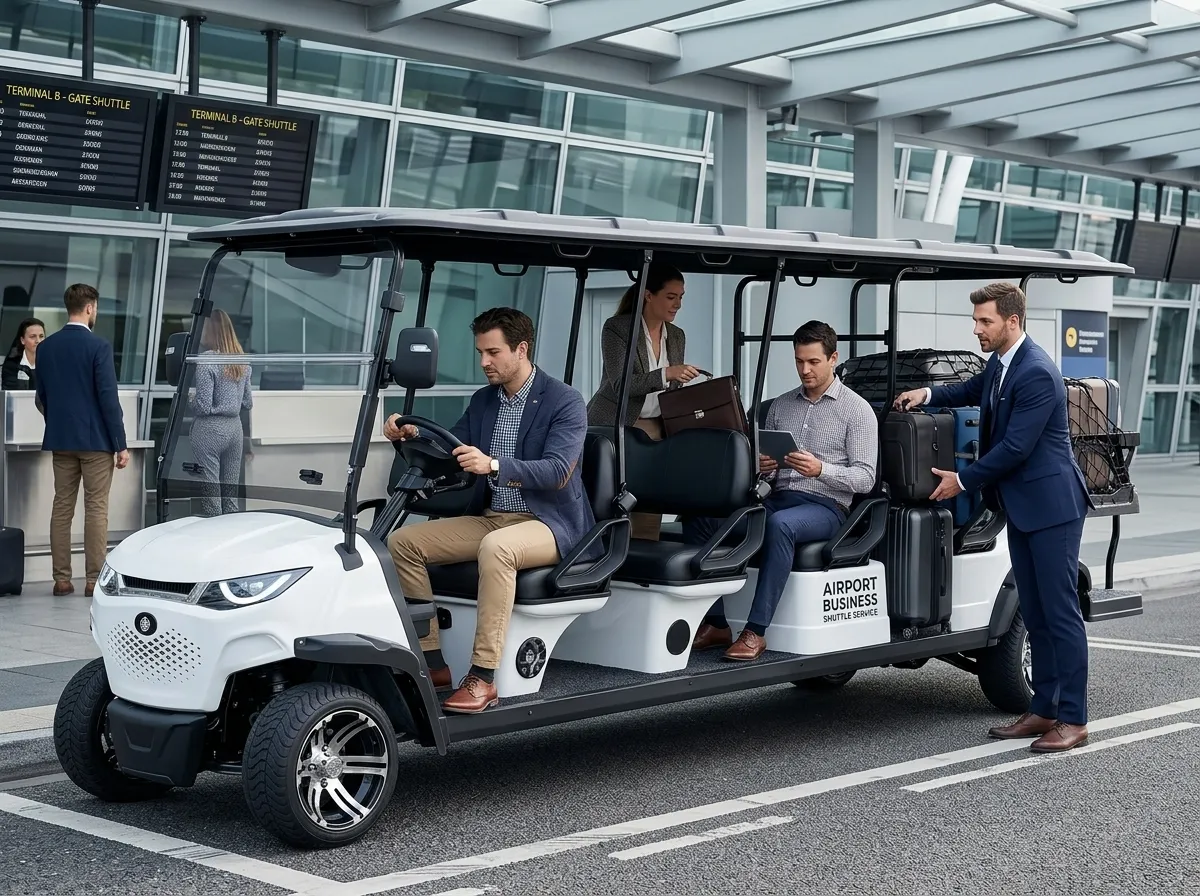
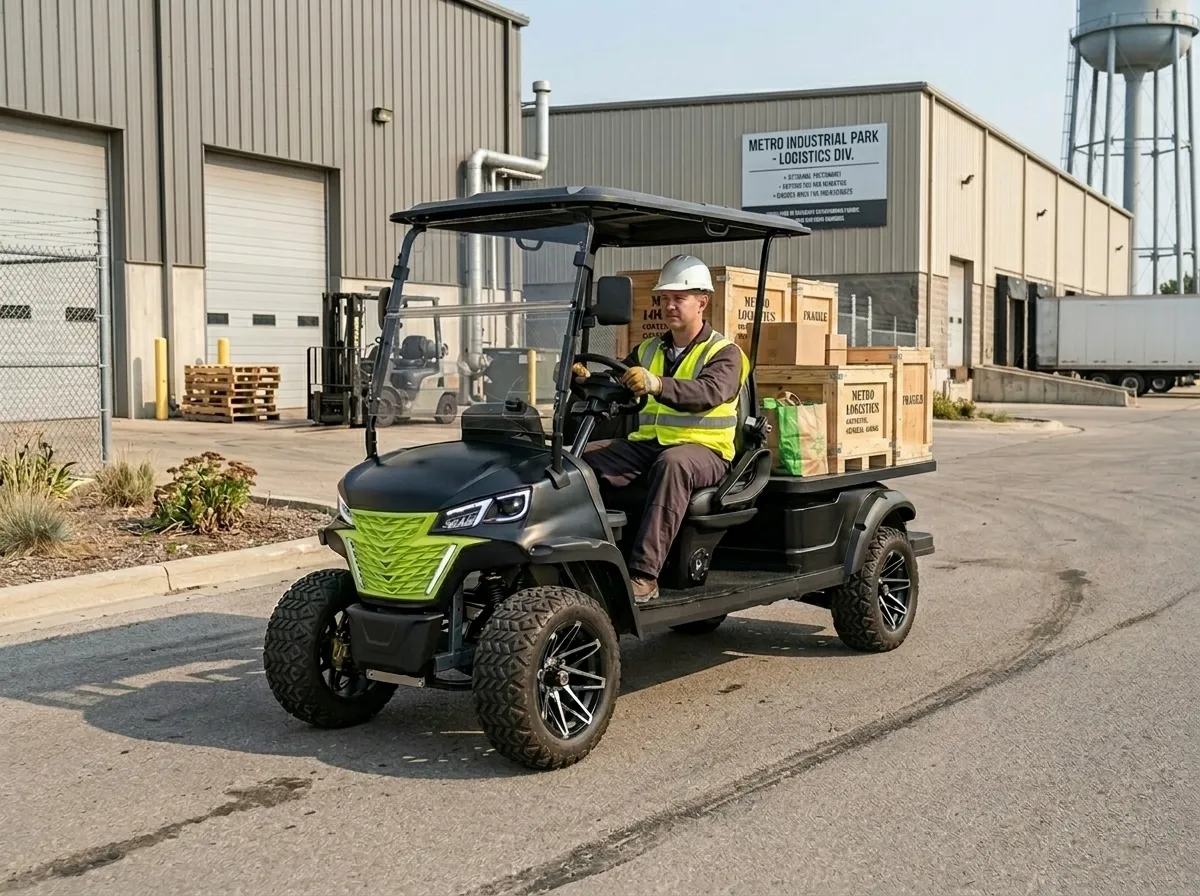
Electric golf carts are no longer confined to fairways. The market is being driven by expanding applications across multiple sectors.
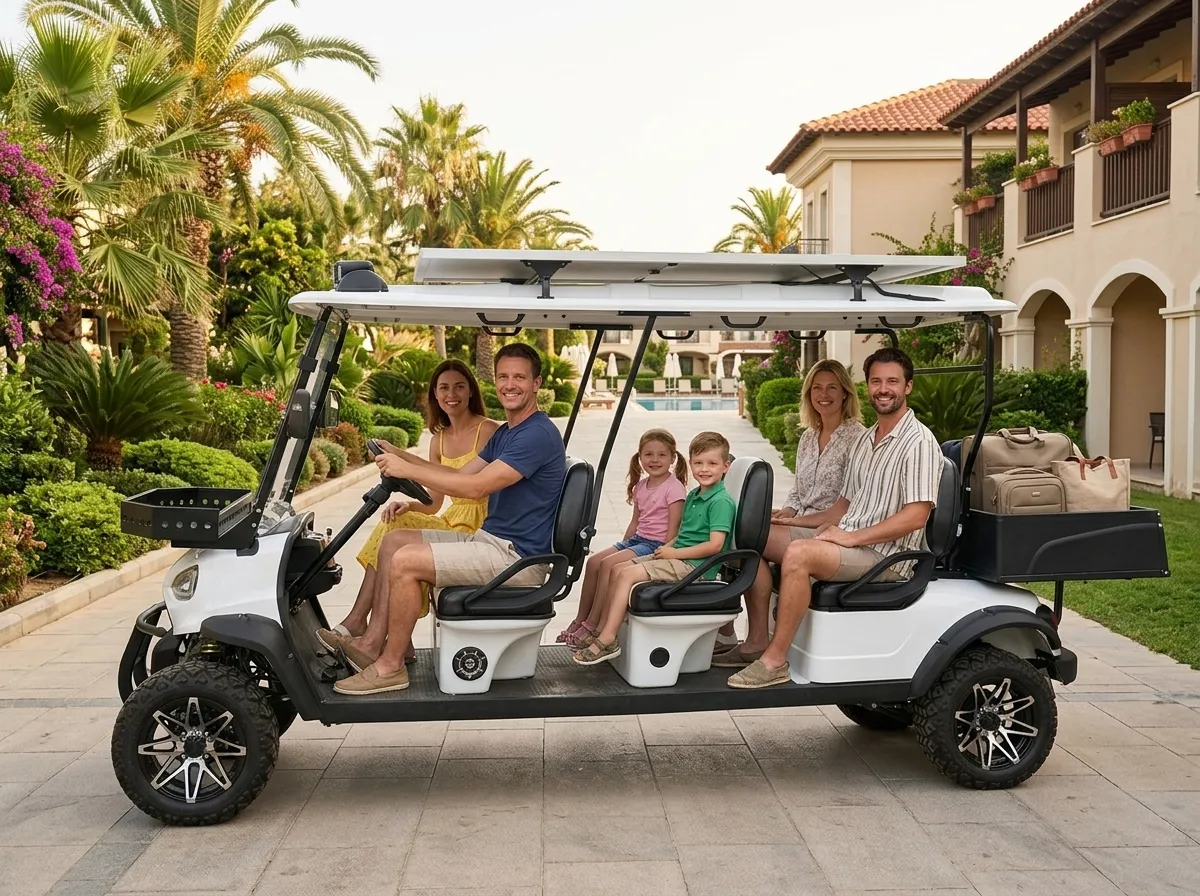
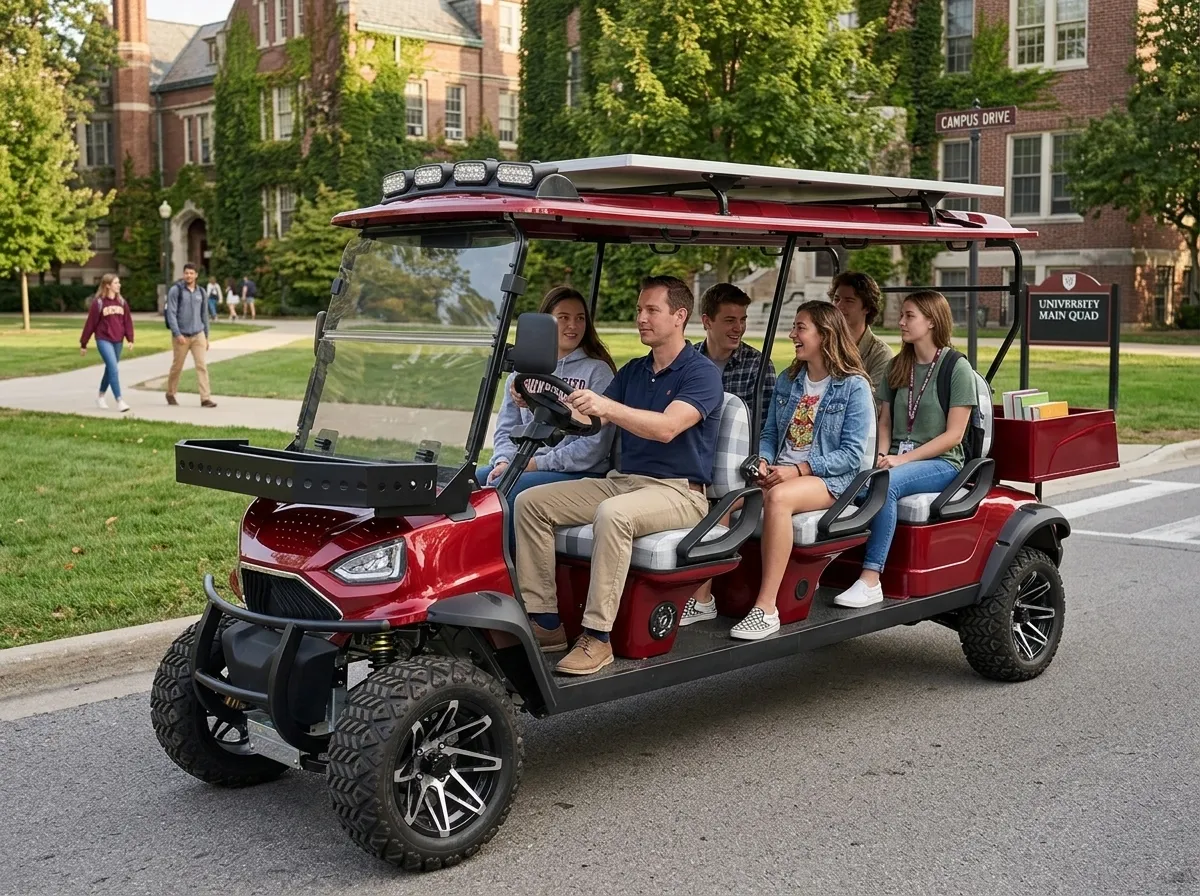
Sun-Cart offers 2, 4, 6, and 8-seat configurations to match your specific application. View our full product lineup →
Smart, Connected, and Customizable – The Tech-Enabled Cart
Today’s golf cart is a technology platform. The 2026 market highlights technology integration as a defining theme, with fleet management software, GPS systems, diagnostic tools, and speed-control technologies showcased as solutions enabling operators greater oversight and efficiency.
Smart Features Now Expected
Integrated GPS with course mapping and geofenced speed control
Bluetooth speakers and USB charging ports
App connectivity for remote battery monitoring
Telematics for predictive maintenance and fleet optimization
For fleet operators, these systems enable real-time monitoring, preventative maintenance planning, and improved safety protocols – increasingly important for facilities managing large or multi-use fleets.
Customization Drives Growth
Customization is also driving category growth. Lift kits, premium wheels, lighting systems, upgraded seating, enclosures, storage solutions, and sound systems are no longer novelties – they are core components of vehicle programs. Retailers and operators are discussing bundled accessory packages designed to increase per-unit value while tailoring carts to specific environments.
The integration of smart monitoring systems and increasing customization and comfort features are major trends shaping the market.
Sun-Cart offers full customization – any color, any logo, custom seat upholstery, and accessory packages. Learn more about our customization options →
Street-Legal LSVs – The Explosion of Neighborhood Mobility
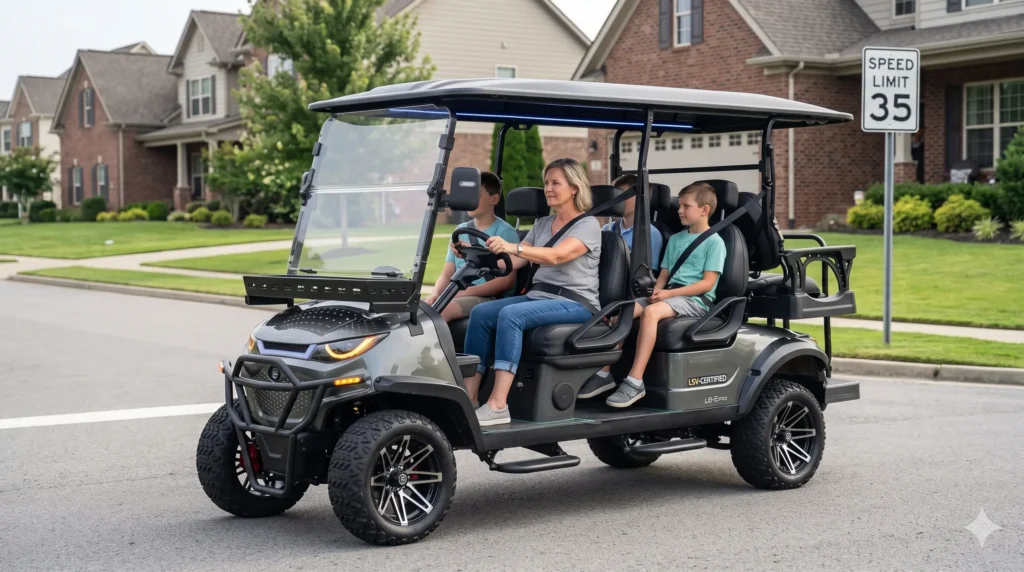
Perhaps the most transformative trend is the rapid expansion of street-legal Low-Speed Vehicles (LSVs).
The LSV Market Is Exploding
The global Street-legal Golf Carts market size is expected to reach $2,735 million by 2032, rising at a market growth of 6.1% CAGR during the forecast period (2026-2032).
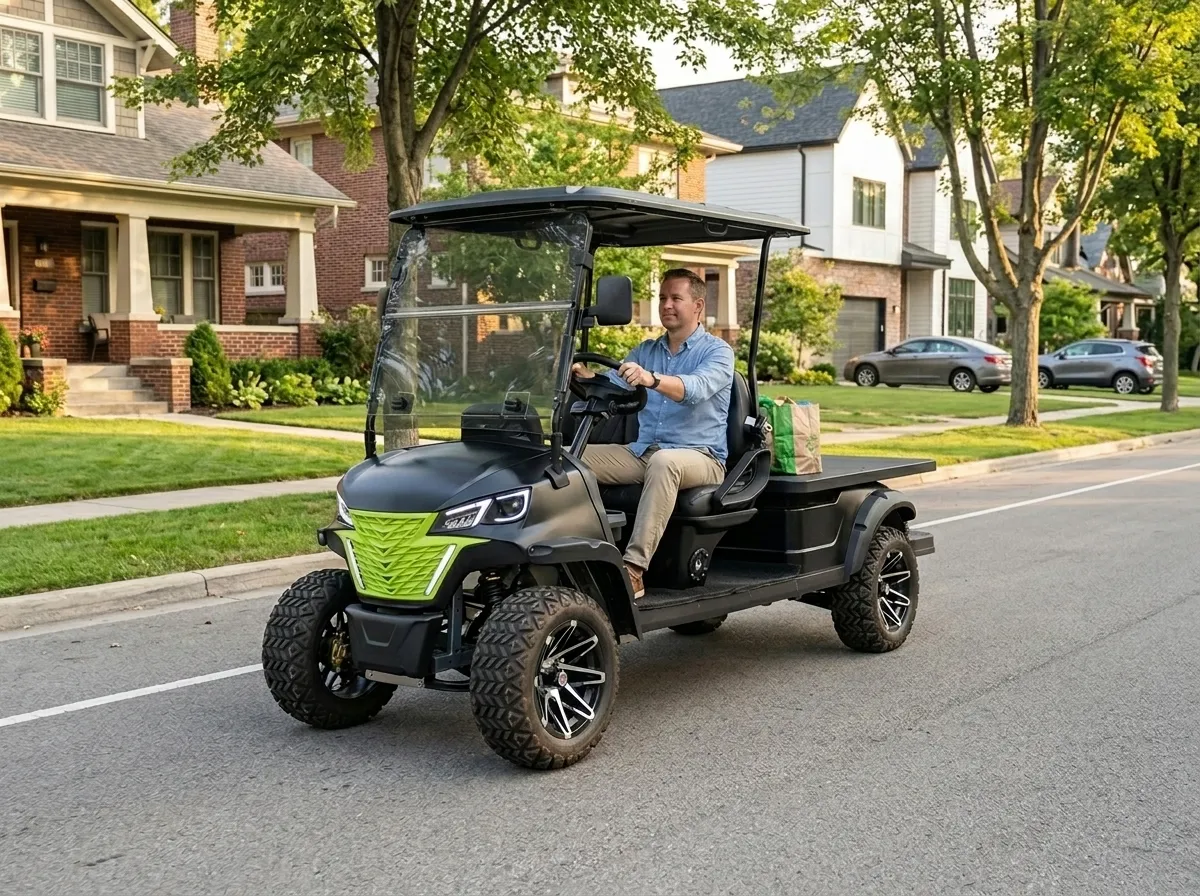
Street-legal golf carts are electric or gas-powered vehicles modified to meet necessary requirements for driving on public roads. These modifications include safety features such as headlights, turn signals, brake lights, seat belts, and mirrors, as well as speed and weight restrictions.
Regulatory Tailwinds
Regulatory adaptations are expanding market accessibility. In the U.S., states like Florida and South Carolina have revised LSV (Low-Speed Vehicle) laws to permit street use on roads with speed limits ≤35 mph, requiring seatbelts, LED lighting, and DOT-approved safety features.
LSVs are a popular mode of transportation in communities where traditional cars may not be practical or allowed, such as retirement communities, college campuses, and resort areas.
The Appeal of Street-Legal Carts
For HOAs and communities, LSV certification means residents can legally drive on public roads up to 35 mph – transforming golf carts from recreational vehicles into legitimate daily transportation. A key trend is the dominance of electric propulsion, with lithium-ion batteries replacing lead-acid models to deliver ranges exceeding 50 miles on a single charge and fast charging (2–4 hours).
Sun-Cart offers LSV-certified models ready for DMV registration. View LSV options →

The Economics – Total Cost of Ownership Advantages
The business case for electric golf carts has never been stronger. The growing interest in affordable electric mobility solutions is driving the growth of the electric golf cart market.
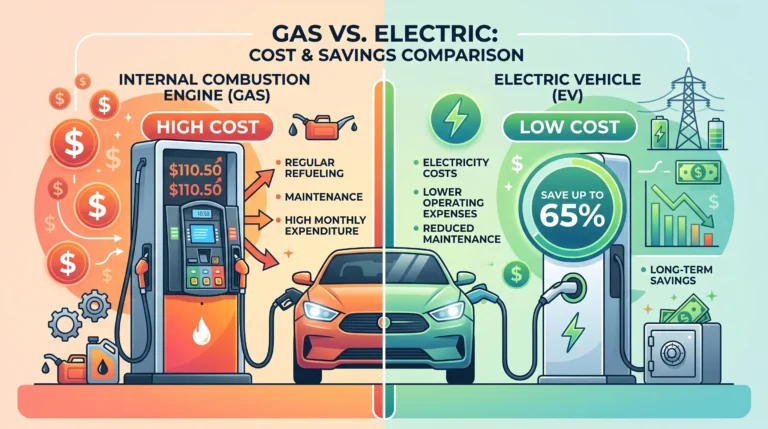
Electric vs. Gas – The TCO Gap Widens
A typical gas cart costs significantly more to operate over five years. Electric carts offer:
Lower fuel costs – pennies per mile vs. dollars for gas
Reduced maintenance – no oil changes, no spark plugs, no fuel filters
Longer lifespan – electric motors last 10+ years with minimal maintenance
Higher resale value – lithium carts retain 65-70% of value after 5 years
Lithium vs. Lead-Acid – The Battery Economics
While lithium batteries have a higher upfront cost, the total cost of ownership over 5-8 years is significantly lower. For a fleet of 20 carts operating daily:
Lead-acid: Expect 1-2 full battery replacements within 5 years, plus monthly maintenance labor.
Lithium: One battery purchase. Zero maintenance. 5-year warranty.

Real-World Savings
Commercial fleet operators report 40-60% lower operating costs after switching to lithium-powered electric carts. The savings come from eliminated battery maintenance, reduced energy costs, and fewer repairs. For resorts and communities managing 50+ carts, the annual savings can easily exceed $150,000.
Sun-Cart provides factory-direct pricing, 5-year battery warranty, and US warehouse stock. Request a wholesale quote →
The 2026 Market Outlook – What’s Next?
Looking ahead, several trends will shape the golf cart industry through 2030 and beyond.
Electric Dominance Will Continue
. The electric golf cart market size is expected to see rapid growth, reaching $3.39 billion in 2030 at a CAGR of 10.5%.
Lithium Costs Will Continue Falling
Battery costs are dropping 5-10% annually, making lithium accessible for mid-range carts. By 2027, experts predict lithium will be the default choice across virtually all price points.
LSV Adoption Will Accelerate
As more states and municipalities adopt golf cart-friendly ordinances, the market for street-legal vehicles will continue its rapid expansion. Expect to see even more local permit programs, simplified registration processes, and designated LSV routes.
Smart Technology Will Become Standard
The integration of telematics and over-the-air capable controllers has changed expectations about serviceability and lifecycle management, enabling predictive maintenance and usage-based monetization. GPS navigation, 9-inch touchscreen displays, and Bluetooth connectivity are becoming standard features.
Sun-Cart’s FOC smart controllers support CAN bus communication for seamless telematics integration. Explore our technology →
Autonomous Capabilities Are Emerging
High-end models now feature semi-autonomous capabilities, such as collision avoidance and adaptive speed control, as demonstrated in trials where autonomous carts achieved high rider satisfaction.

Are electric golf carts really better than gas in 2026?
For most applications, yes. Electric carts now dominate with over 95% of new sales. They offer lower operating costs (pennies per mile vs. dollars for gas), zero emissions, near-silent operation, and minimal maintenance.
Is lithium worth the higher upfront cost?
Absolutely. While a lithium battery costs more initially, it lasts 8-12 years compared to 2-4 years for lead-acid, requires zero maintenance, and delivers consistent power throughout the charge.
Can I drive a golf cart on public roads?
Only if it’s an LSV (Low-Speed Vehicle) with seat belts, lights, turn signals, mirrors, windshield, DOT tires, and a VIN. Standard golf carts are not street-legal. Once registered, an LSV can operate on roads with speed limits up to 35 mph. Check your local laws – regulations vary by state and municipality.
How long does a lithium battery last?
Quality LiFePO₄ batteries deliver 2,000-5,000 cycles – 8-12 years of normal daily use. Many owners never replace the battery during the vehicle’s lifetime.
What’s the real-world range of an electric golf cart?
With a 48V lithium system, expect 40-50 miles per charge. With 72V, 50-65 miles – sufficient for a full day of errands, shuttling, or course use.
Do you have US stock for fast delivery?
Yes. Sun-Cart maintains inventory in our US warehouse. Popular models ship within 3-7 business days, with parts support available domestically.

The Electric Golf Cart Has Left the Fairway
The 2026 electric golf cart industry is defined by transformation. Lithium batteries have made electric the obvious choice. LSV regulations have opened streets and neighborhoods. Expanding applications have turned carts into multi-purpose assets for resorts, communities, campuses, and commercial facilities. Smart technology has made them more capable than ever.
For American families, golf carts are becoming the “second car” of choice – a cost-effective, eco-friendly, and convenient solution for daily local travel. For commercial operators, they’re essential tools for guest services, maintenance, security, and logistics.
The question is no longer whether to go electric. It’s how quickly you can capture the benefits.
The golf cart has left the fairway. And it’s not going back.
Ready to upgrade your fleet or find your perfect electric golf cart? Contact Sun-Cart for a customized quote.
📧 Email: dennis@sun-cart.com
📞 WhatsApp: +86 19357388757
🌐 Website: www.sungolfcarts.com
We respond to all inquiries within 24 hours.