Email:dennis@sun-cart.com Whatsapp:+86 13696971344
Electric Golf Cart Batteries: Lithium vs Lead-Acid – The 2026 Upgrade Guide
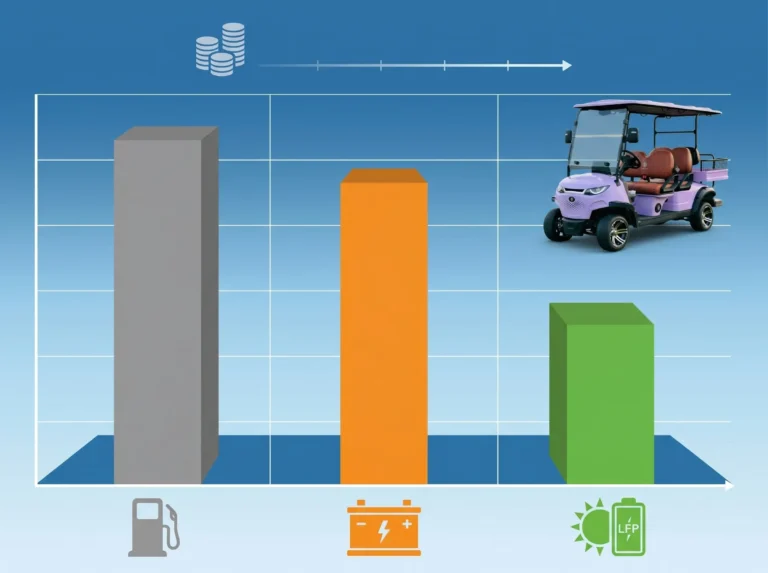
When choosing between gas, lead-acid electric, or LFP lithium electric golf carts, the initial price tag doesn’t tell the full story. This 5-year Total Cost of Ownership (TCO) analysis reveals why SUN-CART LFP lithium batteries deliver the lowest long-term costs and the best return on investment for commercial fleets.
The Million-Dollar Question
If you‘re managing a golf course fleet, running a resort shuttle service, or maintaining a community transport program, you’ve faced this question: Should I buy electric or gas golf carts?
The answer isn‘t always straightforward. While electric carts have surged in popularity—the global electric golf cart market is projected to grow from $1.7 billion in 2026 to $3.3 billion by 2035 (7.9% CAGR)—gas carts still hold their ground for certain applications .
This comprehensive guide breaks down the real costs, performance factors, and operational considerations to help you make the right decision for your specific needs.
| Factor | Electric | Gas |
|---|---|---|
| Upfront Cost | $6,500 – $12,000 | $5,000 – $8,000 |
| 5-Year Fuel/Maintenance | $1,200 – $1,500 | $4,800 – $6,000 |
| Lifetime Savings | 30-45% lower TCO | Higher long-term cost |
| Resale Value (5 years) | 65-70% | 45-50% |
| Break-Even Point | 3-5 years | N/A |
Electric vs Gas
Electric vs Gas
Upfront Purchase Price
Gas golf carts typically have a lower sticker price—usually $5,000 to $8,000 for a standard model. Electric carts range from $6,500 to $12,000, with lithium-ion models at the higher end .
Why the price difference? Electric carts require high-capacity battery packs and advanced motor controllers, which constitute 50-60% of total production costs. Lithium-ion batteries alone add $2,000 to $4,000 to base prices compared to gas engines .
However, a lower purchase price doesn‘t always mean lower total cost.
This is where electric carts pull ahead significantly.
| Cost Factor | Electric | Gas |
|---|---|---|
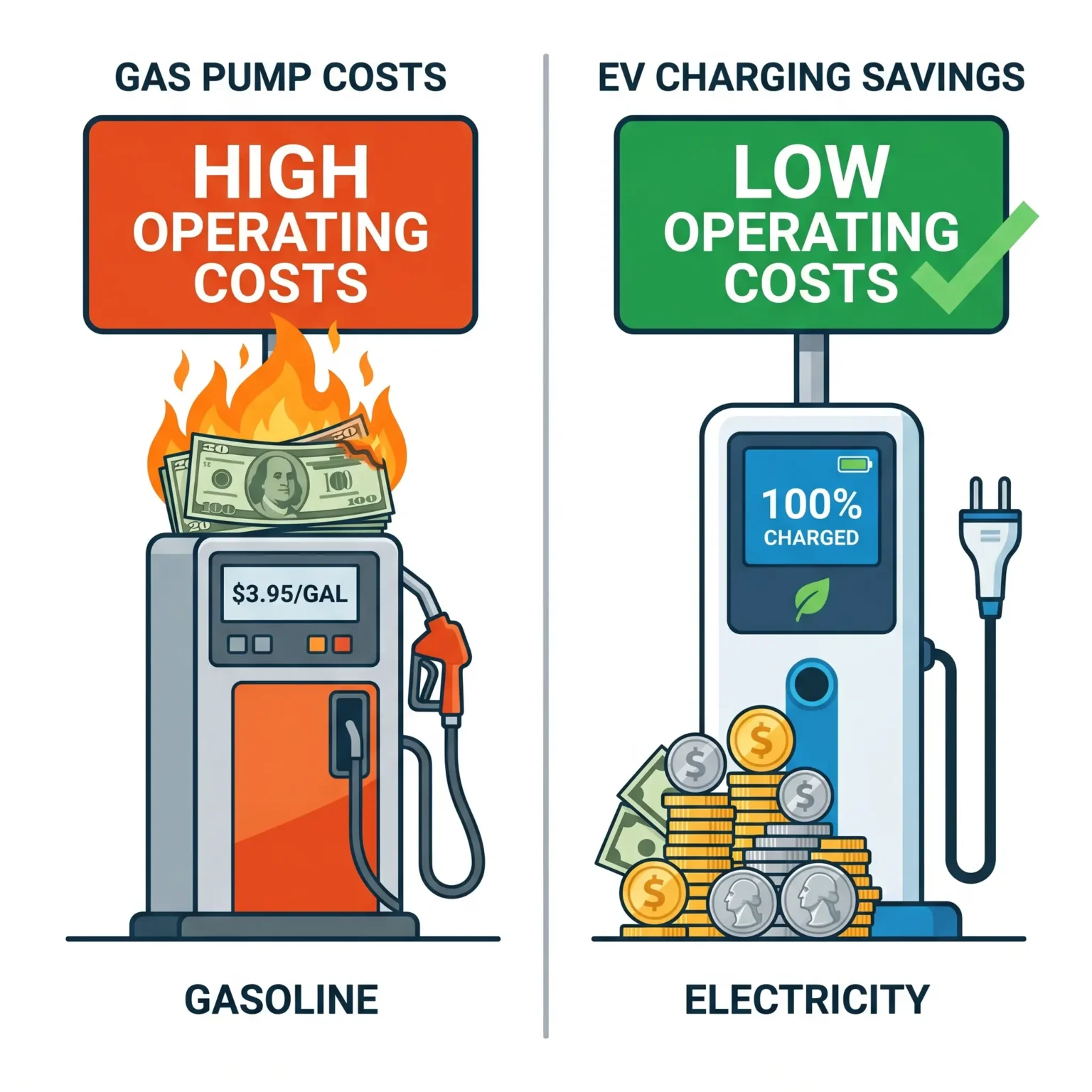
| Cost per mile | $0.02 – $0.05 | $0.20 – $0.25 |
| Cost per hour of operation | $0.14 | $1.75 |
| 5-year energy cost | $300 – $500 | $4,000 – $5,000 |
*Calculations based on 2,000 annual miles and average electricity/gas prices *
Real-world example: A Florida golf course reported 62% lower operating costs after converting their 40-cart fleet from gas to electric, despite higher upfront expenses .
Fuel & Energy Costs
Maintenance Requirements
Electric Golf Carts
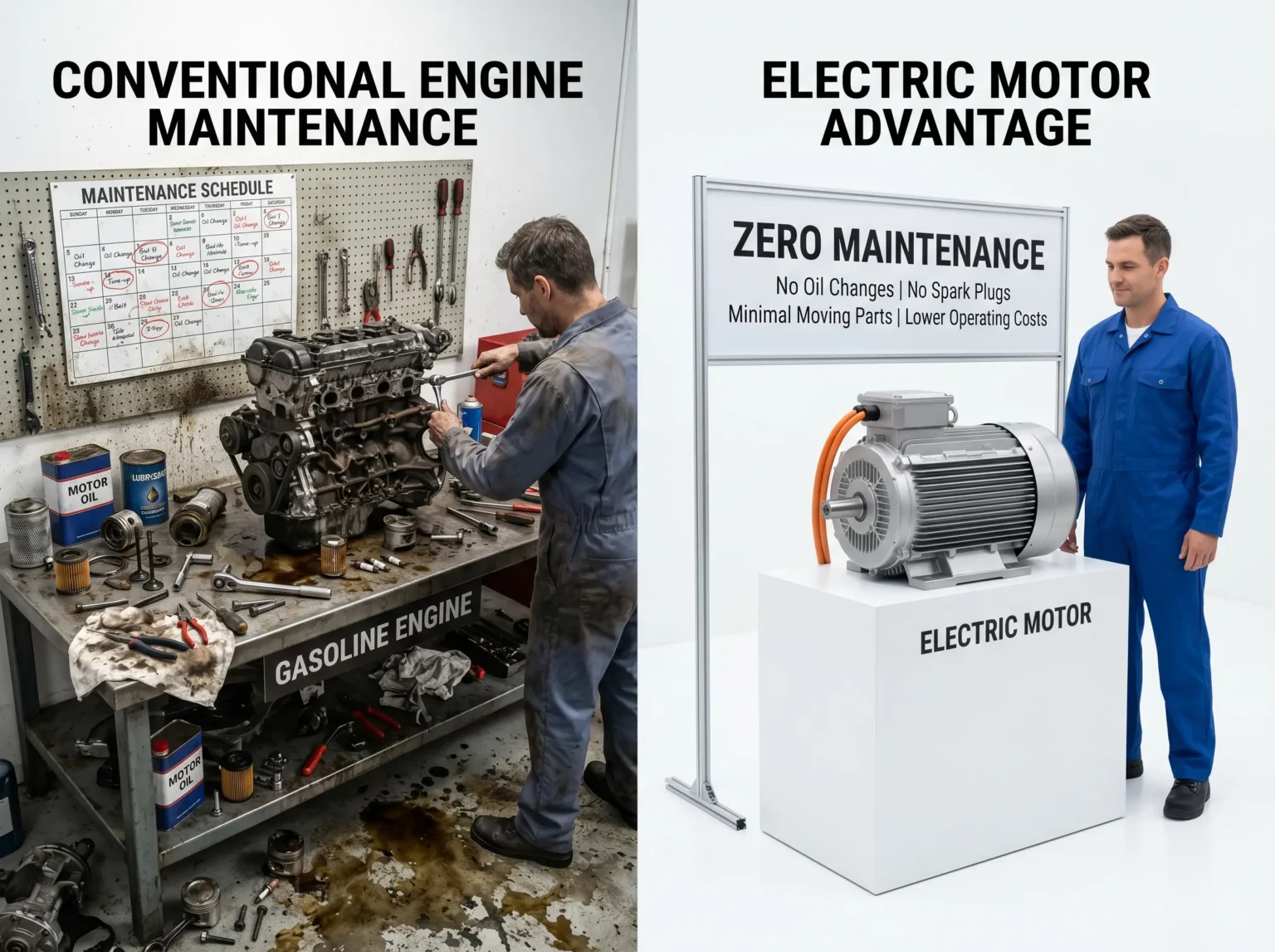
Electric motors have dramatically fewer moving parts. Maintenance requirements are minimal:
No oil changes
No spark plugs or fuel filters
No radiator or coolant
No belts or hoses to replace
Regenerative braking extends brake life
Annual maintenance cost: Approximately $100-200 per cart.
Gas Golf Carts
Gas engines require regular attention:
Oil changes (every 100-200 hours)
Spark plug replacement
Air and fuel filter changes
Carburetor cleaning/adjustment
More frequent brake service
Annual maintenance cost: Approximately $300-500 per cart.
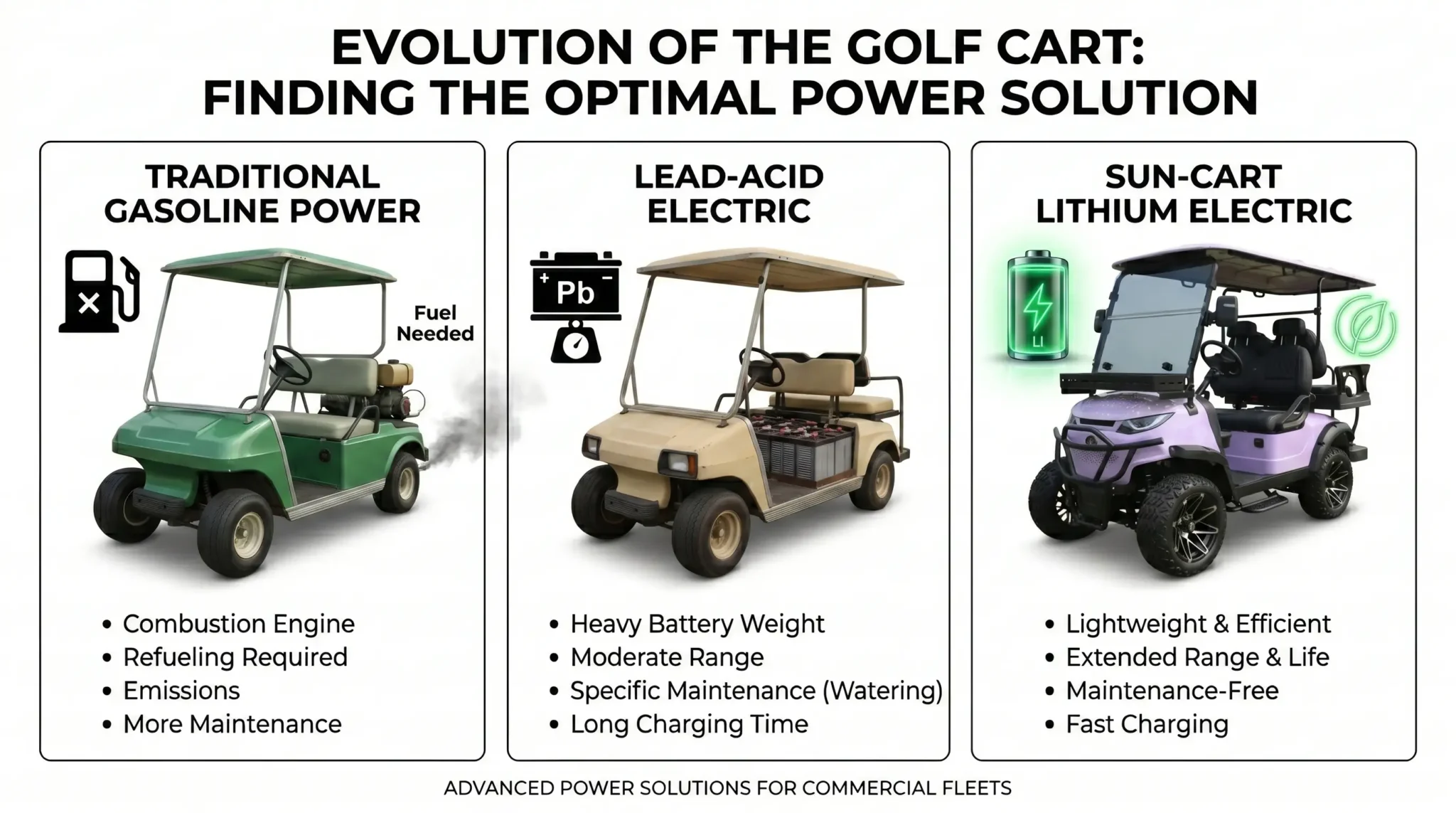
Battery Replacement Considerations
One of the biggest concerns about electric carts is battery replacement. Here‘s the reality:
| Battery Type | Lifespan | Replacement Cost | Maintenance |
|---|---|---|---|
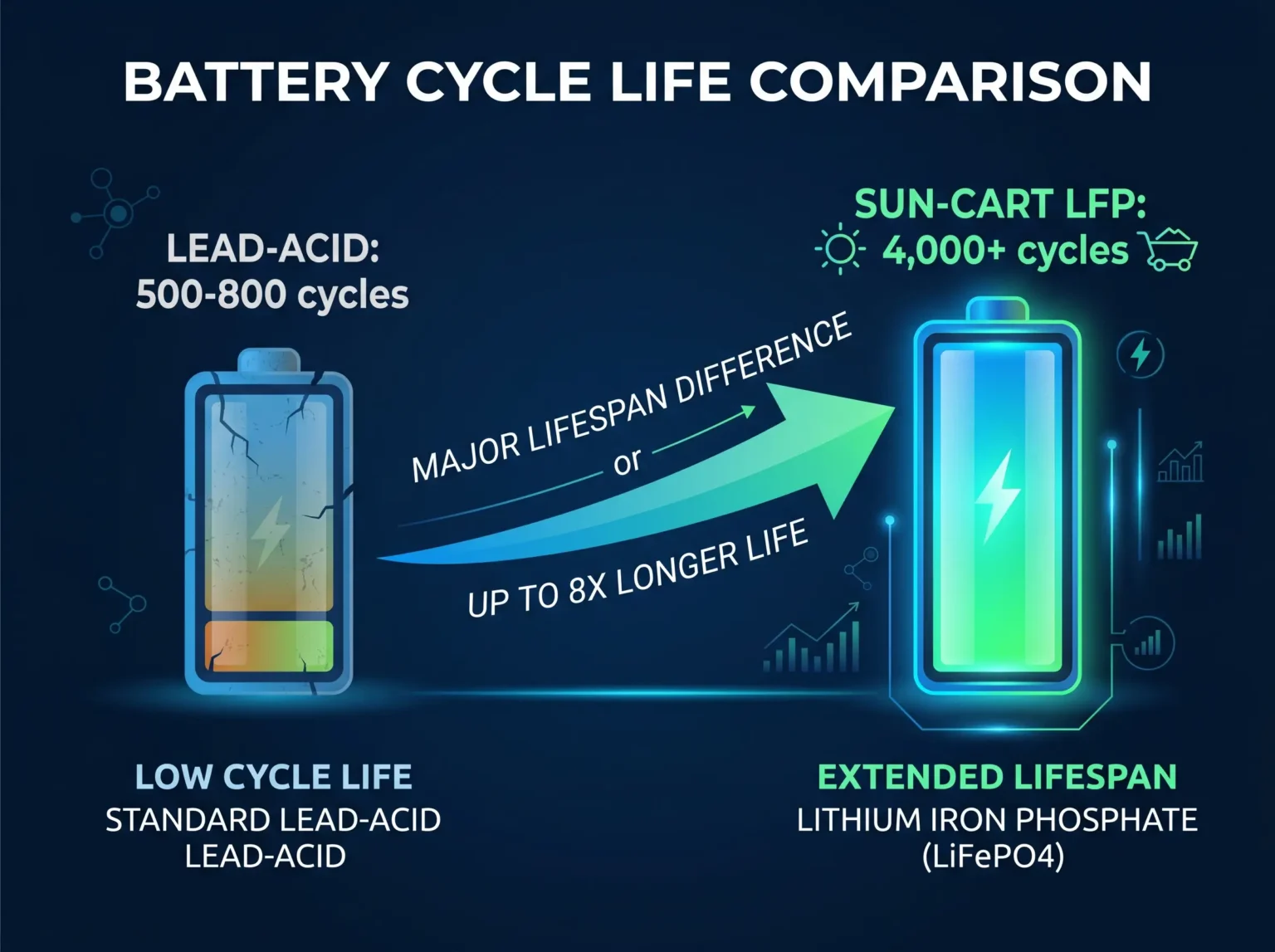
| Lead-Acid | 2-4 years | $800 – $1,200 | Monthly watering, terminal cleaning |
| Lithium (LiFePO₄) | 8-10 years | $2,000 – $4,000 | Zero |
Key insight: While lithium batteries cost more upfront, they last 3-4 times longer than lead-acid and require no maintenance. Over an 8-year period, the total cost of ownership is significantly lower .
Noise & Emissions
Electric carts win decisively in this category.
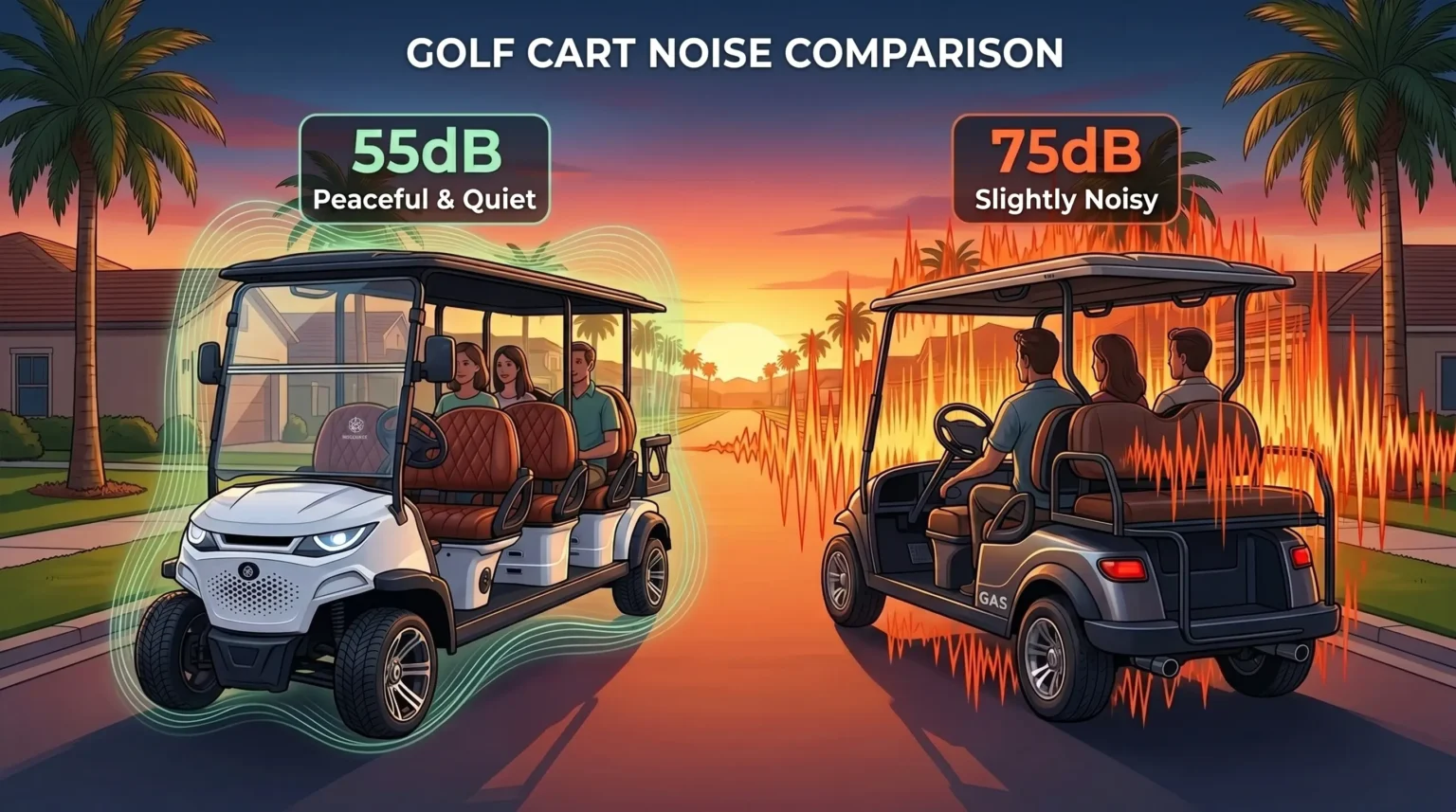
Electric carts operate at approximately 55 decibels—quieter than a normal conversation. Gas carts range from 75-90 decibels, which can be disruptive in residential communities and on quiet golf courses .
For indoor use (warehouses, convention centers, maintenance facilities), only electric carts are safe due to zero tailpipe emissions .
Range & Refueling/Recharging
| Metric | Electric | Gas |
|---|---|---|
| Range | 30-50 miles (lead-acid) / 40-65 miles (lithium) | 80-100+ miles |
| Range (golf holes) | 36-45 holes | 100+ holes |
| Refuel/Recharge time | 2-3 hrs (80%) / 8-10 hrs full | 5 minutes |
Gas carts are better for:
Facilities without dedicated charging infrastructure
Operations requiring continuous use without stopping
Extremely remote locations
Electric carts are better for:
Daily operations with overnight charging
Predictable routes and usage patterns
Environments where noise and emissions matter
Performance on Hills
This is where the technology has evolved significantly.
Modern electric carts with AC motors deliver high torque from zero RPM, providing excellent hill-climbing ability. A 72V electric system can handle up to 30% gradeability.
Gas carts also perform well on hills but require higher RPMs to generate peak torque. For extremely steep or long inclines, gas may still have an edge—but the gap has narrowed considerably with today‘s electric technology .
The Electric Advantage
The Electric Advantage
Turf Protection
Geofencing technology, which is inherently compatible with electric systems, digitally maps restricted areas. When a cart approaches a protected zone, it automatically slows down—reducing turf stress without staff intervention .
Sustainability & Compliance
Zero-emission vehicles are being promoted through government incentives and regulations. Electric golf carts align with environmental policies seeking to minimize carbon emissions and noise, making them suitable for municipal projects, smart city initiatives, and eco-sensitive areas .
Smart Technology Integration
Today‘s electric carts are technology platforms, not just vehicles. GPS-enabled fleet management systems allow course operators to:
Track cart locations in real-time
Manage pace of play proactively
Protect sensitive turf with geofencing
Eliminate end-of-day “lost cart” searches
Predict maintenance needs before failures occur
Fleet managers report that GPS systems have reduced average round times significantly and transformed staff from reactive problem-solvers to proactive managers .
The 2026 Market Outlook
The electric golf cart market is accelerating rapidly, driven by:
Growing adoption in commercial and residential sectors: Gated communities, retirement villages, and master-planned townships are embracing low-speed, quiet, non-polluting mobility solutions .
Shift toward lithium-ion batteries: Battery management systems, motor efficiency, and lightweight materials are enhancing range, durability, and energy efficiency .
Expansion beyond golf courses: Resorts, amusement parks, airports, and event venues are adopting electric carts for passenger and staff transport .
Fleet leasing and subscription models: Flexible financing and maintenance-included contracts are accelerating adoption of advanced lithium-powered carts .
Government incentives: Subsidies, tax incentives, and sustainability requirements are favoring electric adoption .

Frequently Asked Questions
How long do electric golf cart batteries last?
Lead-acid batteries last 2-4 years. Lithium (LiFePO₄) batteries last 8-10 years with 4,000+ cycles .
Are electric golf carts street legal?
LSV (Low-Speed Vehicle) certified electric carts can operate on roads with speed limits up to 35 mph. Most Sun-Cart models are LSV certified .
How much does it cost to charge an electric golf cart?
Approximately $0.14 per hour of operation—about one-tenth the cost of gasoline .
Can electric carts handle hills?
Yes. Modern 72V AC electric systems handle 30% gradeability—sufficient for most course and community applications .
What is the break-even point for switching to electric?
Typically 3-5 years, depending on usage frequency and local energy costs. For daily-use fleets, the payback period is even shorter .
Do electric carts perform well in cold weather?
Lithium batteries perform better than lead-acid in cold weather. However, range does decrease below freezing. Garage storage and keeping batteries charged helps maintain performance .
Conclusion
Conclusion
For most commercial applications in 2026—golf courses, resorts, communities, and industrial sites—electric is the superior choice.
The numbers are clear:
30-45% lower total cost of ownership over the vehicle‘s lifetime
$0.18-0.25 per mile in operational savings
Break-even within 3-5 years despite higher upfront cost
65-70% resale value after 5 years (vs. 45-50% for gas)
Beyond the financial case, electric carts offer better guest experiences (silent operation), support sustainability goals (zero emissions), and integrate with smart fleet management technology.
The only scenarios where gas remains clearly better are:
Operations without reliable charging infrastructure
Continuous 24/7 use where recharging isn‘t practical
Extremely remote locations
For everyone else, 2026 is the year to go electric.
Get the latest information on our products
/ solutions that meet your needs
Get the latest information on our products / solutions that meet your needs
Newsletter Updates
Enter your email address below and subscribe to our newsletter