Email:dennis@sun-cart.com Whatsapp:+86 13696971344
Why Top Resorts and Communities Are Switching Their Fleets to Electric Golf Carts
Beyond the Golf Course
Golf carts have quietly become indispensable across hotels, master-planned communities, corporate campuses, airports, and industrial facilities. These rugged little vehicles now transport guests, luggage, security personnel, maintenance crews, and even cargo — all day, every day.
For large-scale operators, however, running a mixed fleet of aging gas carts and lead-acid battery carts creates a quiet drain on budgets and staff hours.
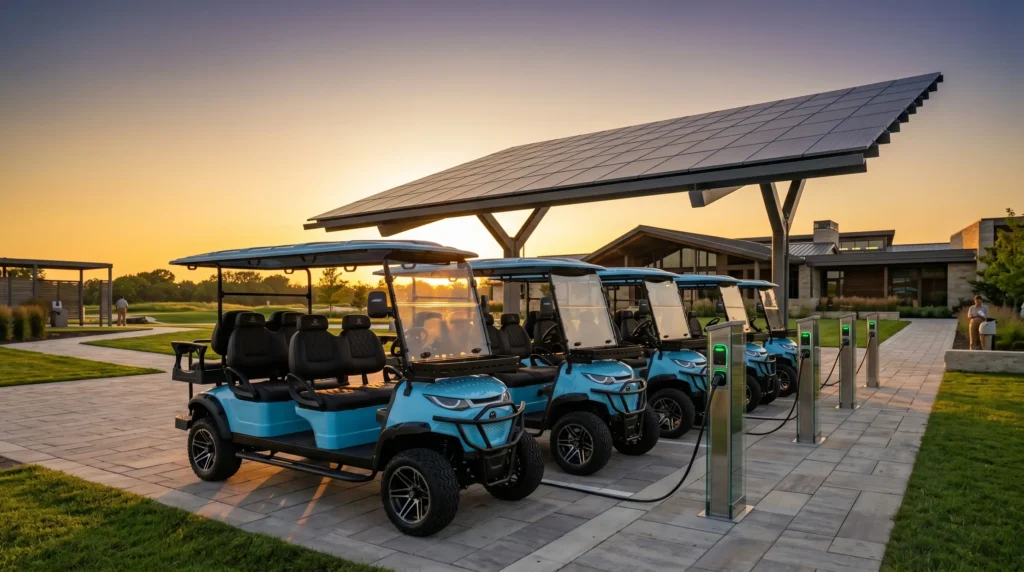
The most successful organizations have discovered a solution: systematic fleet electrification using lithium-powered electric golf carts. This approach reduces operating costs, improves service quality, supports sustainability commitments, and delivers measurable ROI.

Market Trends
Market Trends
The numbers are compelling. The global electric golf cart market is projected to grow from $1.7 billion in 2026 to $3.3 billion by 2035, at a CAGR of 7.9 percent [0†L5-L8]. The broader golf cart and neighborhood electric vehicle market, valued at more than $5 billion in 2025, is expected to reach $8.7 billion by 2033.
Meanwhile, the U.S. electric golf cart market alone generated $509 million in 2025 and is expected to grow to $825 million by 2033 at a CAGR of 6.6 percent.
These market shifts are not happening in a vacuum. Gated communities, retirement villages, and smart township developments are embedding golf carts into planned transportation networks. Simultaneously, the 2026 PGA Merchandise Show confirmed that electric power now dominates the segment — lithium battery systems are positioned as the standard, not an upgrade. Exhibitors showcased extended range, faster charging, lower maintenance requirements, and undeniable total cost–of–ownership advantages over gas and lead-acid alternatives.
For hospitality and commercial operators, the evidence is clear: the industry has made its choice.
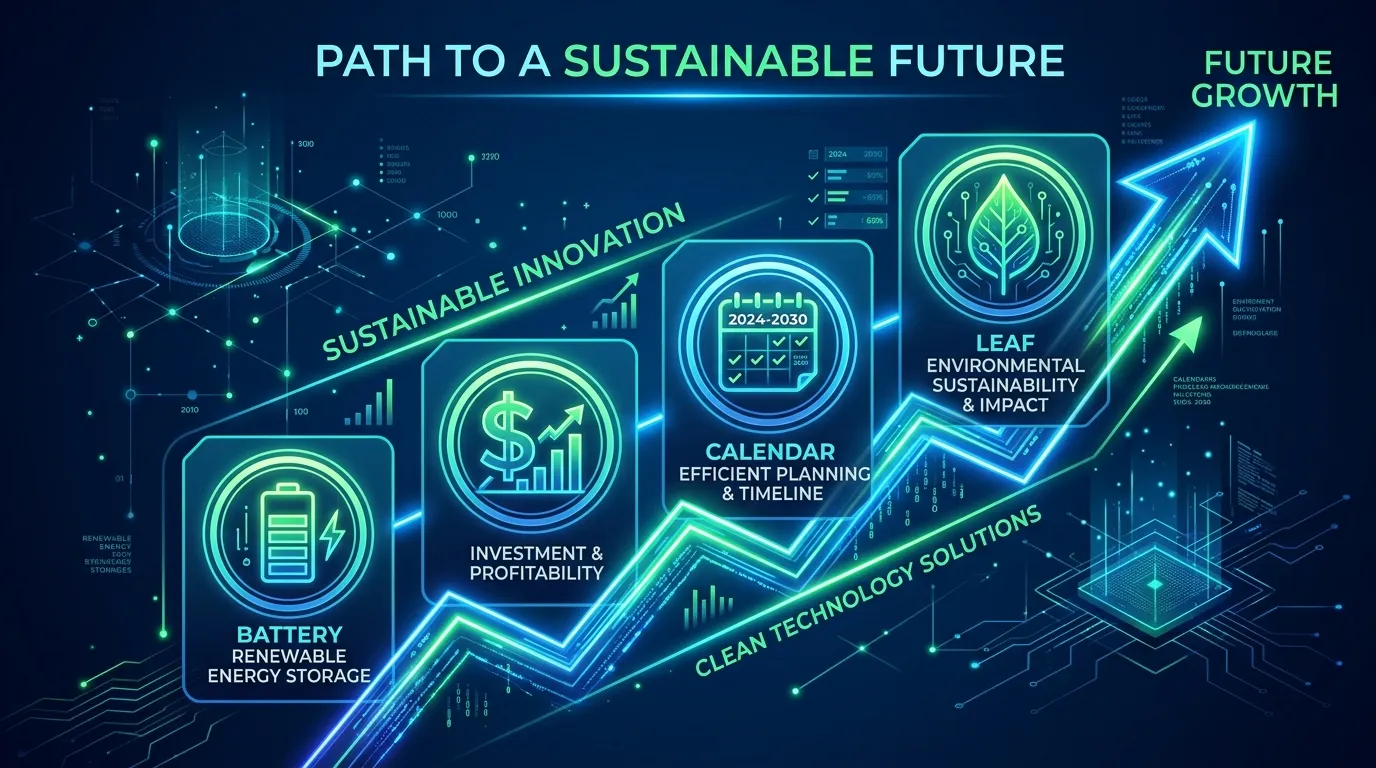
The Financial Case: Total Cost of Ownership (TCO)
Fleet managers often focus on purchase price as the primary decision metric. But for commercial operations that run carts daily, total cost of ownership (TCO) over five years is what matters. The numbers consistently favor lithium-powered electric fleets.
Battery Replacement Costs
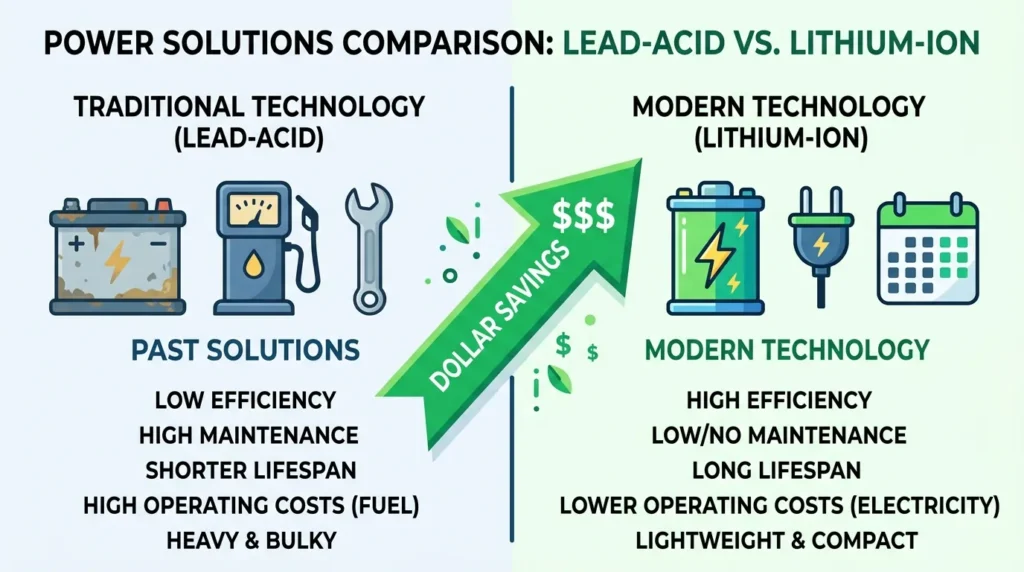
A 50-cart lead-acid fleet faces roughly $23,600 in battery replacements over five years (replacing each pack once). A lithium-powered fleet of the same size pays $0 in battery replacement costs during the same period.
Maintenance Labor
Lead-acid batteries require monthly watering, terminal cleaning, and equalization charges. For a 50-cart fleet, that is roughly $18,900 in labor over five years, not counting consumables and disposal costs. Lithium fleets reduce this to approximately $1,200 — primarily for quick visual inspections and software updates, not physically handling hundreds of pounds of acid-leaking batteries.
One case study showed a 70 percent reduction in total cost of ownership and 95 percent less maintenance time after a golf club upgraded its fleet to LiFePO₄ batteries.
Energy Savings
Gas carts burn through $1,500 to $2,500 per cart annually in fuel. Electric fleets cost only $300 to $600 per cart per year for electricity — a 70 to 80 percent reduction.
The Cumulative Impact
When all factors are combined — lower energy bills, reduced maintenance, elimination of battery replacement costs, and fewer unplanned repairs — commercial operators report 40 to 60 percent lower total ownership costs over five years, despite higher upfront prices for lithium-powered models.
For a typical 50- cart resort fleet, annual savings exceed $30,000. Over a decade, that approaches $400,000 in cumulative savings — enough to fund major facility upgrades or entirely offset the original fleet purchase.
Operational Efficiency
Operational Efficiency
For commercial operators, uptime is arguably more important than upfront cost. You need carts ready when guests arrive, not sidelined for eight-hour charging cycles.
Fast Charging Transforms Fleet Availability
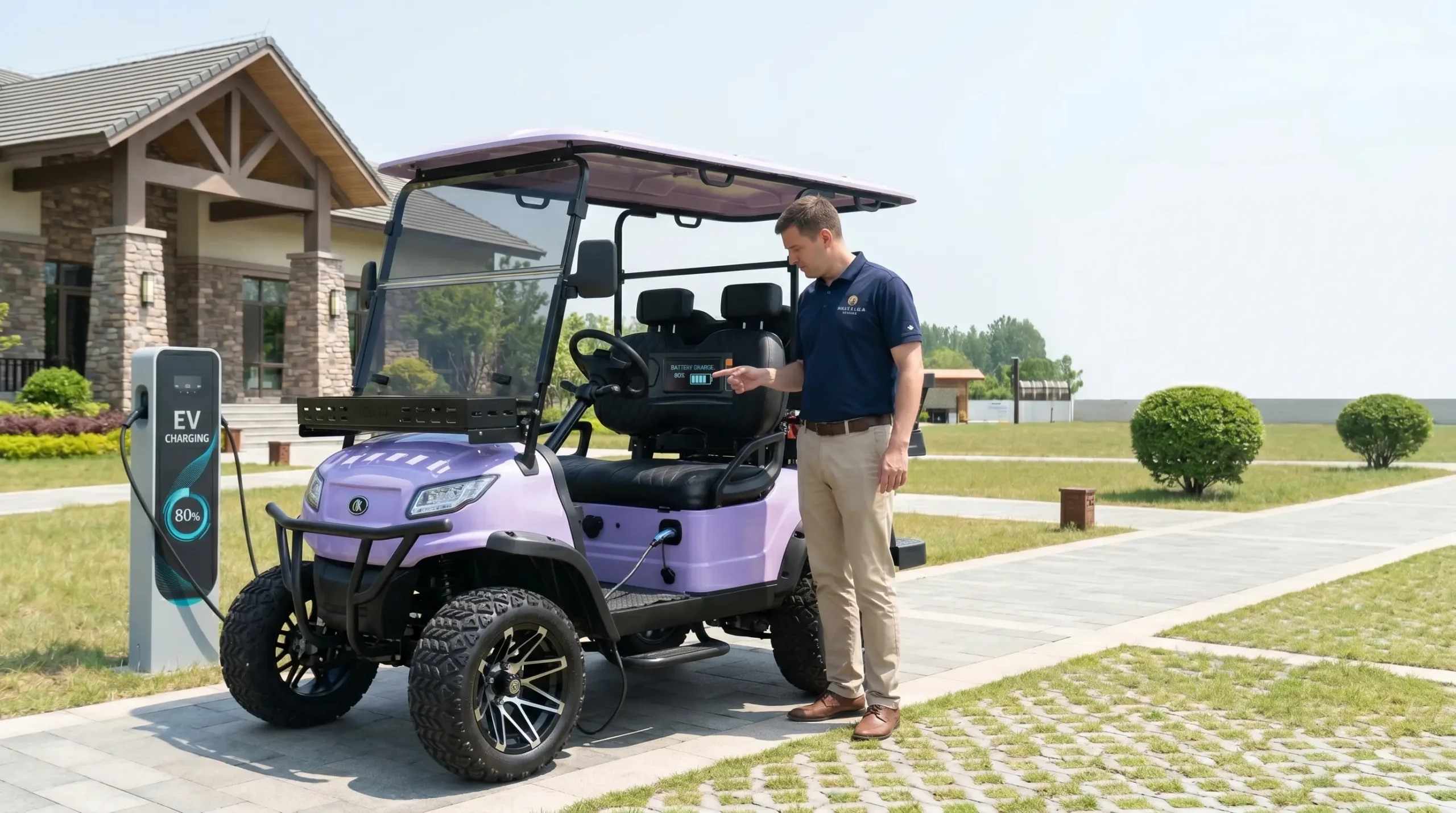
Legacy lead-acid systems take eight to ten hours to fully charge, often leaving carts unavailable during peak afternoon periods. Modern lithium technology changes this: a cart can reach 80 percent capacity during a standard one-hour lunch break.
For fleet managers, this “opportunity charging” means operating with fewer total carts while maintaining service levels — a cost and space advantage unavailable with slower charging technologies.
Reflecting this shift, lithium battery models now dominate new purchases in the United States, driven by faster charging and longer range.
Telematics and Predictive Maintenance
The real game-changer is the quiet integration of fleet management technology. Connected telematics systems can now monitor battery health, track usage patterns, and automatically notify staff before a breakdown occurs. Operators using these tools have seen a 25 to 40 percent reduction in downtime and a 15 percent drop in annual maintenance costs.
Some platforms now use AI-driven analytics to predict precisely when batteries will need replacement, allowing proactive budgeting rather than reactive panic buying.
Consistent Performance
Lithium batteries maintain consistent speed and torque throughout the entire discharge cycle. Your cart will climb hills as easily at the end of a shift as it did at the start — a critical advantage for large resorts, hilly courses, and industrial sites.
Sustainability, Guest Experience, and Brand Value
When resorts and communities switch to electric fleets, they receive benefits that go well beyond the balance sheet — positioning themselves for an increasingly eco-conscious market.
Zero Emissions Compliance
Electric golf carts produce zero tailpipe emissions and operate at roughly 55 decibels — significantly quieter than gas alternatives. This directly supports sustainability reporting, helps meet tightening environmental regulations, and creates a more peaceful atmosphere for guests and residents alike.
The Himachal Pradesh Tourism Development Corporation recently introduced electric golf carts across premier resorts after determining that guest movement across expansive properties would be significantly improved through silent, emission-free carts — while also ensuring that natural beauty remains protected from excessive vehicular emissions.
Enhanced Guest Experience
Guests and residents notice the difference: smoother acceleration, lighter steering, and zero risk of acid leaks damaging clothing or landscapes — an often overlooked but compelling advantage for premium properties.
Brand Value and Marketing
Switching to a clean electric fleet provides authentic marketing content. Resorts can promote electric shuttles as part of their sustainability story. Communities can highlight low-speed, no-emission transport in their resident communications. These are genuine, verifiable environmental credentials — not empty slogans.
Caribbean Resort Fleet Renewal
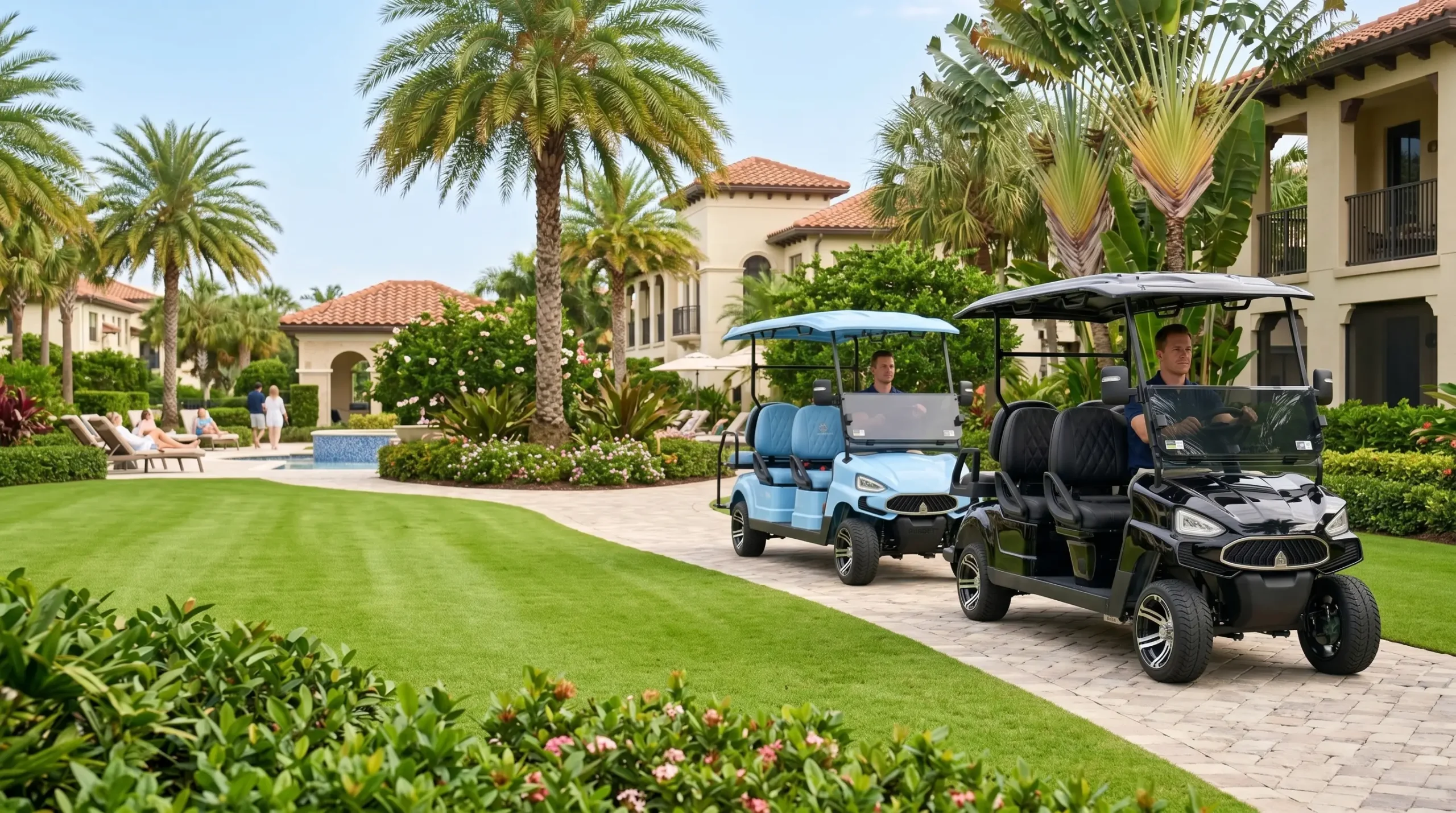
Resorts across the Caribbean are transitioning to lithium-powered electric fleets. Operators have reported dramatically lower operating costs, no regular battery maintenance, no messy watering, and reduced electricity bills — savings that accumulate quickly for larger fleets.
Himachal Pradesh Resort Electrification
After assessing logistical needs across sprawling resort properties, HPTDC introduced electric carts to improve guest movement through silent, emission‑free vehicles. The decision also supports India‘s broader national sustainability goals and reduces the carbon footprint in sensitive Himalayan ecosystems.
Golf Club Fleet Upgrade — 3‑Year ROI of 275%
A golf club that comprehensively switched its fleet achieved a 275% return on investment in three years. The savings came from eliminated battery replacements, reduced maintenance labor, and lower energy costs.
Fleet Solutions and Government Incentives
Fleet Solutions and Government Incentives
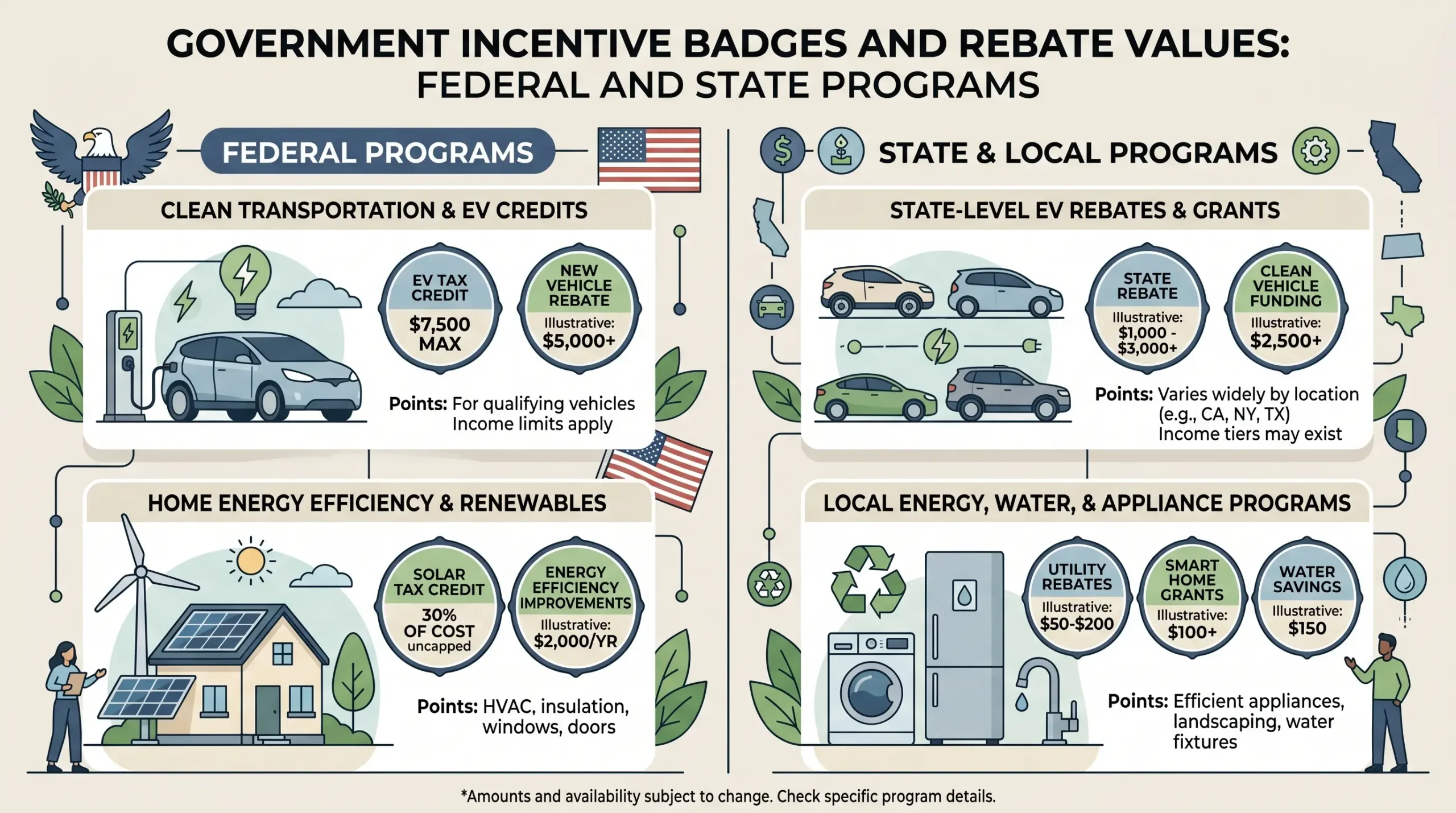
Several commercial EV rebate programs can significantly reduce your overall electrification costs.
At the federal level, the Commercial Clean Vehicle Tax Credit (45W) offers fleets a tax credit ranging from $7,500 for a light-duty vehicle up to $40,000 for a qualifying heavy-duty vehicle.
Massachusetts provides rebates up to $7,500 for certain zero-emission vehicles, while Arizona has launched a $1 million pilot program for heavy‑duty zero‑emission vehicles. New Jersey offers corporate business tax credits for the purchase and installation of commercial zero‑emission vehicles and charging stations.
Additionally, Colorado’s Mobility Options Program offers rebates up to $900 for lithium conversions in low‑income communities, and several states now mandate that municipal courses have 15 percent of their fleets running on lithium batteries by 2026.
What is the lifespan of lithium batteries in commercial fleet use?
Quality LiFePO₄ batteries deliver well over 3,500 cycles, which translates to 8 to 10 years of daily commercial operation. Many fleet managers will never replace a battery across the lifespan of a vehicle.
How much can a fleet save by switching to electric?
For a 50‑cart fleet, annual savings typically exceed $30,000 when combining lower energy costs, eliminated maintenance, and avoided battery replacements. Five‑year savings often exceed $150,000.
Does lithium battery performance degrade like lead-acid?
No. Lithium batteries deliver consistent power throughout the entire discharge cycle. Carts climb hills as effectively at 20 percent battery remaining as they do at 100 percent — a key operational advantage not available with lead-acid technologies.
Are there fleet management tools to track electric carts?
Yes. Modern telematics platforms provide real‑time GPS tracking, battery performance monitoring, predictive maintenance alerts, and usage analytics — all from a single dashboard.
Do commercial fleets qualify for EV purchase incentives?
Yes. Federal incentives include the Commercial Clean Vehicle Tax Credit (45W), which offers $7,500 to $40,000 per qualifying vehicle. Many states offer additional rebates for zero‑emission vehicles and charging infrastructure.
Are electric fleets scalable for large resort operations?
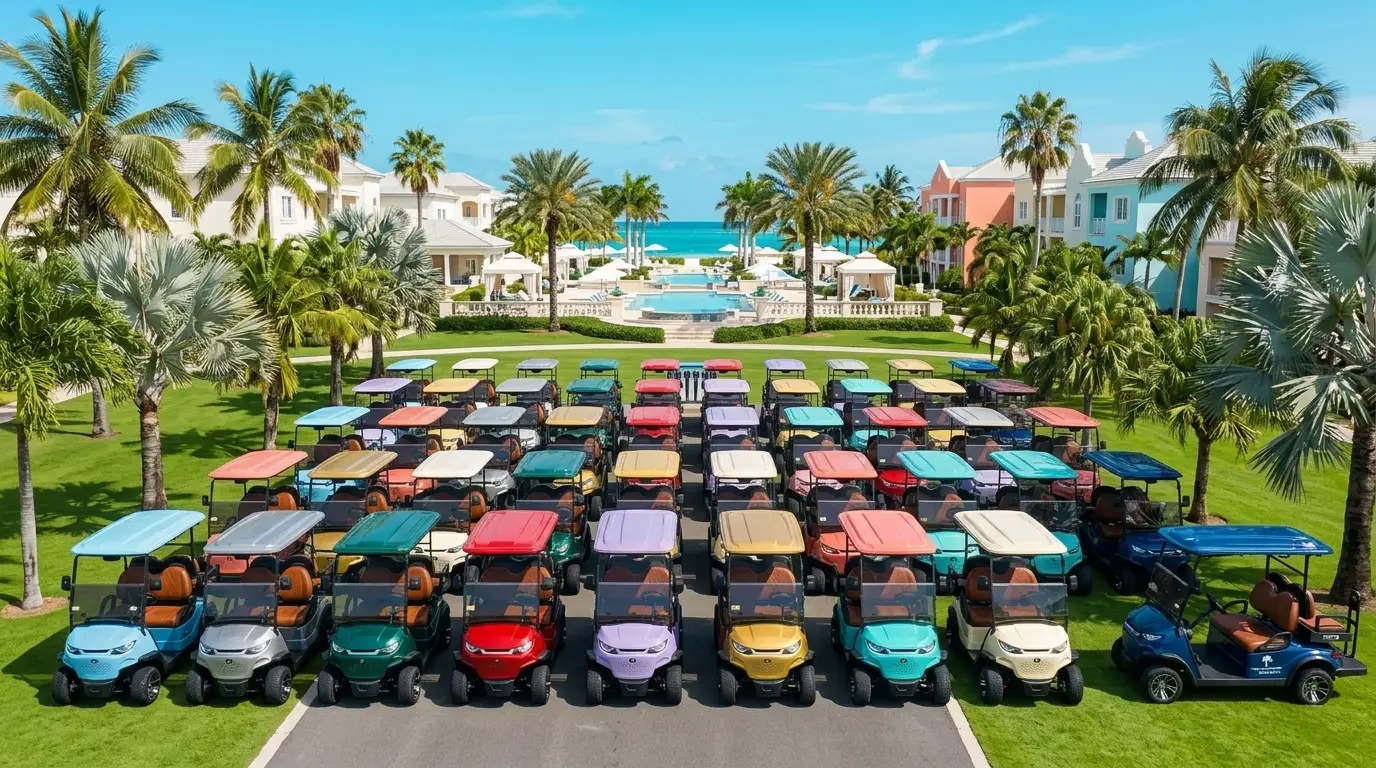
Absolutely. Resorts across North America, the Caribbean, and Asia are successfully operating fleets of 50 to 200+ lithium‑powered electric carts. Fast charging, telematics, and centralized management tools make large electric fleets more efficient than gas alternatives.
Conclusion
Conclusion
For resorts, communities, corporate campuses, and industrial facilities, switching to lithium-powered electric fleets is no longer an environmental statement — it is a business imperative.
The data across every dimension points in the same direction: lower operating costs, higher uptime, reduced maintenance burdens, compelling ROI, and support for sustainability goals. Meanwhile, federal and state incentives make 2026 an exceptional year to make the switch.
The question is no longer whether to electrify. The question is how quickly your organization can capture the savings.
Get the latest information on our products
/ solutions that meet your needs
Get the latest information on our products / solutions that meet your needs
Newsletter Updates
Enter your email address below and subscribe to our newsletter