Email:dennis@sun-cart.com Whatsapp:+86 13696971344
Beyond the Green: How Golf Carts Are Reshaping Resorts and Communities in 2026
More Than a Course Vehicle
You bought an electric golf cart. Maybe for weekend errands around the neighborhood, maybe for shuttling grandkids to the pool, maybe as a second car for short trips. And for the first few months, it was great.
Then winter hit. Your range dropped by nearly half. That battery watering routine became a chore you started dreading. And you realized nobody at the dealership warned you about any of this.
If this sounds familiar, you‘re not alone. Across the United States, homeowners in gated communities, active adult neighborhoods, and coastal towns are discovering that not all electric golf carts are built for real life. The difference often comes down to one decision: lead‑acid or lithium.
This article breaks down five real‑world problems American owners face daily — and explains why switching to lithium technology solves every single one of them.
A Market on the Move
A Market on the Move
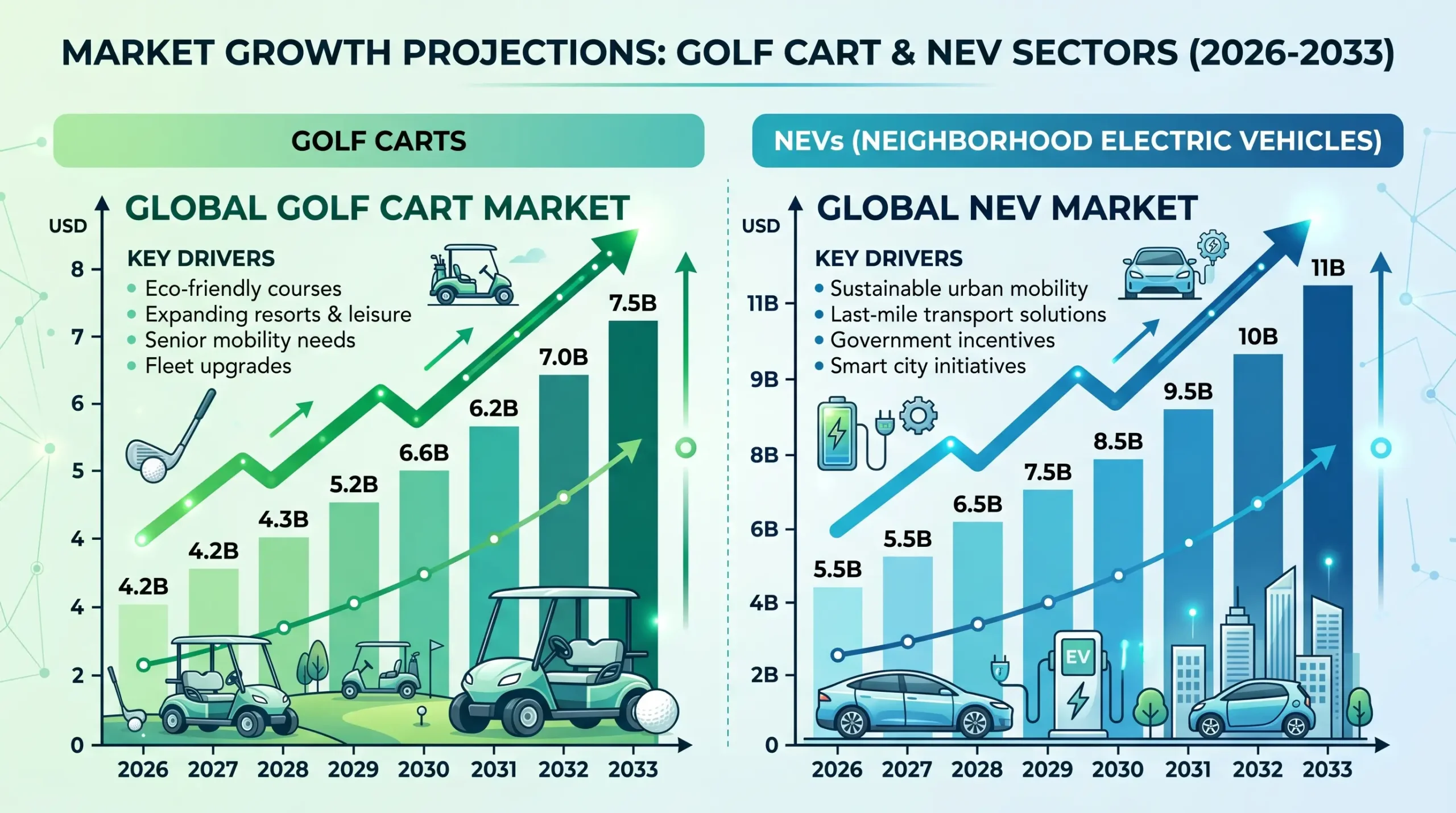
The golf cart and NEV market isn‘t just growing. It’s accelerating across multiple application segments. According to industry data compiled by HTF Market Intelligence, the market is segmented into five core applications: Golf Courses, Residential Communities, Commercial & Industrial Facilities, Tourism & Hospitality, and Airports & Campuses.
Residential Communities already rank as the second-largest application segment. This reflects how deeply these vehicles have integrated into daily neighborhood life. Meanwhile, Tourism & Hospitality is rapidly catching up. This growth is driven by the global recovery of travel and the expansion of eco-friendly resort infrastructure.
Regionally, North America dominates with approximately 41% of the global NEV market. This is supported by nearly 16,000 U.S. golf courses, large residential communities, and a mature regulatory framework through FMVSS 500. But the fastest growth is occurring in Asia Pacific. There, expanding tourism infrastructure and smart city initiatives are driving demand for resort and hospitality fleets at a CAGR of 8.4%.
The global low-speed vehicle (LSV) market, of which golf carts are a core component, is projected to reach USD 19.84 billion by 2034. It was USD 8.58 billion in 2025, growing at a CAGR of 9.76%. Rising urbanization, environmental concerns, and an increasing preference for short-distance, cost-effective transportation are fueling this expansion.
Beyond traditional applications, electric utility vehicles (EUVs) are gaining traction. They are used across resorts, factories, campuses, airports, warehouses, parks, and even farms. This segment was valued at USD 20.3 billion in 2024. It is projected to reach USD 25.5 billion by 2030. Organizations across sectors are increasingly replacing internal combustion engine utility vehicles with electric alternatives. They do this to reduce noise, eliminate tailpipe emissions, and improve energy efficiency.
More Than a Course Vehicle
The Community Revolution
The Community Revolution
In gated communities, retirement villages, and master-planned developments across North America, the golf cart has become something close to an essential appliance. The Villages in Florida, home to over 130,000 residents, has built its entire transportation network around golf carts. Dedicated paths are designed specifically for low-speed electric vehicles. Residents use them for everything from grocery runs to doctor‘s appointments and social visits.
The appeal is multifactorial. For seniors, who form a significant portion of retirement community residents, electric golf carts offer safe, easy-to-operate mobility without the complexity of a full-sized automobile. For households, using both a regular car and a low-speed electric vehicle has been shown to reduce CO2 emissions by approximately 23%. And for community developers, NEV-friendly infrastructure has become a selling point for environmentally conscious buyers.
These vehicles produce zero tailpipe emissions. They operate at approximately 55 decibels. They can reduce lifecycle carbon emissions by 50 to 70 percent compared to gas-powered alternatives. Residential communities appreciate their quiet operation and low environmental impact. Residents benefit from affordable, accessible transportation that fosters social connection and independence.
According to the HTF Market Intelligence report, the commercial and institutional campus segment is also expanding rapidly. NEVs are increasingly used for internal logistics and personnel movement.
The Resort Revolution: Electric Shuttles as Guest Experience Multipliers
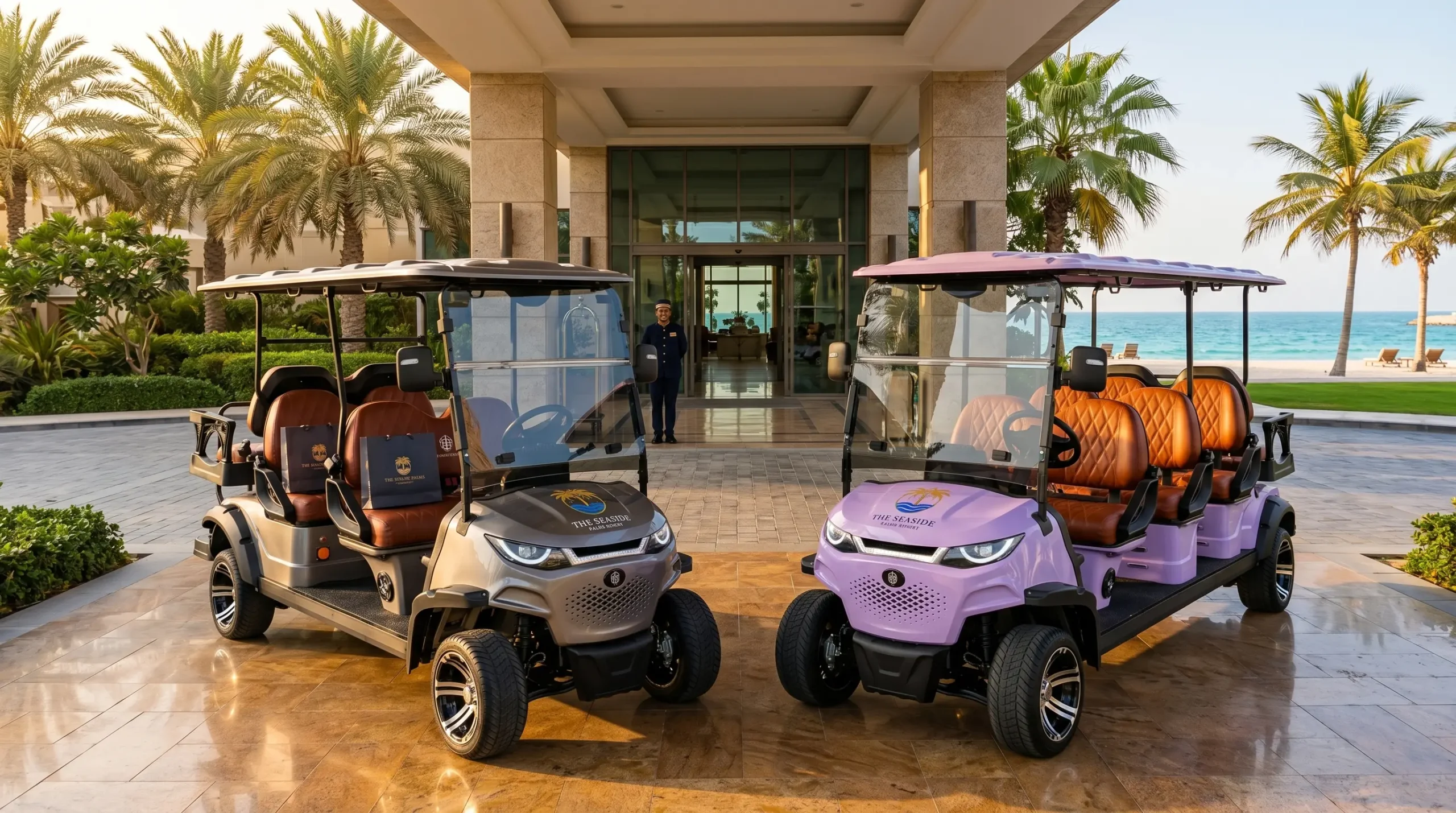
Resorts, hotels, and large-scale hospitality properties are discovering that electric golf carts do more than just move guests from point A to point B. They actively enhance the guest experience while delivering measurable environmental and operational benefits.
Take Wyndham Grand Phuket Kalim Bay. This luxury resort is perched on a hillside overlooking the Andaman Sea. The property spans a significant area, with 132 pool villas and suites connected by paths requiring frequent guest transfers. With 9,000 to 10,000 internal transfers recorded monthly, the resort recently launched its first fully electric shuttle dedicated to in-house guest transfers. Annual CO₂ savings from this single vehicle are estimated to range from 12.15 to 27 metric tonnes. As General Manager Dominic Egger put it: “By replacing noisy traditional engines with clean electric transport, we‘re helping create a more sustainable future for our community and a more peaceful experience for our guests, many of whom are couples seeking relaxation.”
Laguna Phuket has gone even further. It introduced eight fully electric shuttles that carry the Rava Beach Club identity as part of a phased transition to electric transport. These vehicles not only enhance the guest experience but also underscore the resort’s commitment to reducing carbon emissions. The resort is also expanding charging infrastructure across the estate, recognizing that seamless electric mobility requires supporting infrastructure.
Sustainable hospitality is also driving EV adoption in Fiji, where the first-ever fleet of electric tourist coaches was introduced to reduce fuel costs and carbon footprints. In Bali, Mulia Resort has unveiled electric and hybrid vehicles for guest transfers, blending luxury with sustainability.
For hotel owners and resort managers, the business case is clear. Electric fleets reduce noise pollution, protecting the tranquil environment guests are paying for. They eliminate exhaust fumes, improving air quality around dining and pool areas. They also provide compelling marketing content for eco-conscious travelers. The global electric shuttle market is projected to grow from USD 1.48 billion in 2024 to USD 2.82 billion by 2030 at an 11.3% CAGR. This growth is driven largely by the tourism and hospitality industry‘s expansion. For many properties, a branded, modern-looking EV fleet becomes as much a part of their visual identity as their landscaping or architecture. It reinforces messaging around sustainability and guest comfort.
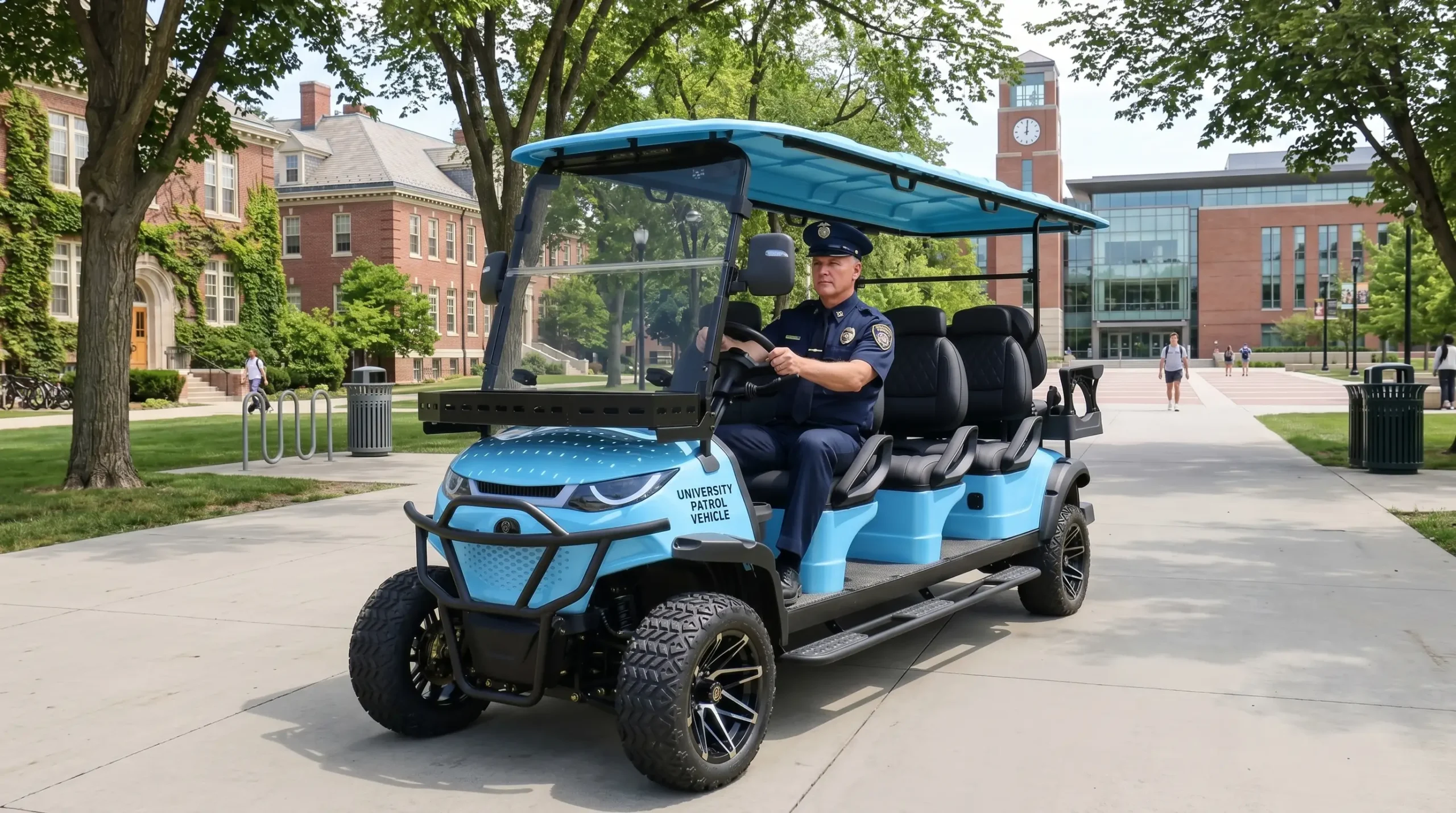
The utility of modern electric golf carts extends far beyond their original purpose. Their low maintenance requirements, quiet operation, and flexibility for customization have made them indispensable across numerous sectors. These include university campuses, industrial parks, airports, hospitals, and farms.
Electric utility vehicles are rapidly gaining popularity as versatile, eco-friendly solutions for a wide range of applications. Organizations across sectors are increasingly replacing traditional internal combustion engine utility vehicles with electric alternatives. They do this to reduce noise, eliminate tailpipe emissions, and improve energy efficiency. In closed environments like factories and warehouses, automation and semi-autonomous features are even being tested for repetitive tasks.
Why are they so well-suited to these environments? Several practical factors make them superior to full-sized vehicles for localized, short-distance operations:
| Factor | Advantage |
|---|---|
| Operating Cost | Electricity costs pennies per mile—roughly one-tenth the cost of gasoline. Lower maintenance means fewer labor hours for service. |
| Quiet Operation | <65dB—doesn‘t disturb guests, patients, students, or wildlife. |
| Customizable | Can be configured for specific tasks: cargo beds, tow hitches, enclosures, lighting packages, and more. |
| Lightweight | Less stress on turf, pathways, and infrastructure. Reduced wear on tires and brakes. |
| Street-Legal Ready | LSV-certified models can operate on roads up to 35 mph, expanding utility. |
| Eco-Friendly | Zero direct emissions, aligning with sustainability mandates and green building certifications. |
For fleet operators, the integration of telematics and GPS tracking systems for fleet optimization, remote diagnostics, and route planning is significantly improving uptime and efficiency. Major companies are also introducing versatile 4-seater models with advanced electric drivetrains. These balance seating capacity and compactness for short-distance transport with minimal environmental impact. Technological advancements such as modular designs for interchangeable attachments—cargo beds, sprayers, snowplows, personnel carriers—are making these vehicles multi-functional and adaptable.
Customization and Fleet Branding
Customization and Fleet Branding
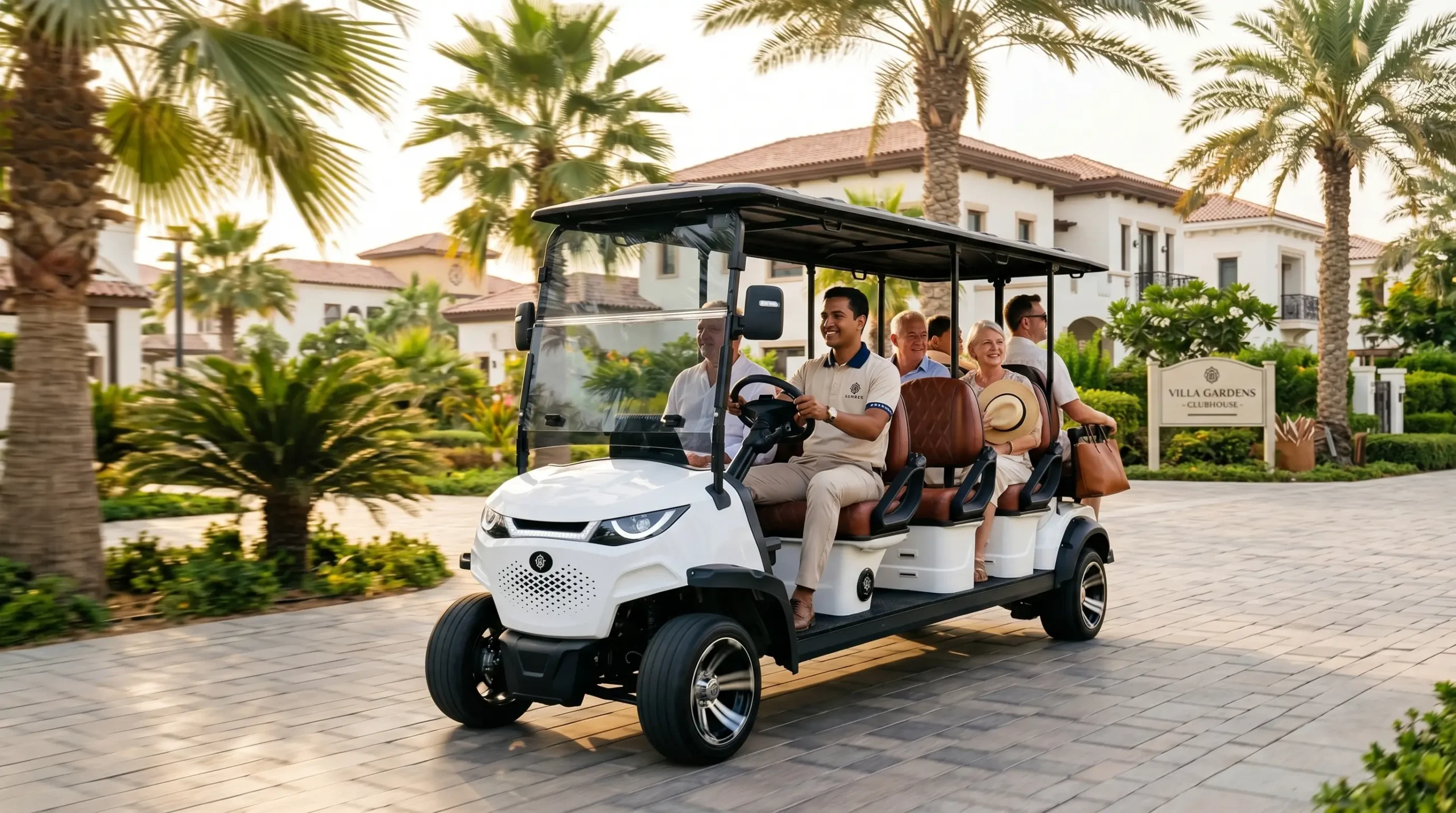
For resorts and large-scale residential communities, a uniform, aesthetically branded fleet reinforces property identity and professionalism. Sun-Cart‘s full-service customization includes:
Brand-specific colors and graphics – Match property logos and design language precisely
Premium seating – Choose comfort levels and materials that reflect your property‘s quality standards
Accessory packages – Cargo beds for luggage, coolers for beach service, lighting for evening patrols
Weather enclosures – Keep passengers comfortable year-round in any climate
For community associations and HOAs, a uniform, well-maintained fleet of branded vehicles signals quality and thoughtful planning to prospective homebuyers. This enhances property value while serving residents‘ daily needs.
The NEV market is seeing rising demand for multi-passenger models. These are especially suited for group transport in resort settings. Customization of LSVs for commercial operations is a major industry trend. Companies are also equipping LSVs with integrated GPS navigation, wireless charging, and app-based controls. This enhances convenience and safety for fleet managers.

Flexibility with 48V and 72V Systems
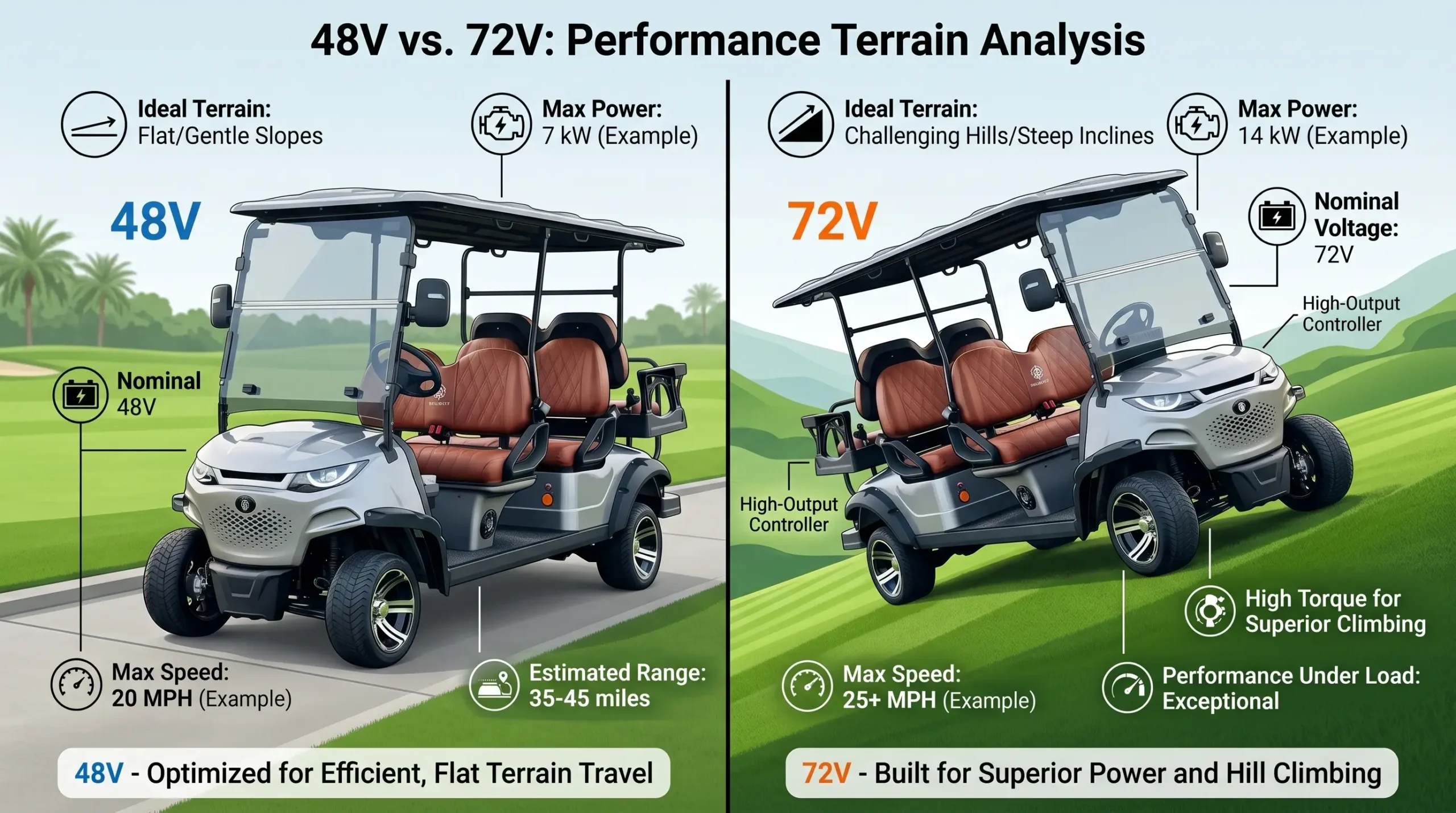
Not all communities or resorts have the same operational demands. For flat terrain and shorter-distance daily use, a 48V system provides a perfect balance of range and efficiency. It typically delivers 40-50 miles per charge. For larger properties that include significant elevation changes or require more frequent passenger transport, 72V systems deliver higher torque and extended daily coverage.
Sun-Cart provides both options across 2, 4, 6, and 8-seat configurations. The ability to match vehicle specifications to the actual terrain and usage pattern of each property ensures that fleet managers aren‘t paying for unneeded capacity. They also won’t discover too late that their current vehicles can‘t handle the demands of their site.
Charging Infrastructure Considerations
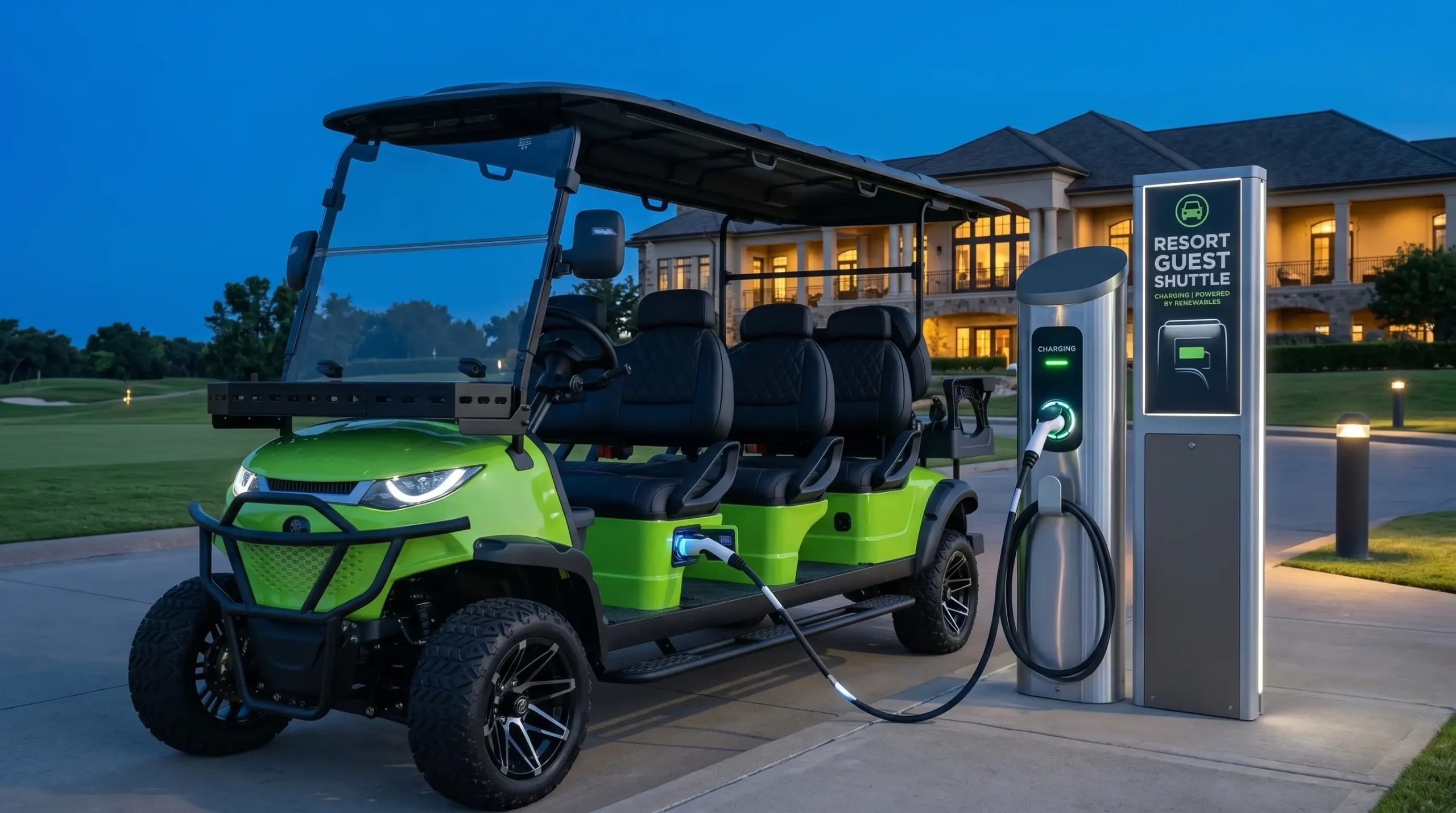
One of the keys to successful fleet electrification is planning charging infrastructure. For resorts, this means placing chargers strategically—near valet stands, maintenance buildings, and employee parking areas. For communities, it may involve installing shared charging stations at clubhouses, community centers, or designated parking zones.
The good news is that LiFePO₄ batteries can be opportunity-charged during low-activity periods. This means fleets don‘t require dedicated overnight charging for every single vehicle. A well-designed charging schedule, managed through smart load-balancing systems, can keep a large fleet operational without massive electrical upgrades.
According to the Research and Markets report, the low-speed vehicle market‘s growth in the forecast period can be attributed to increasing investment in electric vehicle infrastructure. It also comes from the expansion of airport ground mobility and smart city projects. Major trends in the forecast period include rising adoption of electric low speed vehicles, growing use in gated communities and campuses, expansion of LSV applications in airports and resorts, and increasing demand for multi-passenger LSVs. Additionally, the integration of autonomous driving capabilities and ADAS in controlled environments like campuses, resorts, and retirement communities is emerging as a key trend.
Are these golf carts street legal for community use?
Yes. Our LSV-certified models comply with FMVSS 500 and can be operated on roads with speed limits up to 35 mph. We provide documentation for local DMV registration.
What’s the range of a typical electric golf cart for resort or daily use?
With 48V systems, expect 40-50 miles per charge—enough for a full day of typical operations. With 72V, range extends to 50-65 miles as needed for larger properties.
Can our resort or HOA place custom branding on fleet vehicles?
Absolutely. We offer custom colors, logo decals (or metal badges), seat upholstery choices, and accessory packages tailored to your specific needs. Free digital proofs before production.
How long do the batteries last for daily fleet use?
Our LiFePO₄ batteries deliver 2,000-5,000 cycles (8-10 years) with proper care—substantially longer than lead-acid. For daily resort shuttle use, battery life typically exceeds the vehicle‘s own useful life.
Is there a warranty on the battery for fleet operators?
Yes. 5-year standard warranty on all LiFePO₄ batteries, with full replacement coverage and US-based support for warranty claims.
Do you have US stock for quick delivery?
Yes. Popular models available from our US warehouse with 3-7 day delivery. Parts support also available domestically, including replacement chargers, controllers, tires, and battery packs.
The New Standard in Short-Distance Mobility
The golf cart has left the fairway. It‘s now an essential tool for short-distance mobility in resorts, gated communities, corporate campuses, industrial parks, and airports worldwide. Smart developers and resort operators are recognizing that a modern, well-maintained electric fleet isn’t just an operational convenience. It‘s a competitive advantage that improves guest satisfaction, supports sustainability goals, and enhances property values.
Whether you’re managing a master-planned community of 10,000 homes, a coastal resort requiring guest shuttles, or a corporate campus focused on reducing your carbon footprint, electric golf carts offer a practical, cost-effective, and environmentally responsible solution.
The numbers tell the story: billions in market growth, thousands of fleet conversions, and real-world case studies documenting measurable reductions in both operating costs and environmental impact. The question is no longer whether to electrify short-distance transport in planned communities and hospitality settings. It’s how quickly you can begin capturing the benefits.
Ready to upgrade your resort or community fleet? Contact Sun-Cart for a customized quote.
📧 Email: tina@sun-cart.com
📞 WhatsApp: +86 19357388757
We respond to all inquiries within 24 hours.

Get the latest information on our products
/ solutions that meet your needs
Get the latest information on our products / solutions that meet your needs
Newsletter Updates
Enter your email address below and subscribe to our newsletter