
Email:dennis@sun-cart.com Whatsapp:+86 13696971344
Is Your Golf Cart Ready for Real Life? 5 Common Problems U.S. Owners Face (And How Lithium Fixes Them)
Why So Many Golf Cart Owners Get Frustrated After the First Year
You bought an electric golf cart. Maybe for weekend errands around the neighborhood, maybe for shuttling grandkids to the pool, maybe as a second car for short trips. And for the first few months, it was great.
Then winter hit. Your range dropped by nearly half. That battery watering routine became a chore you started dreading. And you realized nobody at the dealership warned you about any of this.
This article breaks down five real‑world problems American owners face daily — and explains why switching to lithium technology solves every single one of them.
The U.S. Market
The U.S. Market
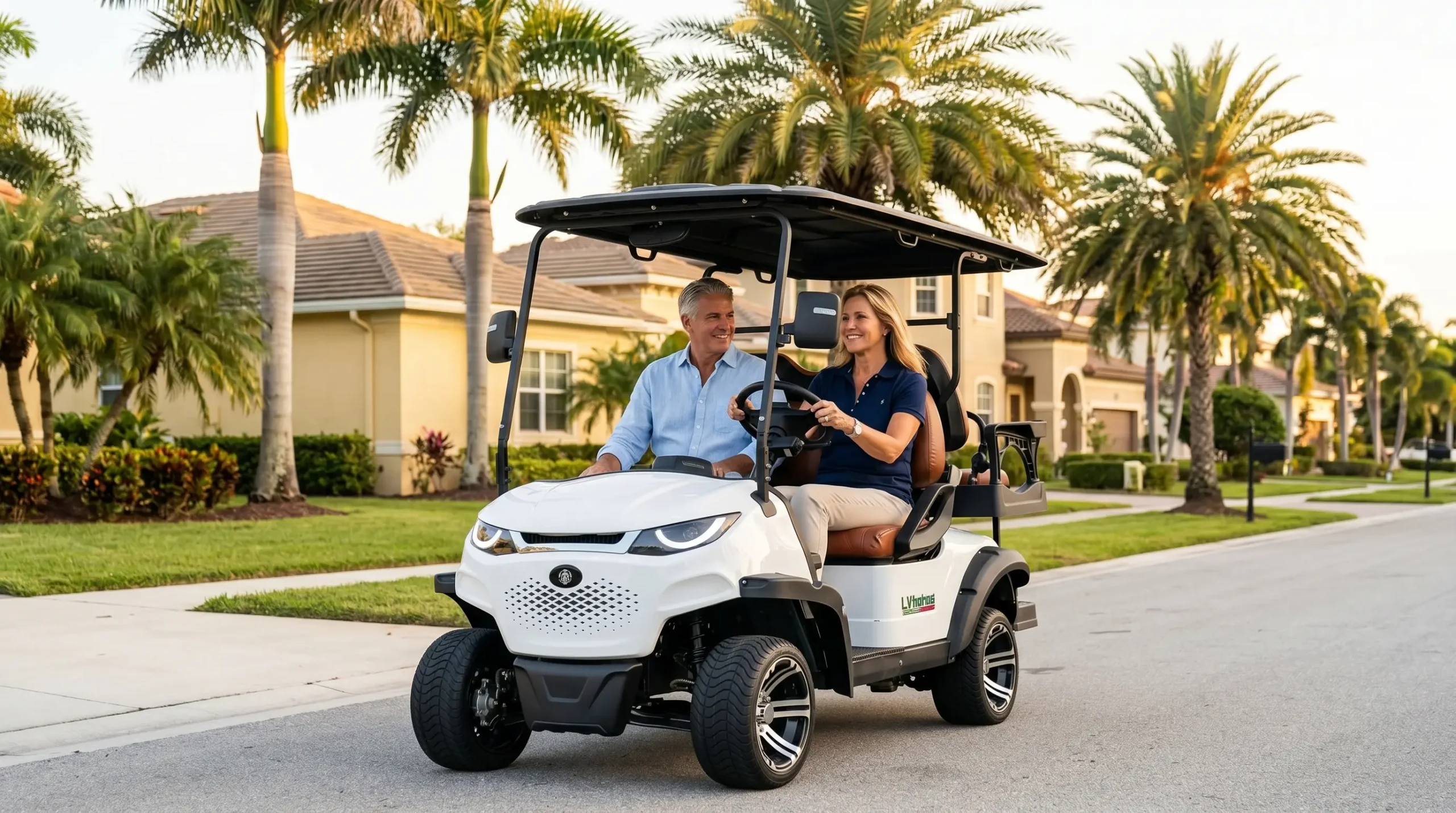
Before we dive into the problems, let‘s look at the scale.
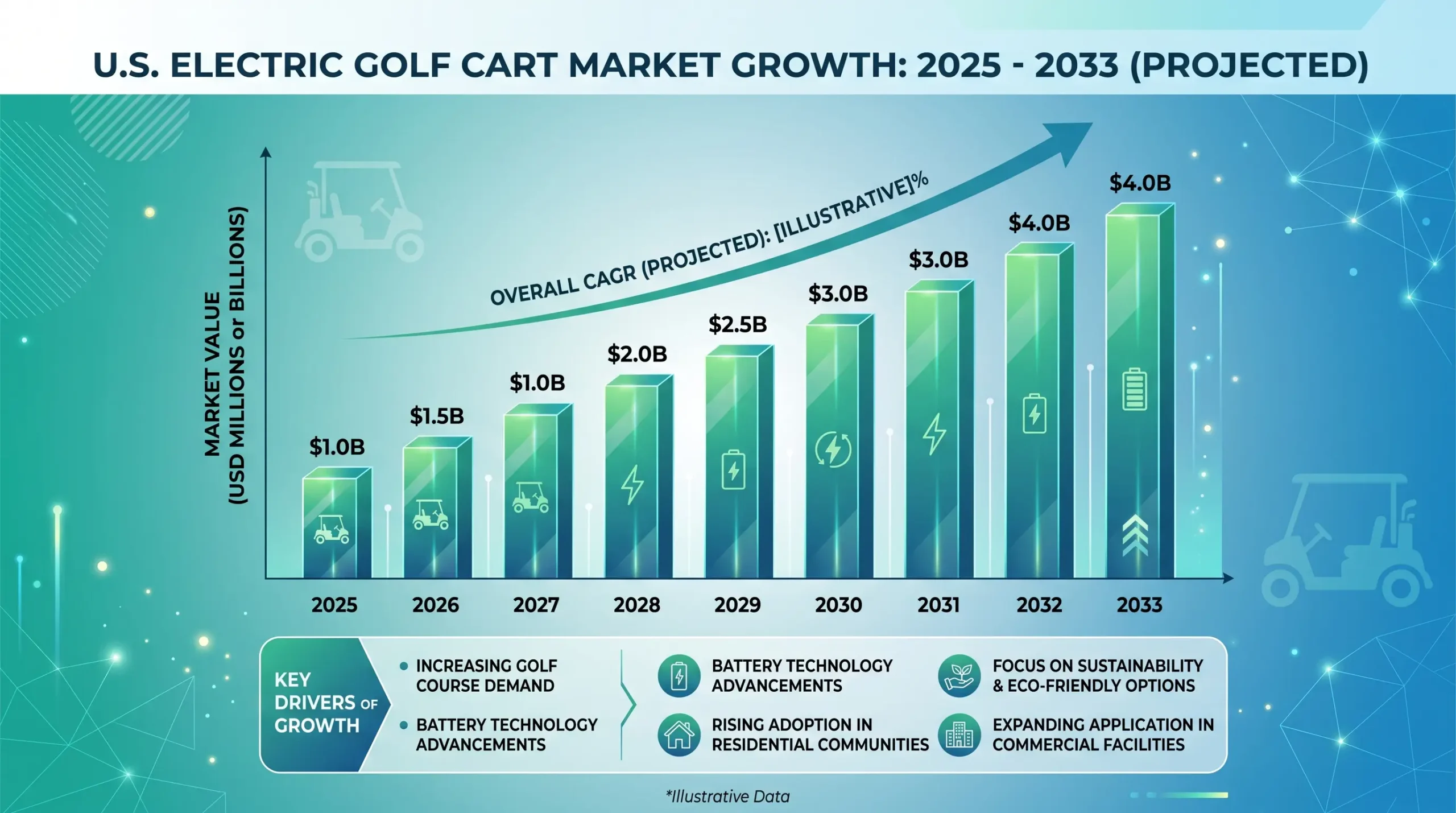
The U.S. electric golf cart market was valued at 509millionin2025∗∗andisexpectedtoreach∗∗509millionin2025∗∗andisexpectedtoreach∗∗825 million by 2033, growing at 6.6% annually. North America holds over 52% of the global golf cart market, supported by nearly 16,000 golf courses and thousands of master‑planned retirement and active‑adult communities.
The golf cart and NEV market is projected to grow from 5.5billionin2025to5.5billionin2025to8.7 billion by 2033, at a 6.8% CAGR, with residential communities ranking as the second‑largest application segment — right after golf courses themselves.
Here’s the problem. Despite this growth, nearly 60% of cart owners neglect regular maintenance, leading to a 30% reduction in performance lifespan. Many of those owners are stuck with outdated lead‑acid technology without even realizing there‘s a better option.
Problem
Problem
“I Thought I Bought a Street‑Legal Vehicle — Turns Out I Didn‘t”
| Feature | Basic Golf Cart | LSV (Street‑Legal) |
|---|---|---|
| Top speed | Under 20 mph | 20 to 25 mph |
| VIN required | No | Yes |
| Seat belts | Optional | Required |
| Headlamps | Optional | Required |
| Turn signals | Optional | Required |
| Mirrors / Windshield | Optional | Required |
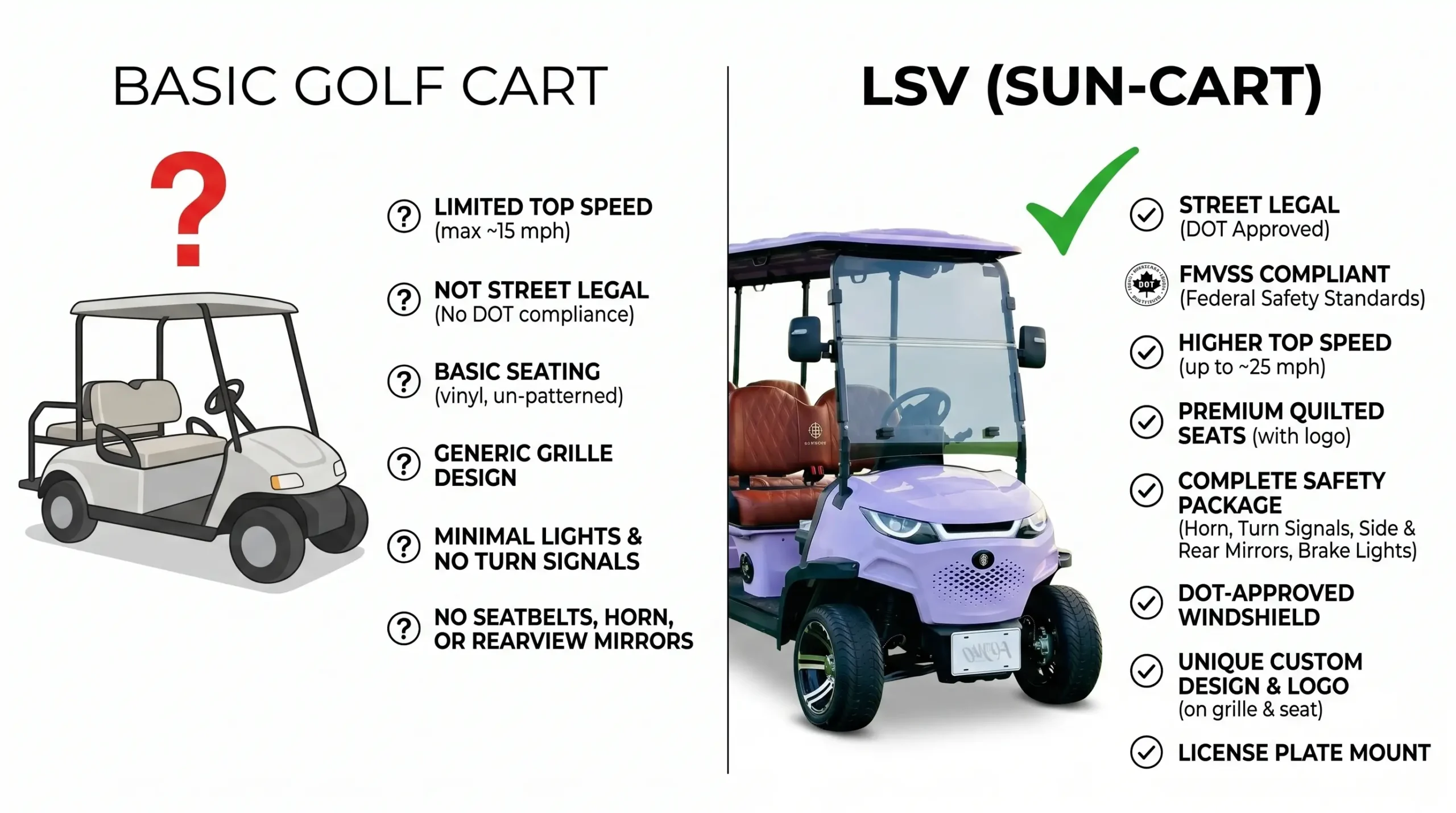
This is the most expensive and frustrating surprise for owners who never checked the fine print.
A basic golf cart is designed for golf courses and private property — not public roads. Under federal law, to be considered a Low‑Speed Vehicle you can legally drive on the street, your cart must meet FMVSS 500 standards.
Across the United States, local laws add another layer of complexity. Florida allows golf carts on roads with speed limits of 30 mph or less — but registered LSVs can go on roads up to 35 mph. Texas requires a golf‑cart license plate and has its own set of rules. In California, LSVs can be driven on any public road with a posted speed limit of 35 mph or less, but basic carts are heavily restricted.
The average buyer doesn‘t know these distinctions. They buy a cart online, get it delivered, and only discover they can’t legally drive it to the grocery store after a neighbor gets ticketed — or worse, after they get one themselves.
The Lithium Solution: Every Sun‑Cart LSV model comes fully certified with a VIN, seat belts, LED headlights, turn signals, mirrors, a windshield, and DOT tires. It’s delivered ready to register with your local DMV — no guesswork, no hidden upgrades.
Winter Wipes Out Your Range
This is the most common complaint I hear from electric golf cart owners.
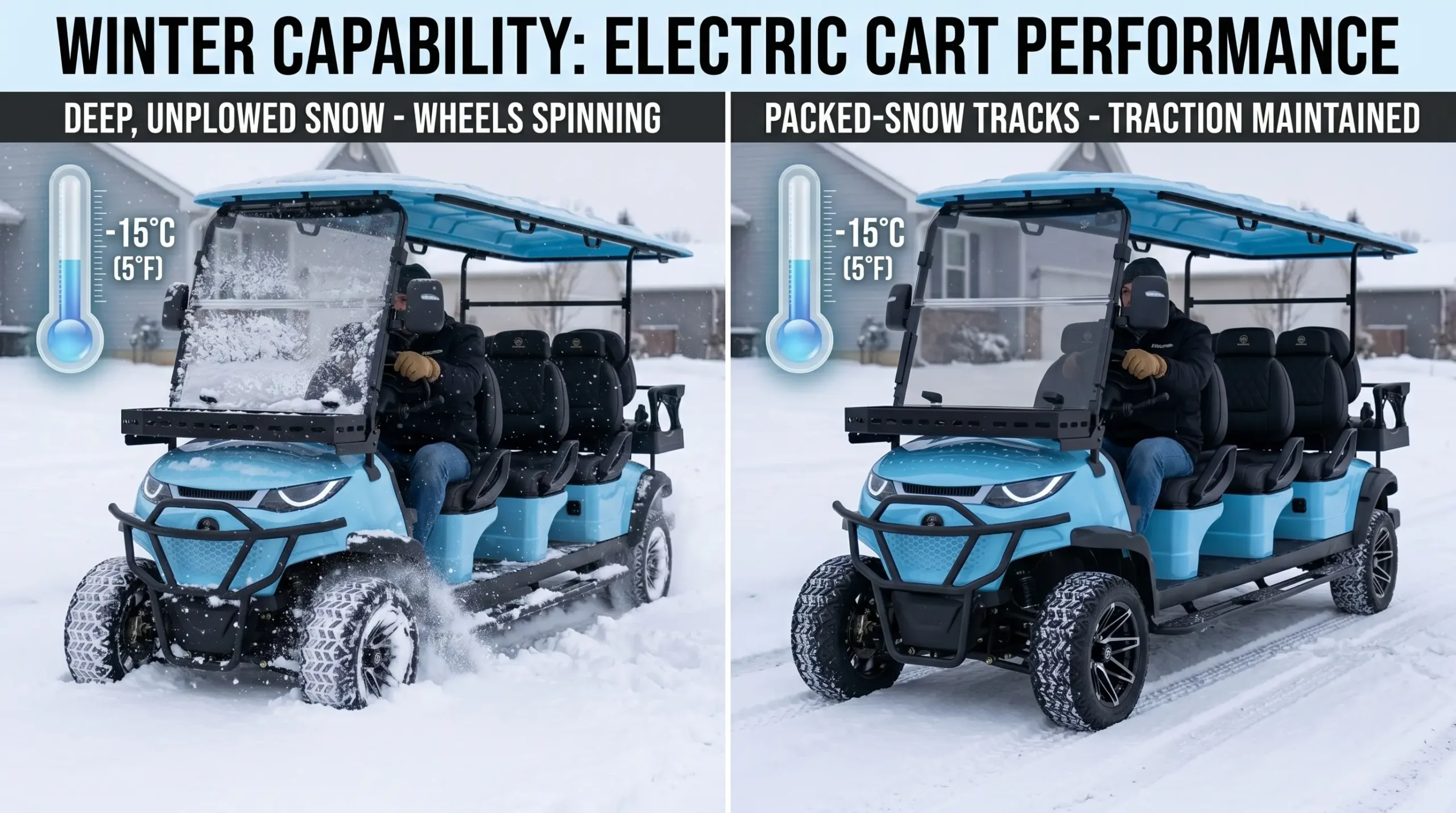
Most golf cart owners lose anywhere from 10% to 40% of their range in winter. Sometimes more. And nobody tells you this when you buy the cart. They just hand you the keys and talk about how far it goes on a nice sunny day.
Here‘s the reality. Cold temperatures slow down the chemical reactions inside batteries. The electrolyte gets thicker, and ions can‘t move as freely. In deep winter around 20–32°F (‑7 to 0°C), expect 20–30% range loss as a baseline. Below 20°F (‑7°C), the problem becomes severe: 30–50% reduction.
Your once‑30‑mile cart may only deliver 15–20 miles in freezing weather. That‘s fine for a quick trip to the clubhouse — but it won‘t get you to the pharmacy and back, let alone around the entire community.
The Lithium Solution: LiFePO₄ chemistry handles cold significantly better than lead‑acid. Capacity loss in lithium batteries is less severe, and advanced models now integrate thermal management systems that mitigate cold‑weather performance loss even further. Sun‑Cart’s lithium batteries also maintain consistent voltage output down to lower states of charge. When a lead‑acid cart slows to a crawl below 30% battery, your Sun‑Cart keeps moving at full speed — even on cold days.
“But My Dealer Said Lead‑Acid Is Cheaper” — And They Were Half‑Right
Yes, lead‑acid batteries cost less upfront. A 48V flooded lead‑acid set runs about 800–800–1,200. That’s what dealers emphasize because it makes the sale easier.
What they don‘t tell you is the true cost of ownership over 5 to 10 years.
Lead‑acid batteries demand:
Monthly watering — every single month
Terminal cleaning — corrosion builds up constantly
Equalization charges — to balance cell voltages
Ventilation — hydrogen gas requires space
Full 8–10 hour recharges after every use — no partial charging
And after all that work, lead‑acid batteries last only 3 to 5 years under normal use. By year 4, you’re already budgeting for your next $1,000 replacement.
Here‘s the five‑year math for a single cart:
| Cost Factor | Lead‑Acid | Lithium (Sun‑Cart) |
|---|---|---|
| Upfront battery cost | 800–800–1,200 | 2,000–2,000–4,000 |
| Battery replacements (5 years) | 1–2 times | 0 |
| Replacement cost | 800–800–2,400 | $0 |
| Monthly maintenance (5 years) | 60 watering sessions | 0 |
| Annual maintenance time | ~6‑8 hours | ~5 minutes (visual inspection) |
| Total cost + time | High | Lower long‑term |
Electric golf carts cost 50–50–150 per year to charge versus 250–250–500 for gas. Maintenance is also lower since there are no oil changes, spark plugs, or fuel system service.
And here‘s the final kicker. Neglected lead‑acid maintenance doesn‘t just waste your time — it causes premature failures across the cart. Unchecked corrosion and underinflated tires add an average of 800–800–1,200 in extra repair costs annually.
The Lithium Solution: Sun‑Cart’s LiFePO₄ batteries are maintenance‑free. No watering, no cleaning, no equalization charges. Just plug in and drive. And with a 5-year warranty and 8–10‑year service life, you may never replace the battery while you own the cart.

You Use Your Cart More Than You Planned — And Lead‑Acid Can‘t Keep Up
Surveys tracking U.S. golf cart usage consistently show one surprising trend: people use their carts far more often than they expected.
A University of North Florida study found that most golf carts are privately owned and used daily for everyday commuting, errands, and even transporting children to school.
The same research confirmed that daily use, everyday errands, and ownership are the most important variables affecting the choice to use a golf cart as a primary local vehicle.
For many American families, the golf cart is now used more often than their second car for local travel — trips to the pool, the mailbox, the community center, or a neighbor’s house.
But here‘s where lead‑acid fails. Those batteries aren‘t designed for the constant stop‑and‑go of daily errands. Frequent shallow discharges — exactly what happens when you take five short trips in one day — lead to sulfation, capacity loss, and early death.
Lithium batteries, by contrast, love partial charges. You can run a lithium cart to 40%, park it for an hour, and run another trip without harming the battery at all. You can‘t do that with lead‑acid.
The Lithium Solution: Sun‑Cart lithium batteries handle thousands of partial charge cycles with no capacity loss. Daily use doesn‘t shorten lifespan — it’s what they’re built for. And with a consistent voltage curve, your cart won‘t slow down as the battery drains, so your afternoon errands run as smoothly as your morning trip to the clubhouse.
You‘re Hauling Heavy Loads Without Realizing It — And Lead‑Acid Is Straining Under the Weight
This is the problem owners rarely think about — but it quietly destroys performance over time.
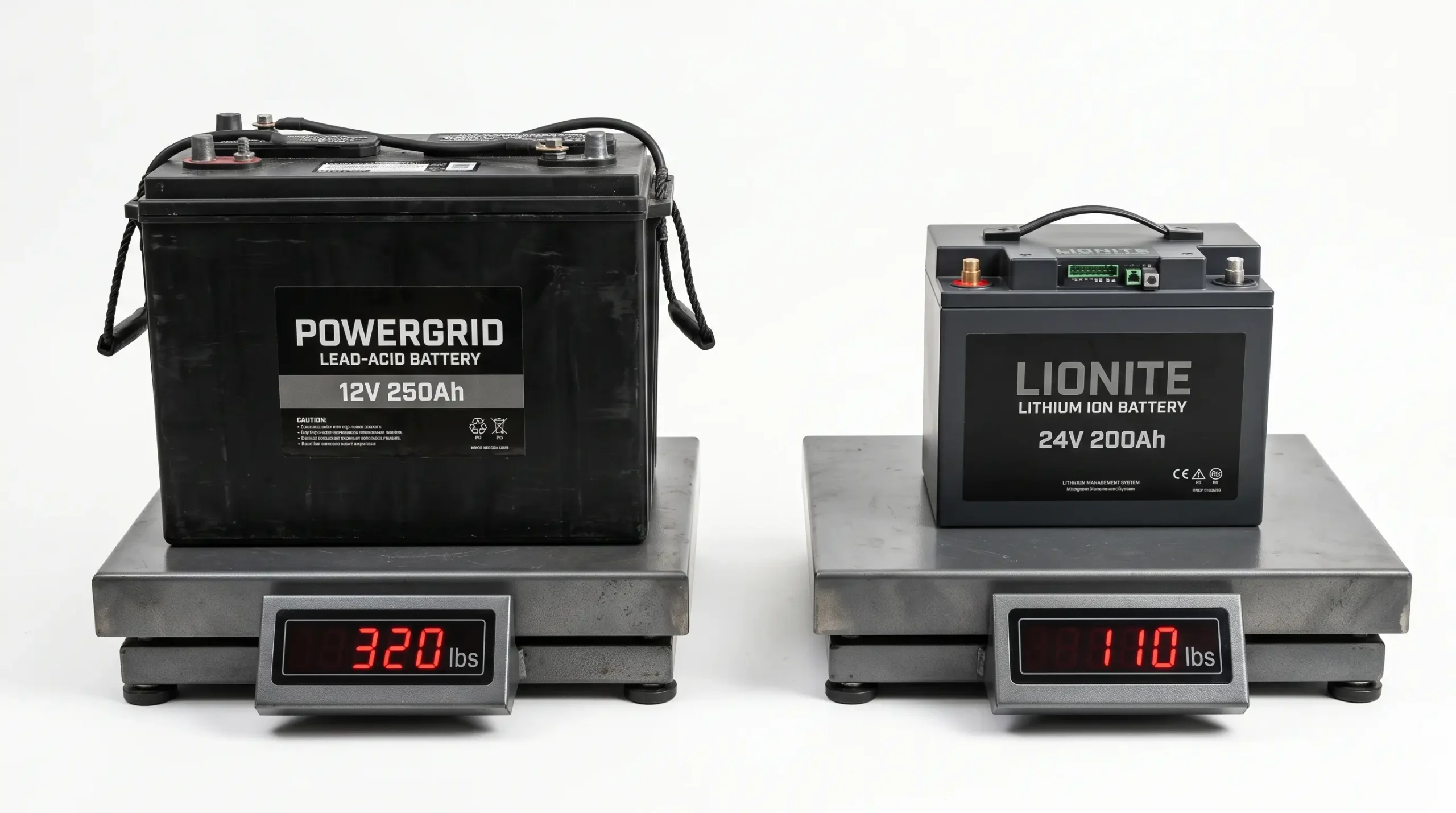
A standard 48V lead‑acid pack weighs over 320 pounds. That‘s 320 pounds of dead weight your motor has to drag around every single day, uphill and downhill, accelerating and braking.
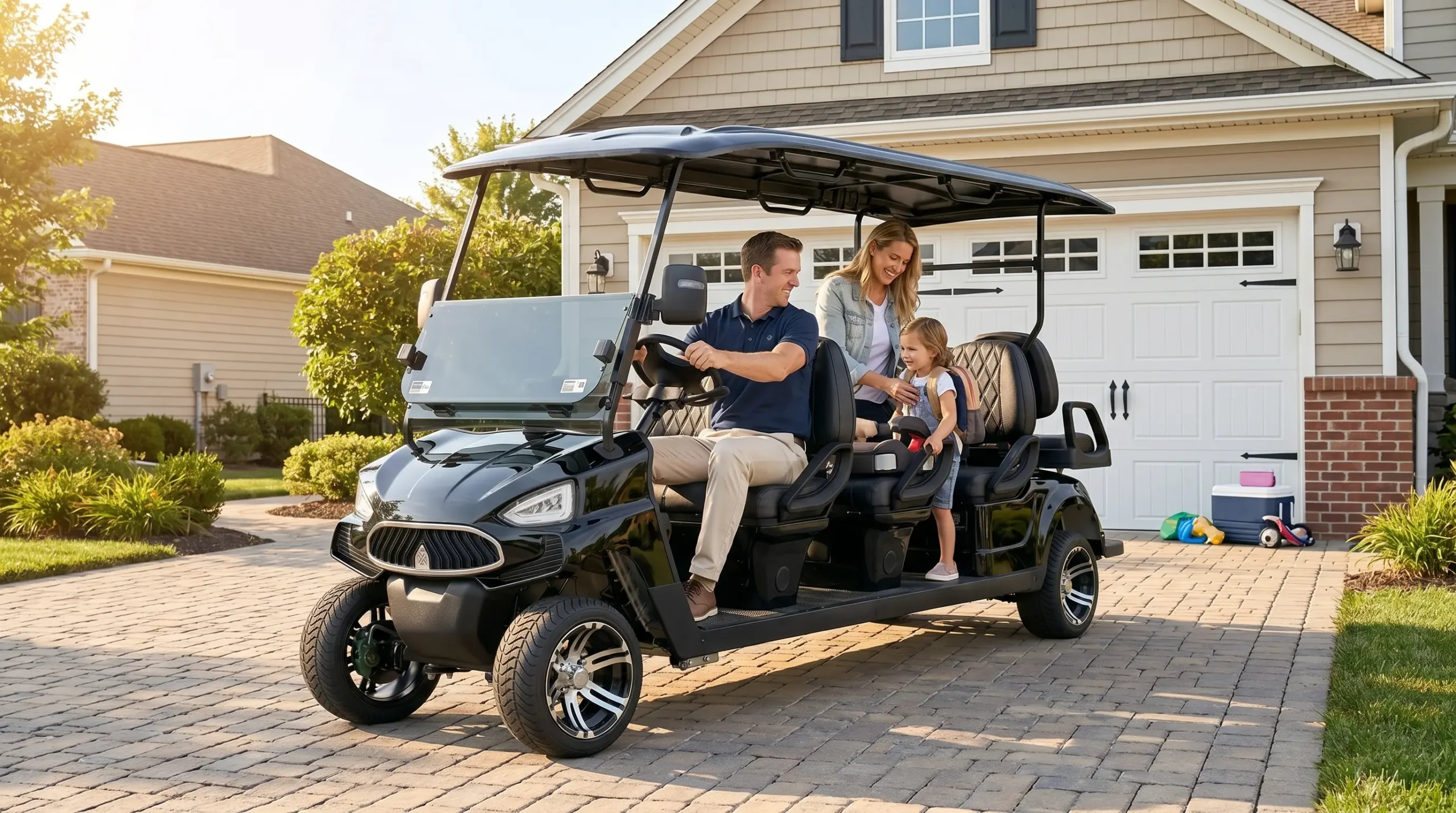
Now add passengers. A four‑seat cart with four adults easily exceeds 650 pounds of passenger weight. Add the 320‑pound lead‑acid pack, and your motor is pushing nearly a thousand pounds every time you leave the driveway.
Lithium batteries cut that dead weight by roughly 65% — down to about 110 pounds. That weight reduction translates directly into faster acceleration, longer range per charge, less strain on tires, brakes, and suspension, and reduced wear on every single moving part.
For heavy‑use owners — shuttling kids, hauling groceries, running errands — lithium‘s weight advantage compounds every single trip.
The Lithium Solution: Sun‑Cart lithium packs weigh just 55–65 kg — about one‑third the weight of lead‑acid. More range, less wear, better performance, and your cart handles like it was always meant to.
The Bottom Line - Lithium Isn't an Upgrade, It's the Right Solution
If you‘re buying your first electric golf cart, don’t start with lead‑acid. The frustration isn‘t worth the few hundred dollars you “save” upfront.
If you already own a lead‑acid cart, every problem above sounds familiar. The good news is you can fix all of them — with a single upgrade.
Switching to lithium eliminates:
❌ Monthly watering and terminal scrubbing
❌ Range anxiety in cold weather
❌ Performance loss as the battery drains
❌ Heavy dead weight straining your motor
❌ Hidden street‑legal compliance issues
With Sun‑Cart’s LiFePO₄ batteries, you get:
✅ Zero maintenance — just drive
✅ 8–10 years of reliable service
✅ 5‑year warranty with US‑based support
✅ LSV‑certified street‑legal models ready to register
✅ Consistent power and range year‑round
The bottom line? Real life demands real solutions. Your golf cart should make your daily routine easier — not add another chore to your list.
Are your golf carts actually street‑legal in the US?
Yes. Our LSV-certified models meet FMVSS 500 with VIN, seat belts, LED lights, turn signals, mirrors, and DOT tires. You can register them with your local DMV and drive on roads up to 35 mph. Laws vary by state — we provide documentation to help.
How much range will I lose in winter?
All batteries lose range in cold weather. But LiFePO₄ handles it much better than lead‑acid. Expect 15–25% loss at 20°F, not 30–50%. Our lithium packs also maintain consistent power output as the battery drains — no noticeable slowdown until the very end.
Is lithium really maintenance‑free?
Yes. No watering, no terminal cleaning, no equalization charges. Just plug in and drive. Annual voltage checks are optional.
Can I really drive a golf cart on the street where I live?
Maybe. It depends entirely on your city and state regulations. More and more cities are passing ordinances to allow LSVs on designated public roads. You should check with your local DMV or city government for their specific requirements on registration, insurance, and permitted routes.
What‘s the warranty?
2,000 to 5,000 cycles — typically 8–10 years of normal daily use. Many owners never replace the battery during the vehicle’s lifetime.
Can I upgrade my existing lead‑acid cart to lithium?
Yes. SunCart lithium batteries are designed as drop‑in replacements for most 48V systems. Our team can help verify compatibility.
Do you have US stock for faster delivery?
Yes. Popular models are stocked in our US warehouse with 3–7 day delivery. Parts support also available domestically.
Real Life Happens Daily. Your Golf Cart Should Be Ready.
American families use golf carts more than ever — for daily errands, neighborhood trips, school runs, shuttling friends, and everything in between. But lead‑acid technology was never designed for that kind of use.
Sun‑Cart lithium batteries are. Maintenance‑free, light weight, cold‑weather resistant, street‑legal ready, and backed by a 5‑year warranty.
Don’t let outdated battery technology turn your daily driver into a chore. Drive lithium.
Get the latest information on our products
/ solutions that meet your needs
Get the latest information on our products / solutions that meet your needs
Newsletter Updates
Enter your email address below and subscribe to our newsletter